This year's World Cup has never been more technological
From Var with 3D offside to Bodycam. Pierluigi Collina explained the innovations introduced by Lenovo


The World Cup 2026 will be different: a giant data factory disguised as a football tournament. For the first time, FIFA is spreading the World Cup over three countries - the United States, Canada and Mexico - and turning 104 matches into a global artificial intelligence laboratory. Behind the scenes there is not just a technology sponsor. There is an industrial platform.
The engine is Lenovo, which will act as the nervous system of the event: over 17 thousand devices distributed in 16 stadiums, millions of data to process, 6 billion spectators to reach and 7 million people to physically manage in the stands. When the margin for error tends to zero, technology stops being marketing and becomes critical infrastructure. Like the power grid. Or air traffic control.
in a meeting with the tech press, former referee and current president of the FIFA Referee Committee Pierluigi Collina and Valerio Rizzo, project manager at Lenovo, who implemented the project together with Fifa, explained the impact of these innovations and what will change in practice for us spectators. Starting with what is perhaps the most odious innovation for a fan: offside at Var.
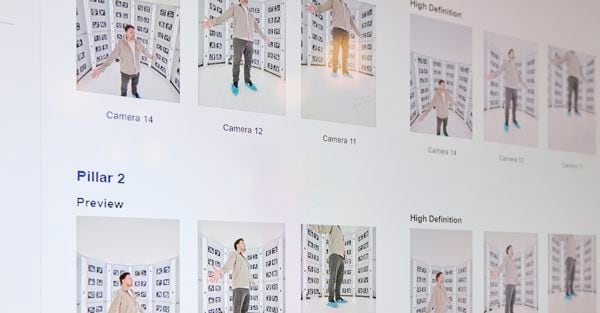
At the 2026 World Cup, offside changes (literally) dimension: in what will be the most high-tech World Cup ever, offside will be three-dimensional thanks to 3D Var. The technology uses Digital Twin: digital twins of players built in real time. Each athlete is reconstructed as a 3D avatar with real physical dimensions, posture and millimetre position. The referee will no longer see a blue and a red line on a flat image. He will see bodies in space. Like an aerospace simulator applied to a centre forward.Replays will be shared simultaneously between referees, broadcasters and stadium screens. More transparency. More spectacle. And probably new controversy, because in football, technology does not eliminate debate, nor does human refereeing try to make the choices more understandable. In practice, the operation has important numbers and costs. . In practice, they explained, the more than one thousand two hundred players who will land on the American continent will undergo a session with a sophisticated 3D scan to have an avatar of themselves. There will be no more little men from the metaverse with bodies that all look the same and, above all, do not take foot size into account. With one peculiar detail: everyone will be bald, and not as a tribute to Collina. The reason is that hair does not (or should not) count when the offside is measured.
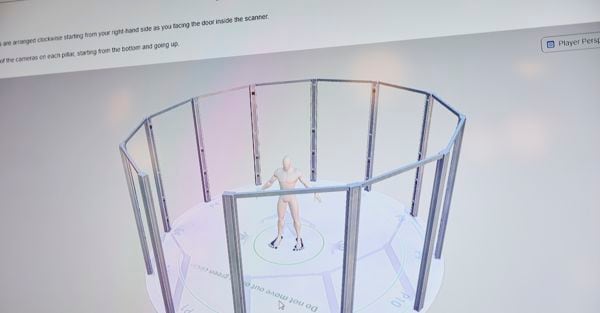
The role of applied technology is precisely to measure and make a decision more intelligible, not to replace the work of the arbitrator. More or less the same is said when reasoning about the impact of Ai in the labour market. In the case of football to monitor what happens on the pitch there are seven plus 14 video cameras and a chip in the ball to understand when foot contact occurs. According to Pierluigi Collina is President of the FIFA Referees Committee and Chief Refereeing Officer of FIFA the missing piece of information is a technology that can measure impact. "At the moment,' he said in response to a question from Il Sole 24 Ore, 'even a chip on the athletes' shoes could detect the position but we can already get that from the cameras. What could be useful is to measure the impact and the force of a foot in case of a foul'. The referee on the field is currently the only one able to assess this 'parameter'.