2026 World Cup

World Cup: a guide to the quarter-finals

The four matches in the tournament’s quarter-finals will all be played in the United States between 9 and 12 July

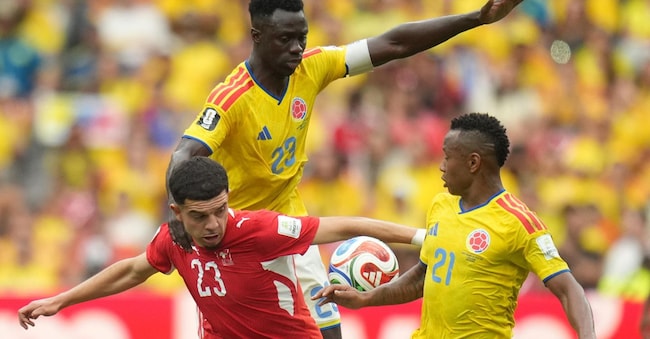
 Zeki Amdouni della Svizzera (a sinistra), Davinson Sanchez della Colombia (al centro) e Jaminton Campaz della Colombia (a destra) in azione durante la partita degli ottavi di finale della Coppa del Mondo FIFA 2026 tra Svizzera e Colombia, a Vancouver, in Canada  (EPA/BOB FRID) EPA

3' min read

Translated by AI
Versione italiana

3' min read

Translated by AI
Versione italiana

After a month of matches and a knockout stage that has already produced a few surprises, only eight national teams remain – six from Europe, one from Africa and one from South America, the defending champions Argentina – in the running for the World Cup. The quarter-finals will all be played in the United States between 9 and 12 July.

The fixtures include France v Morocco in Boston on 9 July at 22:00 Italian time, Spain v Belgium in Los Angeles on 10 July at 21:00 Italian time, Norway v England in Miami on 11 July at 11.00 Italian time, and Argentina v Switzerland in Kansas City on 12 July at 3.00 Italian time.

Loading...

France v Morocco

Morocco continues to prove itself as one of the major forces in international football and has reached the quarter-finals after first knocking out the Netherlands and then Canada with a convincing 3-0 victory. France, meanwhile, beat Sweden in the round of 32 and overcame Paraguay in the round of 16 thanks to a decisive goal from Kylian Mbappé, who remains the linchpin of Les Bleus, supported by the quality of Dembélé and Olisè. In Morocco, all eyes are on Achraf Hakimi, the team’s technical and emotional leader, and on the forwards who have propelled the Africans this far. The absence of striker Saibari, who went off in the 21st minute of the match against Canada, is a significant blow.

France are the favourites thanks to the depth of their squad and their international experience, but Morocco have already shown they can cause problems for anyone with their organisation, aggression and pace on the counter-attack.

Spain v Belgium

Spanish possession and passing play versus Belgian directness and physicality. This is probably the most evenly matched fixture in the draw from a technical point of view. Spain come into the match having knocked out Austria and Portugal, with that latest victory coming in one of the toughest matches of the tournament. Belgium, meanwhile, are coming off the back of a convincing 4–1 victory over the United States, having previously beaten Senegal in the round of 16.

In La Roja, who are rock-solid in defence, the spotlight is on Pedri, Lamine Yamal and the midfield, which continues to be the Spanish side’s hallmark. Belgium, on the other hand, are relying on the attacking prowess of Romelu Lukaku – the star of the tournament – and the quality of De Ketelaere and his teammates.

Norway v England

The big surprise of this World Cup is undoubtedly Norway. The “Vikings” first knocked out the Ivory Coast and then Brazil, achieving one of the most sensational results of the entire tournament. England, on the other hand, lived up to expectations by beating DR Congo and Mexico.

Norway will take to the pitch with nothing to lose, pairing Erling Haaland – who has been the driving force behind the Scandinavian side so far – with the talent of Martin Ødegaard.

England, led by Jude Bellingham, Bukayo Saka and one of the most well-rounded attacking line-ups in the tournament, will feel the weight of a nation that has been waiting for a World Cup title for sixty years.

Argentina v Switzerland

Lionel Messi’s Argentina have reached the quarter-finals after beating Cape Verde and following a real battle against Egypt, whom they came from behind to beat 3–2 in the closing minutes. Switzerland, meanwhile, knocked out Algeria in the round of 16 and then Colombia on penalties after a hard-fought 0–0 draw in Vancouver.

Argentina are the favourites. All eyes will inevitably be on Lionel Messi, who has once again proved decisive at the most crucial moments of the tournament. But Switzerland, relying on Granit Xhaka’s leadership, Akanji’s solidity and Gregor Kobel’s saves, has proved to be an extremely well-organised side that is difficult to break down. If they manage to keep the pace of the match slow, they could make life difficult for the South American champions.

Copyright reserved ©
Loading...

Brand connect

Loading...

Newsletter

Notizie e approfondimenti sugli avvenimenti politici, economici e finanziari.

Iscriviti

Tutto mercato WEB