
Streparava: 'lower energy costs, stop stability constraints'
The president of Confindustria Brescia: 'Cutting excise duties is not enough. Amazed by Brussels' rigidity in the face of the crisis'.

%20Fonderie%20Ariotti%20S.p.a.%20(1)-U56160610668YKa-1440x752@IlSole24Ore-Web.jpg?r=650x341)
A decisive intervention in favour of industry, to counteract the difficulties of the moment.
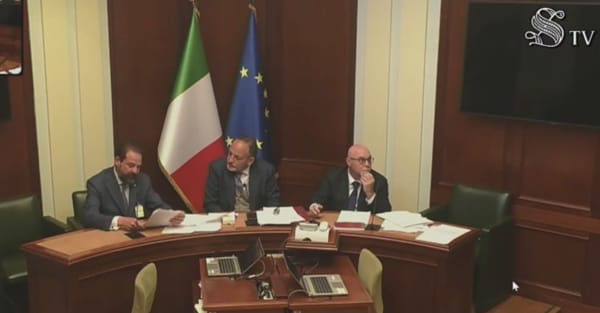
This was the request made by the president of Confindustria Brescia, Paolo Steraparava, during a hearing on the tax and excise dl at the Senate Finance Committee. 'On the excise cut decree,' he explained, 'we understand the urgency of the intervention and we know its purpose: to counter speculative phenomena, temporarily ease fuel price rises, protect citizens, and safeguard road haulage in a phase of extraordinary tension. The point is, however, that for the industry this is not enough'.
"The real problem is not just the price of fuel at the pump and a short-lived excise reduction, which may offer immediate relief but does not change the ability to plan investments, price lists, contracts and production: the problem is the overall cost of energy for manufacturing.
Streparava calls the correction on Transition 5.0 made by the Minister of Enterprise, Adolfo Urso, 'fair and necessary' after the cut in funding for exodus projects undermined the relationship of trust between enterprises and institutions. "Businesses need that when something is announced, it is written clearly, quickly and consistently. Regardless of the technical form that has been chosen, tax credit or contribution, the final benefit must have the same economic impact for companies and the same rules of cumulability'.
Streparava then called for a reversal of course at EU level in terms of public accounts, allowing room for manoeuvre at such a dramatic time, and shared the position expressed by Economy Minister Giancarlo Giorgetti.


