
WTO warning: Trump's tariff war freezes global trade
With the tariffs in place as of 14 April, merchandise trade could fall by 0.2 per cent, which is about three percentage points lower than in the baseline ('low-duty') scenario. The decline could reach 1.5 per cent if the US adopts the 90-day paused tariffs. North America will be the hardest hit area, with exports and imports plummeting

3' min read
3' min read
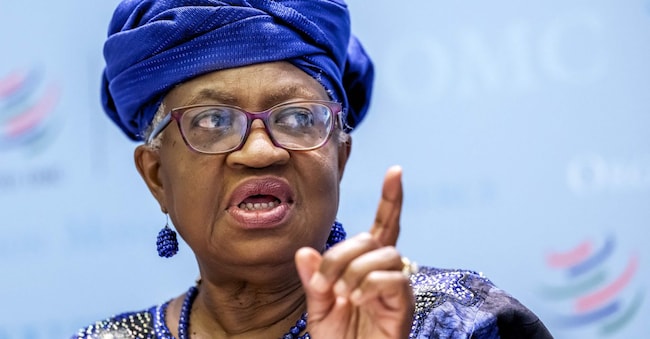
The tariff war unleashed by Donald Trump freezes world trade: the tariffs in force as of 14 April, which include the 10 per cent levy on all US imports, are more than enough to send trade volumes shrinking by 0.2 per cent, about three percentage points lower than in the baseline scenario ('with low tariffs'). The drop could be as much as 1.5 per cent if the US adopts the duties put on hold for 90 days, what Trump calls reciprocal, even though there is nothing reciprocal about them. It would be the steepest fall since the Covid year. These are the WTO's estimates, presented yesterday by an alarmed Secretary-General, Ngozi Okonjo-Iweala: 'I am deeply concerned. The recent de-escalation,' she said, 'has temporarily relieved pressure on world trade. However, persistent uncertainty threatens to dampen global growth, with serious consequences for the world and particularly for the most vulnerable economies'. By 2024, the volume of world trade in goods had grown by 2.9 per cent. In October, the WTO itself had forecast an increase of 3%.
USA, Mexico and Canada the most affected
.Based on the current situation (with tariffs already in place as of 14 April), the WTO predicts that the hardest hit region in 2025 will be North America (US, Canada and Mexico), with exports falling by 12.6% (-14.8% compared to the baseline scenario) and imports falling by 9.6% (-12.5% compared to the baseline scenario). The collapse in trade would subtract 1.7 percentage points from the growth in world merchandise trade in 2025, pushing the overall figure into negative territory.
Asia and Europe are expected to see growth in both exports and imports, albeit modest and still lower than expected.
The US-China Wall
.The tariff wall against China, the WTO also points out, will push exporters from the world's second largest economy to seek alternative outlets, putting pressure on other markets. The WTO predicts that sales of Chinese goods will increase by 4% to 9% in all regions outside North America. At the same time, the decline in US imports of textiles, clothing and electrical equipment made in China should open up opportunities for companies in other countries.
For Okonjo-Iweala, the most serious risk is the freezing of relations between the US and China, the so-called decoupling. The WTO estimates that trade in goods between the two economies will decline by 81%, a decline that could have been as high as 91% without the recent exemptions for products such as smartphones. If this decoupling contributes to a broader fragmentation of the global economy into geopolitical blocs, global GDP could shrink by 7% in the long term, as the WTO and the Monetary Fund themselves have been warning for almost a year.


