
A close-up look at the supply chain at the Fiap ‘village’: from clients to infrastructure challenges
Relations with producers, responsibility for waste, infrastructure priorities, training: what the Fiap Logistic Village 2026 had to say about the sector

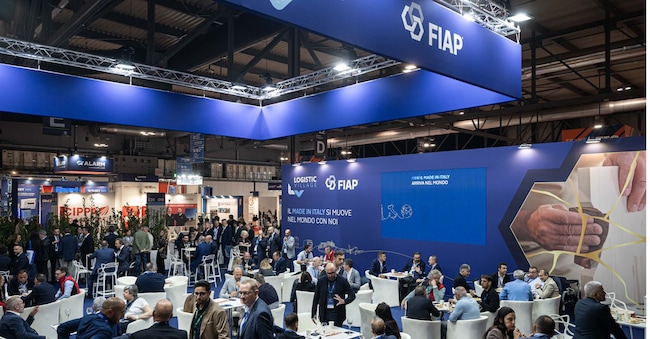
Transport? ‘A necessary evil’ for manufacturing companies. The relationship between clients and logistics operators? ‘Unbalanced’ in favour of the former and focused primarily on price. Is logistics a key sector for the economy? It is still “not seen as a strategic asset”, despite its annual turnover of 120 billion euros, its contribution of 9–10 per cent of GDP and its overall size, which makes it the third largest in Europe. Whilst the most pressing issues for hauliers currently revolve around major emergencies such as high fuel prices, diesel subsidies, ETS and the Brenner Pass issues, the sector as a whole continues to suffer from being undervalued within the national economy, whilst the challenges it faces – infrastructure, environmental sustainability, business transformation and the demand for staff – are of great significance. The survey of operators, clients and sector managers presented at Fiap’s Logistic Village, and the ensuing panel discussions involving over 80 experts at Transpotec Logitec 2026, have shone a spotlight on the contrasts that characterise the sector. ‘Logistics is not just a “side issue” – as summarised by Alessandro Peron, Fiap’s general secretary – it is an industrial asset. Italy can no longer afford to view it as merely ancillary to production.’
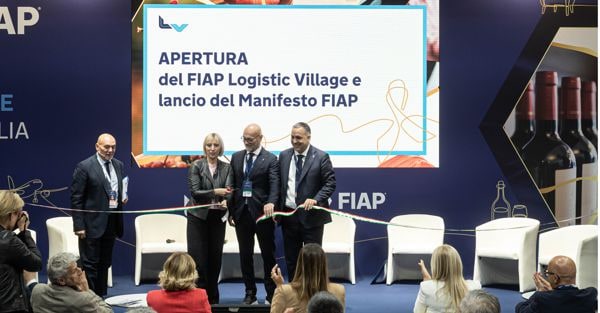
Clients and operators: towards a partnership?
It is precisely the relationship between manufacturers and logistics that has come under the microscope in a discussion between major brands (Ferrero, Finiper Canova, Ponti) and transport operators (Italtrans, Cab Log, F.lli Primiceri). For the former, the relationship is evolving towards a strategic partnership: long-term relationships, regular meetings, a proactive approach and mutual opportunities through new technologies; for the latter, however, the focus often remains on reacting to unforeseen events, and joint planning is rare, whilst price remains the dominant factor, even though certain quality indicators are recognised and required as prerequisites.
The supply chain under pressure: three systemic risks
Recent developments in the relationship between clients and the logistics supply chain – as highlighted in another panel discussion on the main pressures facing the professional transport sector – are, however, giving rise to new legal and contractual risks that could jeopardise the path towards strategic partnership. The desire to protect oneself from liability for what happens along the supply chain and to subject everything to strict control is leading to lengthy contracts, full of clauses and checks that burden the system without providing greater security.
Infrastructure and corporate structure are the other two major risk factors for the logistics industry. If the Alpine passes are at the centre of disputes with neighbouring countries and the Scan-Med corridor – which crosses the continent from north to south – is operating at just 50 per cent of its capacity, logistics will suffer, as will Italian exports and trade within Europe. As for businesses, the question is whether their typically family-run structure and the ongoing generational transition will be able to cope with the new demands of the market.
The shortage of staff for digitisation
And what about those working in logistics? Experts at the Fiap Logistic Village discussed three potential crisis areas: the shortage of drivers, both in Italia and across Europe, with wages having been on a downward trend for years; digitalisation, which is transforming the skills required of staff; and, finally, the conditions needed to make the profession attractive once again. “The mobility and logistics sector – according to employment demand forecasts from Unioncamere’s Excelsior Information System – is estimated to require between 139,000 and 151,000 workers in the period 2025–29 (138,000 to replace departing staff and up to 13,000 new entrants linked to the sector’s expansion): ‘This sector,’ the analysis states, ‘will need professionals capable of adapting to the rapid changes in the sector, given the digital transformation of logistics operations.’
Changing rules: from Europe to waste
On top of these structural uncertainties come the obligations to comply with regulations. There are many ongoing issues in Europe, such as the reform of weight and size limits for vehicles, the ETS scheme for pollutant emissions and ETS 2, which has been postponed until 2028, the Brenner Pass issue and the parcel tax, whilst specific issues, such as waste management, require constant awareness and updating on the part of hauliers too, given the obligations involved and the regulatory changes on the horizon.


