
Trump opens up to Xi on Taiwan: 'No independence'. CNN: towards new attacks on Iran
The US president speaks at the end of the summit that led to the thaw with Beijing. Taipei reacts: 'Washington's policy unchanged'

Key points
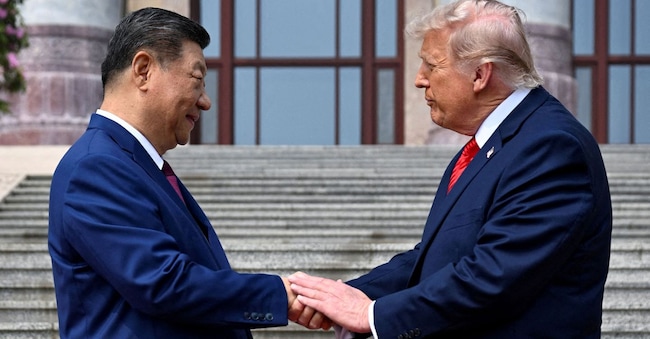
The tension over Taiwan is back. "I don't want anyone to declare independence and for the US to have to travel 15,000 kilometres to go to war," Donald Trump said after the summit with Xi in Beijing, later denying that Xi's warning about Taiwan was a "threat" to the US. But Taipei asserts its independence and reiterates: 'Arms sales are part of US security commitments, Washington's policy remains unchanged'. The US president also returned to talk about Iran. According to CNN, which has heard from sources with knowledge of the facts, it has never been so close since the beginning of the ceasefire to resuming attacks. The 'two days' brought about the diplomatic thaw, but not the desired breakthrough.
Chinese President Xi Jinping will make a state visit to the US in the autumn of 2026, "at the invitation of US President Donald Trump". This was confirmed by the Chinese Minister of Foreign Affairs, Wang Yi, as reported by the state-run Xinhua news agency.
Moreover, in the coming days, and particularly on 20 May, Russian leader Vladimir Putin is expected to visit China. This was reported by the South China Morning Post, giving an account of a move that goes to confirm Beijing's central role in relations between great powers and the Chinese leader's close ties with Russia. The Kremlin chief's visit, should it go ahead, will be for only one day, as a routine step in Russian-Chinese relations, according to anonymous sources, who say "the event is unlikely to include elaborate ceremonies, such as a parade".
Trump: "I don't want Taiwan to declare independence and start a war."
In an interview with Fox News about Taiwan, the US president said, "I don't want anyone to declare independence and for the US to have to travel 15,000 kilometres to go to war". "Nothing has changed" in US policy towards Taiwan. "I want them to calm down. I want China to calm down," said Trump who then would not formally commit to the issue of arms sales to Taipei. 'I might do that. I might not," he told Fox's Bret Baier "We don't want to start wars. If the status quo were maintained, I think China would have no objection. But we don't want anyone to feel entitled to say, 'Let's declare independence, the US has our back anyway,'" he insisted.
Earlier, Trump had avoided directly answering a question about Taiwan's possible defence in the event of an attack by China. He did so while speaking to reporters on board Air Force One, returning from Beijing after meeting with Chinese President Xi Jinping. "I don't want to say it. I won't say it," Trump said. The US president added that he would be asked the same question by Xi Jinping during the talks: 'He asked me the same thing today. I replied, 'I don't talk about these things'." Trump then reiterated that he did not want to clarify the US position: 'I don't want to say that. There is only one person who knows. Do you know who it is? Me."

