
Xiaomi and the useless habit of imitating iconic cars with Su7 and YU7
The Chinese manufacturer grinds speed records and boasts great technology but needs to develop an original style and not copy carbon

2' min read
2' min read
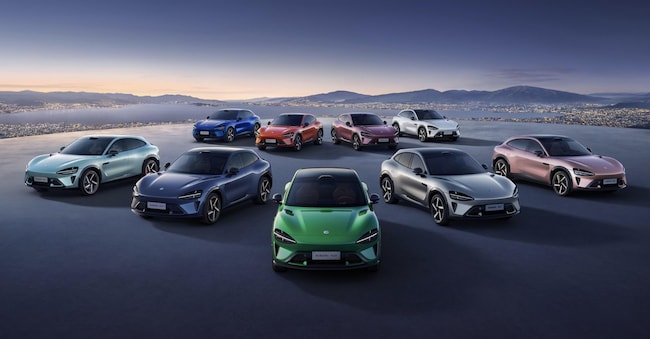
The habit of copying is inherent in the automotive world. Those who more or less draw inspiration from the shapes and formulas of success of others. It is a sort of osmosis of ideas that flattens the search for stylistic languages and innovative solutions, with all due respect for originality and the courage to dare (two qualities that have made automotive history with the creation of extraordinary models, such as the Citroën DS, which celebrates its 70th birthday in these months). However, if inspiration is tolerable, blatant copying is not. We thought the era of Chinese clones with cut-and-paste cars like the Chery Landwind that traced the Range Rover Evoque was over. But that was another era, the one where Chinese manufacturers got by somehow copying lines and technical solutions. Now that the Chinese, in many respects, especially technological, are ahead of the rest, copying iconic models is intolerable. And this is the case of Xiaomi, the Chinese manufacturer best known for its smartphones, with its two first battery-powered cars: the Su7 sports car and the Yu7 suv. The former precisely traces the silhouette of the Porsche Taycan, an electric car acclaimed for its style, the latter even Ferrari Purosangue, a model awarded the Compasso d'Oro and Red Dot Awards. OK, that the Yu7 is electric while the Purosangue is proudly 12-cylinder, but to imitate such a car is embarrassing on Xiaomi's part. And the company's top management, starting with CEO Lei Jun, seem to be shamelessly mocked on social media, they don't care: they go on their way, without an effective statement of strategies and roadmap for the European market, but with appearances, often unofficial, for the use and consumption of creators on social media, especially the Chinese TikTok, who act as a claque for Xiaomi's cars, like the recent one at the Goodwood Festival of Speed where an SU7 Ultra was paraded. A muscular demonstration, on a par with the records at the Nürburgring, that seems to say: 'We are the last to arrive but we can challenge and beat the greats of the car'. And for a brand that comes from smartphones (excellent and original) and excellent digital devices, this is no small thing. All this with an admirable and super-interesting approach to the digital electric car, though perhaps too fast and disruptive. The Su7 and Yu7 are, in many ways, rich in ideas and technical-functional solutions never seen on cars from traditional manufacturers. Of course there is no shortage of leaps forward such as the use of chips used in smartphones (powerful but not automotive certified). It is a pity that Xiaomi models are dressed in such an unoriginal way as to debase their technological and engineering value with the real risk of relegating them to the world of copies and knock-offs. And to reverse the perception, at least in Europe, it is not enough to go to Goodwood almost on the sly and break records on the track. Xiaomi has possibilities for enormous growth and development. It is one of the few Chinese brands with a serious global reputation. Now it is time to think about how to dress its cars with original dignity.


