
Yayoi Kusama, the Japanese artist known for her polka dots, pumpkins and mirrors, has died
He was 97 years old. Anti-war happenings in the US in the 1960s. Commercial success in the 1990s

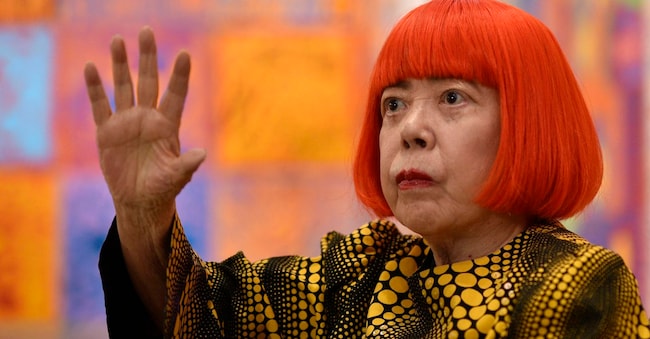
Yayoi Kusama, the Japanese artist known worldwide for her obsessive repetitions of polka dots, her pumpkin-shaped sculptures and her famous ‘Infinity Mirror Rooms’, died on 14 August in Tokyo at the age of 97. The announcement was made overnight by the foundation that bears her name.
Born in 1929 in Nagano into a wealthy family marked by domestic tensions, Kusama began drawing her characteristic dots and grids as early as the age of ten – as she recounted in her autobiography – which she developed as a way of exorcising her fears. After studying painting in Kyoto, she moved to the United States in 1957, first to Seattle and then to New York, where, for sixteen years, despite financial hardship, she became a leading figure in the avant-garde.
In the 1960s, she organised ‘happenings’ featuring naked bodies painted with polka dots in public places, as a form of anti-militarist protest and in support of civil rights, and launched a fashion line. On her return to Japan in 1973, she chose to live voluntarily in a psychiatric hospital in Tokyo, from where she continued to work well into old age. Her commercial success came late, starting in the 1990s, with her pumpkins – described as ‘lifelong companions’ - and the ‘infinite mirror rooms’, which became a global phenomenon, even on social media.
In 2016, she was named by *Time* as one of the 100 most influential people in the world, and her works have fetched staggering prices, with an ‘infinity net’ selling for nearly eight million dollars in 2019. Always recognisable by her fiery red wig and polka-dot dresses, she has often criticised Japan, which she described as ‘full of contempt for women’. In 2017, a museum dedicated to her opened in Tokyo. ‘My wish,’ she said at the time, ‘is that the bright future, the beauty of love and my soul will be passed on. Love my works, even after my death.’

