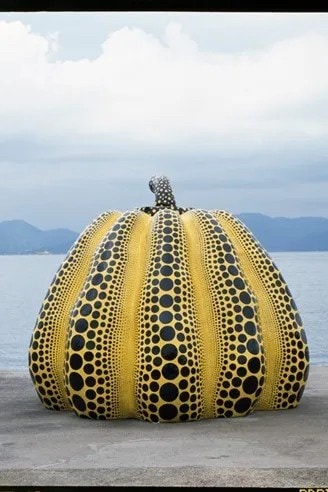
Yayoi Kusama, the Market of Infinity
The Japanese artist, who has recently passed away, generated $52.1 million at auction in 2025, with 765 lots sold. Several exhibitions are currently taking place

Key points
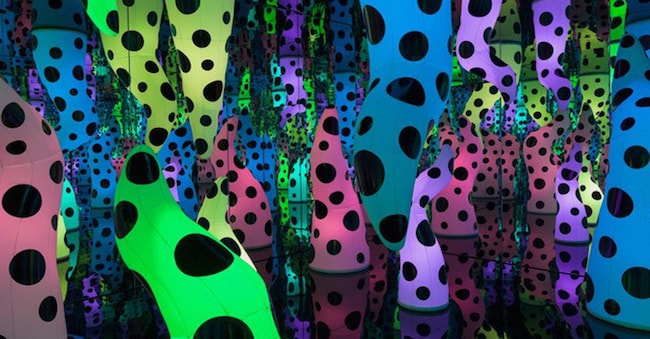
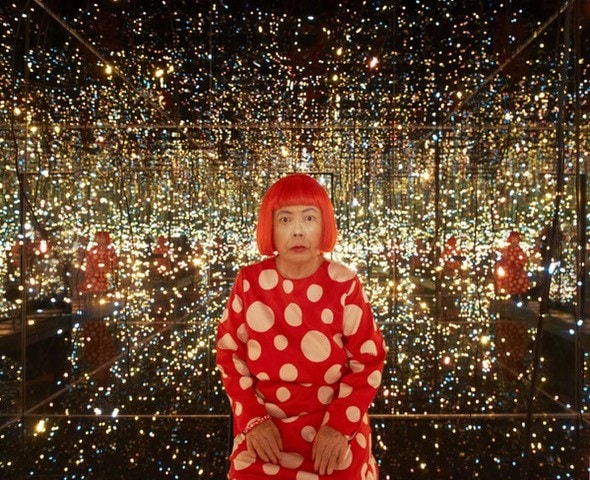
b, the Japanese artist who transformed polka dots, pumpkins, nets, mirrors and immersive spaces into a universal language, has died at the age of 97 Yayoi Kusama. But behind the pop icon and the Infinity Mirror Rooms lies one of the most robust markets in contemporary art. In 2025, her works generated $52.1 million at auction, with 765 lots sold, placing her 26th in the global ranking of best-selling artists and first among female artists. Yayoi Kusama died on 14 August in Tokyo, but the news was made public on 27 August by David Zwirner, the gallery that had represented her since 2013. “It has been one of the great privileges of my professional life to have been able to represent the extraordinary art of Yayoi Kusama over the last fifteen years,” said the gallery director, recalling how even the first New York exhibition of their collaboration had been met with long queues of visitors.
In addition to Zwirner, Ota Fine Arts – with branches in Tokyo, Singapore and Shanghai – has historically supported the artist since her early days in Japan, whilst Victoria Miro (London) hosts her solo exhibitions and Infinity Mirror Rooms in Europe.
Her passing brings to a close one of the most extraordinary chapters in late 20th-century art: that of an artist capable of transforming personal experiences, obsessions and compulsive repetitions into an instantly recognisable visual language and, at the same time, a global phenomenon.
After sixteen years in New York, Kusama returned to Japan in 1973 and, from 1977, chose to live in a psychiatric hospital in Tokyo, whilst continuing to work daily in her studio. Her personal vulnerabilities thus became an integral part of one of the most recognisable and influential artistic practices of the contemporary era.
A legacy already on display across Europe and Japan
His death comes at a time when the international museum community is still showcasing his work through major exhibition projects. In Europe, the next event is at the Stedelijk Museum in Amsterdam, where, from 11 September to 17 January 2027, the third and final leg of the major travelling retrospective organised in collaboration with the Fondation Beyeler and the Museum Ludwig will take place. The exhibition traces over seventy years of her career through painting, sculpture, installations, drawings, collages, fashion and happenings. Japan also has exhibitions already scheduled. In Matsumoto, Kusama’s hometown, the municipal museum is presenting ‘Yayoi Kusama: The Place for My Soul’ throughout the year, an exhibition that traces her career from her early works to the ‘My Eternal Soul’ series.
Also in Japan, the Fukushima Prefectural Museum of Art is hosting ‘The World of Yayoi Kusama Prints – Repetition and Proliferation’ until 18 September, a travelling exhibition based on the collection of the Matsumoto City Museum of Art.
Kusama’s passing comes at a time when her institutional legacy is being established, broadening her audience to the point where she has become one of the few figures in contemporary art capable of operating simultaneously within the museum world, popular culture and the luxury market, through her collaboration with Louis Vuitton.
The market: a highly complex international demand
In 2025, Yayoi Kusama was the world’s top-earning female artist at auction, according to Artprice. Her works generated $63.4 million, with 774 lots sold, placing her 23rd in the global rankings. This figure is particularly significant because Kusama’s success is not driven solely by a handful of masterpieces fetching millions. Her market is highly diverse and encompasses paintings, sculptures, works on paper, prints and multiples. This breadth of her output helps to make her one of the most liquid contemporary artists on the secondary market. At the same time, a comparison with previous years shows a return to normality following the peaks reached during the period of greatest expansion in the contemporary art market. The 2025 figure is, in fact, lower than the peaks reached in previous years: in 2024, turnover stood at 130.5 million dollars, and in 2023 it exceeded 155 million dollars.