
Yemen: Tehran’s challenge to the Saudis
Control of the Bab el-Mandeb Strait jeopardises maritime trade with Asia

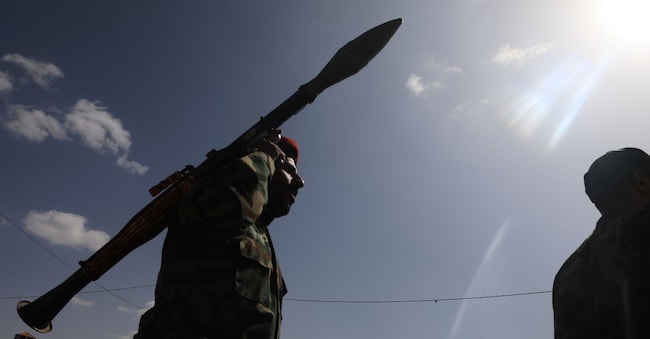
The Houthi militias have captured the port city of Mocha and the strategic Hanish Islands off its coast. This marks a continuation of the pro-Iranian forces’ efforts to gain total control of Yemen’s Red Sea coastline and the Strait of Bab el-Mandeb. This development in the conflict, which began in 2014, risks further complicating the military and commercial situation in the Middle East, a region already grappling with the war in Iran and the blockade of the Strait of Hormuz. This development risks making it even more difficult to get Asian goods to Europe and, above all, creates a further bottleneck for oil and natural gas shipments.
The players involved
Following the Arab Spring, the civil conflict in Yemen began in 2014, when Houthi forces, also known as Ansar Allah, drove government forces out of the capital, Sana’a. The group remains the dominant force in the country to this day: the most populous areas of the country remain under its control. The militias are supported by the government in Tehran, with which they have formed the ‘Axis of Resistance’ alliance. Iran provides funding, training for soldiers, and components for drones and missiles.
The internationally recognised government – known as the PLC – is backed by Saudi Arabia, from which it receives weapons and air support. The Kingdom of Saudi Arabia cannot tolerate the presence of a rival force near its borders, particularly when it threatens commercial traffic in the Red Sea and its vital oil revenues.
To further complicate the picture, other paramilitary groups have carved out spheres of influence within the country’s chaotic landscape. Such as the STC (Southern Transitional Council) forces, which are backed by the United Arab Emirates and form part of the opposition to the Houthis, although they aim to establish an autonomous state in southern Yemen.
The resumption of the conflict
What reignited the conflict, after almost four years of a truce, was the bombing last July by Yemeni government forces of Sana’a airport to prevent a plane carrying Houthi officials returning from Iran from landing. In retaliation, on 20 July, Ansar Allah forces announced a ‘navigation ban’ on vessels heading towards Saudi Arabia. This was in response to what they described as an ‘ongoing siege’ of the country. Houthi militants then attacked a Saudi oil tanker on 24 July and the Jazan refinery the following day. These attacks also triggered a US response: President Donald Trump announced severe punishment in the event of further raids. This threat did not deter the group from announcing, a few days later, a plan to charge tolls to ships passing through the Bab el-Mandeb Strait. This model is similar to that proposed by Iran for the Strait of Hormuz. It is a plan that the group’s recent territorial gains are bringing ever closer to realisation.

