
Yoga and Pilates: the clash between wellbeing and the sports industry
The two disciplines, which share a growing following, are also establishing themselves as structured economic activities, with large-scale events and formal recognition for their teachers
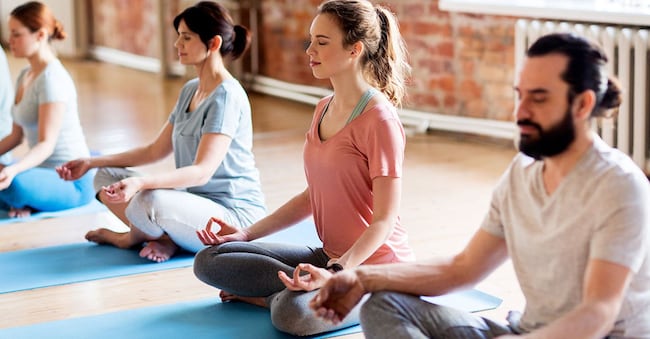
Rather than rivals, they are cousins. Not competing with one another, but complementary disciplines. One, yoga, has a history stretching back thousands of years, the other, Pilates, just a century, yet they manage to bring together those who take up the practice. These two disciplines are seeing significant growth in terms of practitioners and enthusiasts. And, in the case of yoga today (21 June), thousands of people will gather at crowded yet silent events.
5,000 people in Rome
From the Farnesina Stadium in Rome (near Ponte Milvio) to the beaches, and on to parks and squares. “The phenomenon is constantly growing,” says Giancarlo Miggiano, a CSEN-certified yoga instructor, “it’s an activity suitable for everyone, not least because it encompasses various forms of practice. Very often, people think of yoga as ascetic practices involving staying still for hours or performing extremely difficult poses with very challenging body positions. There are different practices involving light or intense physical work, but the interesting thing is that all these practices lead to self-reflection. And they provide a sense of well-being that goes beyond the physical.”
6 million practitioners in Italia
Although there is no official federation – just private associations and clubs affiliated to sports promotion bodies – the numbers involved in this sport are still high. ‘In Italia, there are thought to be around 6 million of us,’ he adds. ‘We’ve had some surprising feedback for 21 June. We’re expecting 5,000 people for the event in Rome. It’s an exceptional event, with all these people gathering in one place. On the same day, there will be other similar events taking place on the other side of the world.’
Then there is the issue of the unqualified instructors – that is, those who teach without proper training. ‘Unfortunately, in this case, it is the students and the people who place their trust in those lacking competence who suffer the consequences. When performing a physical movement, one must be aware of the postural and physiological implications; if someone has sciatica, they must be guided in a specific way.’
The economy
There is also an economic dimension to the practice of yoga, which many would like to see recognised by CONI as a sport. ‘Take yoga mats, for example,’ the instructor continues, ‘they used to cost 10 euros, but today they can cost as much as 200 euros because there are designer ones, which are much more “sophisticated” than the earlier models.’

