
Yoghurt, purchases up 5% in one year driven by Greek, protein and 'almost desserts'
In a market worth 2.2 billion, the latest generation products take space away from the more traditional ones with a very fast-changing assortment

3' min read
3' min read
What happened to Vitasnella? What was for a couple of decades the reference brand in low-fat yoghurt disappeared from shop shelves in 2022, the victim of corporate choices (it belongs to Danone) dictated by the need to follow new consumer tastes, less oriented towards light and more interested in protein-rich products (such as Greek-style strained yoghurt and kefir) and 'indulgence' products increasingly resembling desserts.
These are the two trends that are driving the world of yoghurt, a sector that is worth almost EUR 2.2 billion in large-scale distribution and enjoys excellent health, since, between April 2024 and the same month in 2025, sales increased by around 5% in both value and volume. But not all segments are doing well. "Whole yoghurt is growing very little and low-fat yoghurt is even declining (+1% and -3.4% by volume respectively)," explains Sergio Grasso of Niq. "In contrast, we see strong growth in functional yoghurt (+9.0%), alternative yoghurt and especially Greek yoghurt, which achieved +23%.
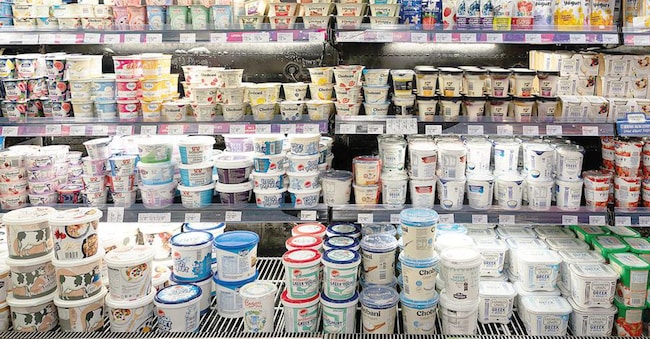
It is not surprising, therefore, that all companies have revised their offer and focused on the most popular products also in order not to lose positions in the refrigerated counters, where space cannot be expanded and competition is played out on the edge of shelf inches. "For us, the new launches, which respond well to the market trend, represent a concrete response to the needs of consumers, who today show an ever-increasing attention to prevention and health," confirms Yoann Steri, digital & data director of Danone Italia, which registers a 6.5% growth in volume in the world of ultra-fresh.
Year after year, the tourbillon of products and brands gets faster and faster, and innovations are more and more borderline across categories, with 70% of products being changed every two years, between reformulations of existing recipes, packaging restyling, launches of new flavours and formats the shelf is in constant turmoil. Activities that seem to be working, given that in the last four years the consumption of yoghurt, fermented milks and desserts has risen by 13.6%, reaching ten kilos per capita per year, reveals a trade study commissioned by Danone Italia. The company wants to increase this to 15 kg thanks to products that respond to the new consumer purchasing rationale. 41% choose yoghurt for health reasons, preferring those with low sugar content and sources of fibre and protein, plus the presence of beneficial ferments for the intestinal microbiota.
Health choices (40%) but also taste preferences (37%) have pushed 26 million Italians to also consume vegetable-based products, which are experiencing a happy moment (+18.5% in volume and +21% in value in total Italy, excluding discount stores) but still represent less than 1% of the total market. Meanwhile, alternative niche products are also growing, such as yoghurts made with sheep, goat or buffalo milk: they are worth half as much as vegetable-based products (EUR 8.6 million) but are going fast (+38% in value and +42% in volume in 12 months).

