
You can protect the prompt if you demonstrate human creative input
Artistic creation, copyright and legal-political perspectives on the fourth day of 'Talk to the future'

Key points
Faced with the dissemination of literary, artistic and cinematographic works co-created with artificial intelligence, the law is faced with the question of whether and how to protect this type of production. At present, in fact, there is no specific rule on how to handle creations performed with Ai, even though Law 132/2025 amended Article 1 of the Copyright Law (633/1941) by declaring that works of human genius also include those 'created with the aid of artificial intelligence tools, provided they are the result of the author's intellectual work'.
The protection of the prompt
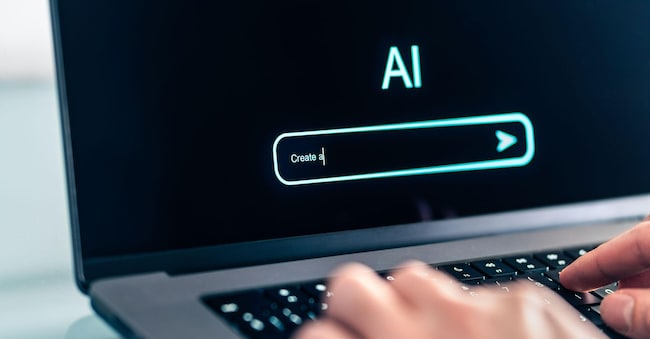
On the fourth day of "Talk to the future", the event organised by the Milan Bar Association to discuss law and Ai, the debate revolves around the relationship betweenintellectual property and technology. "The difference between a work of human ingenuity and one that is not lies in the command the artist gives to the software: no matter how long or articulate it is, what counts is the creative reasoning. Therein lies the protection of the prompt,' explains Lucia Maggi, lawyer at the Milan Bar. For this reason, adds colleague Maria Francesca Guardamagna, the type of protection to be afforded to these works must no longer look only to copyright, but must range to the sphere oftrade secrets and databases.
From the US Copyright Office comes a fairly precise indication on how to distinguish the creations to be protected, keeping the anthropocentric approach central. "If the Ai is used in an assistive manner, the work is protectable; if the Ai is a substitute for human ingenuity, the work cannot be protected", clarifies Cristiano Bacchini, coordinator of the Order's IP commission, who emphasises the also the competitive theme between the different approaches to the use and regulation of artificial intelligence between the United States, China and the European Union. The US Copyright Office has also issued a clear indication on how to distinguish between creations to be protected, keeping the anthropocentric approach at the heart
In this regard, Ms. Guardamagna recalls how in China there was recently a ruling in defence of the protection of works created with Ai because the latter is considered alever of development in the field of art.
The Supreme Court of 2023
Already in 2023, on the other hand, the same Cassazione had ruled on the relationship between artistic creation and the use of software. The case concerned the architect Chiara Biancheri who, in 2016, designed a digital flower that was used without permission by Rai during the Sanremo Festival. Biancheri sued the broadcaster, whose defence revolved around the fact that the work was not handmade. In the last instance, confirming the conviction, the Court of Cassation stated that if the artist is able to prove the creative process, then the work, even if made with the aid of digital devices, should be protected as a production of human genius because it is protected by copyright.

