
Young people and older workers: policies to tackle the challenge of employment
Companies, managers and experts are in agreement: ‘Competitiveness and innovation depend on the continuous development of people’

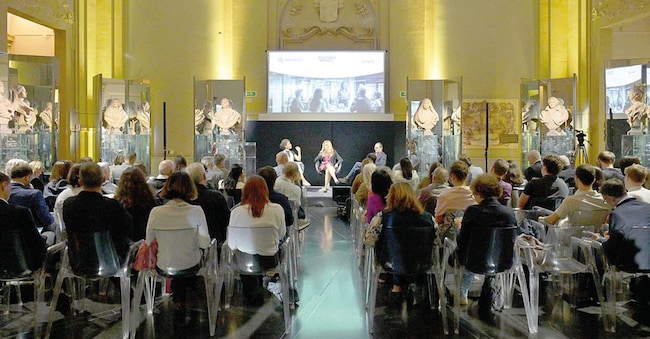
Some organisations are stepping up induction training for young talent, supported by senior staff. Others are retaining staff approaching retirement to ensure that the wealth of knowledge and specialist skills acquired over the years is not lost. Furthermore, some are trialling tools – including innovative ones – to support career transitions, whilst maintaining high levels of competitiveness and innovation. For whilst it is true that early retirement schemes and past measures – whether more or less voluntary – designed to encourage staff to leave are now economically unsustainable, it is equally true that the world of work is changing and companies are committed to experimenting with new forms of organisation, all based on a common principle: valuing the contributions of everyone, young and old alike. This was the key takeaway from the Bologna leg of the roadshow dedicated to corporate culture, organised by 4Manager and the Il Sole 24 Ore Group.
“The changes taking place at the heart of the world of work are a key issue for our businesses,” emphasised Tiziana Ferrari, Director-General of Confindustria Emilia. “ For this reason, as Confindustria Emilia Area Centro, we have for some time been paying close attention to many new challenges, including the extension of working lives and the renewal of the workforce and entrepreneurship, devoting time and energy to training staff at all levels within companies, across a wide range of areas. We believe that what may be seen as problems, if tackled with the right tools and the right motivation, can make a real difference for every company.” Paola Boromei, Chief Operating Officer of the Il Sole 24 ORE Group, is on the same wavelength: ‘The gaps between generations close when skills are shared. Intergenerational teams and mutual mentoring bring together the experience of those who know the business with new digital languages. Technology speeds up work, but judgement is forged between people. That is why the decisive shift concerns not only savoir-faire, but also savoir-être. It is there that generational diversity becomes a competitive advantage.”
This message was also echoed by Elena Bonetti, chair of the parliamentary committee of inquiry into the economic and social effects of the ongoing demographic transition: ‘Having more generations in the workforce is not enough: the benefit arises when the experience of some becomes a catalyst for the growth and innovation of others’. Moreover, “the ageing of the workforce requires businesses to invest in people throughout their working lives,” explained Claudio Lucifora, professor of political economy at the Catholic University of the Sacred Heart. “ Continuous training, the exchange of skills between generations and combating age-related stereotypes help to make the most of older workers’ experience and sustain productivity.”
The point, as Paolo Sestito, Head of the Planning, Organisation and Budget Department at the Bank of Italia, pointed out, is that ‘the economic unsustainability of early retirement is now widely accepted. The issue today is how to make the most of the coexistence of multiple generations within a company, by focusing on incentives other than automatic pay rises and the prospect of a long internal career – prospects that are not very credible in the long run, as they lead to rigidity and a generational divide. We need to focus on values that can bring us together. But to avoid falling into rhetoric, we need to provide a practical foundation for this coexistence, and one way forward may lie in the use of AI, with a team-based operational approach and less rigid organisational structures’. Alice Pretto, Chair of Essay Group and Vice-Chair of Confindustria’s GI, agrees: ‘Generational diversity will truly work when no generation feels it has to ask permission from another to be valued. When experience becomes a shared asset and new perspectives find space to contribute to the company’s growth. Each generation brings with it different skills, sensibilities and ways of interpreting its own era. The challenge is to learn to recognise the value of others, even when it takes forms different from those we are familiar with. It is from this awareness that a shared responsibility can emerge: to make what we are and what we know available for what we can still build.’ For Gaia Giappichelli, of Federmanager’s National HR Commission and Nexi’s Industrial Relations department, it is important to emphasise how Federmanager is implementing new initiatives regarding the management of older workers on the agenda; and, as a representative of the credit sector – a sector which is inherently prosperous and therefore inclined towards support schemes for workers’ transition out of the workforce – she highlights that ‘as part of the discussions on the new sectoral collective agreement, the possibility of introducing measures to support schemes for the development of senior employees within companies is being examined’.
Francesca Mazzolari, Managing Director of 4Manager, summarised the event’s conclusions, setting out the priorities in this area: ‘Early retirement is not only no longer sustainable from a macroeconomic perspective, but it is also of little benefit to companies. Companies that invest in age management see returns in terms of productivity, but legislative measures and public policies are needed.” Among the proposals put forward by 4Manager following consultations with around forty companies is the ‘Skills Relay’, which goes beyond the mechanisms of the current ‘Generational Relay’. ‘The condition for obtaining incentives must be the structuring of skills transfers between senior and junior workers,’ concluded Mazzolari.


