
Young people today are moving 'sustainably', but Italy is lagging behind
Only 1 in 3 use cars and motorbikes and all of them practise a sustainable lifestyle,
starting with the way they move and moving through recycling and reuse
.
by School Editorial Board
 Aggiungi Il Sole 24 Ore
ai preferiti su Google
4' min read
4' min read
Walk, share, recycle, repair and reuse. These are the 5 golden rules, according to the new generations, for a planet-friendly lifestyle. The starting point is sustainable mobility: 60% 'promote' themselves in terms of daily attention to reducing their carbon footprint when moving from one place to another. This aspect is the most important to take care of - according to 39% - in order to reduce one's environmental impact, followed by separate waste collection (24%) and the recovery/reuse of objects (23%). There are also those who pay more attention to virtuous behaviour such as using fewer resources - water and energy in primis - for personal well-being (8%) or less polluting cosmetic products (7%).
L’indagine
This is the message sent out to the community by the 2,500 students - aged between 15 and 35 - who took part in the survey 'Young people and sustainable mobility' conducted in recent weeks by Skuola.net for ECO Festival della Mobilità Sostenibile e delle Città Intelligenti - Rome, 17-18 September - the event that showcases the state of the art of the ecological transition in the transport of people and goods in Italy.
lifestyle
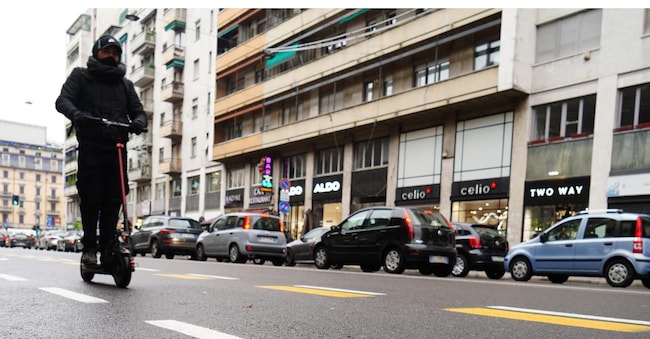
.But there is more. Because the commitment of Generations Y and Z is not limited to words. It translates into everyday behaviour. More than 2 out of 3, in fact, claim to have all but abandoned the most polluting means of transport: 33% prefer, where possible, to use public transport (buses, trams, subways, local trains, etc.), 13% divide their time between bicycles and scooters, 4% are already experimenting with other forms of electric micro-mobility (such as hoverboards, monowheels and the like), and 19% go directly on foot when they have the chance. Only 31%, therefore, continue to prefer classic motor vehicles (cars, motorbikes and motorbikes), as guest or driver. The use of online shopping - which, according to some studies, can reduce C02 emissions by almost three times compared to a purchase in the physical channel - is also one of the contributions to the cause, albeit unconsciously: only 16% are aware of this while 8% think that e-commerce even has negative environmental impacts.
The moves towards transition
.What are the moves that, according to young people, could ease the transition? First and foremost, a reorganisation of public transport, i.e. the means they know best as they are most used. For almost half of them (45%), an increase in the frequency of journeys would suffice, 26% would rather focus on extending the network to as many city areas as possible, 21% think that limiting ticket and season ticket prices would be the optimal solution, and only 8% would prioritise action on vehicle safety and comfort. Because as things stand at present, it is undeniable that the car, especially in certain contexts (for work, logistical, family needs, etc.), remains an indispensable or almost indispensable means of transport. The same young people, projecting themselves into the future, nonetheless plan to buy one: for 61% it is practically certain, 23% could give it up only if car sharing or rental services were to grow and become established. Just 16% rule it out a priori. A figure that apparently runs counter to the numerous studies that see Generation Z far removed from car ownership as a status symbol, but which reflects the young people's mistrust of what the country is doing for the ecological transition.
Italy is slow going
.Only 30% of girls and boys think that Italy is working effectively towards this goal, both economically and culturally, and therefore they also ask adults, especially those "who matter", to make an effort to make decisions and implement actions that accelerate change. In the end, more than 1 in 2 foresees a very long time to achieve it and 1 in 4 believes that smart cities and sustainable mobility in Italy are an unattainable utopia. How, for example, to make a decisive push towards an ecological approach to the car industry? According to those interviewed, action should be taken on two fronts. On the one hand by increasing the presence of recharging stations in our cities: for 1 in 3, this cannot be ignored. On the other hand, by encouraging the switch through bonuses and incentives: 31 per cent put them first. Only in second place, on the other hand, are campaigns to raise awareness of the benefits of electric vehicles for the planet and the benefits that can be had thanks to these vehicles (free parking, access to historic town centres, etc.): 18% consider them a priority in both cases.
Brand connect


Newsletter Scuola+
La newsletter premium dedicata al mondo della scuola con approfondimenti normativi, analisi e guide operative
Abbonati