
Young people and territory drivers of donations in Italy
Fundraising. Gen Z continues to donate despite the crisis, according to data from Bva Doxa for Rete del Dono and PayPal

3' min read
Key points
3' min read
2023 was the worst year of the last ten: 80% of online users donated, down 4 points from the previous year, according to Bva Doxa's Donate 3.0 research for PayPal and Rete del Dono. The winds of war and inflation have taken their toll. But it is young people who have stemmed the decline: in the face of a drop in generosity by baby boomers (the 85% who donated in 2022 fell to 76% in 2023) and Generation X (from 83% to 78%), Generation Zeta and millennials have continued to donate (from 85% to 84%). "It seems that the shadow of wars and the economic crisis have less of an impact on young people's attitude to donate than other generations, they want to invest in the future and they want to be part of and be protagonists in change, as can be seen from the participation in volunteering, which falls in all age groups while it remains high among young people," explains Valeria Vitali, founder of Rete del Dono, which last year collected over 3.5 million donations on the platform. In fact, while there has been a drop from 33% to 29% overall, the number of young people who say they are involved in volunteering is substantially stable at 34%.
And young people, like women, also have a different motivation for giving. However, while the majority donate to change things (52%) - while the minority donate to cover needs that would otherwise not be covered (48%) -, the most committed on the first front are GenZ, together with women (with 56% for both).
Venturi: 'From young people and women push for change'
"People no longer donate to satisfy needs with a restorative logic, that is just the tip of the iceberg. There is a drive to contribute to change, which is stronger in women and young people,' comments Paolo Venturi, director of Aiccon, 'and it is relevant when we talk about that evolved form of giving that is volunteering, which is increasingly evolving into a dimension of activism, especially for young people, which has a tension towards social change'.
Donation is enhanced when it expresses a local cause
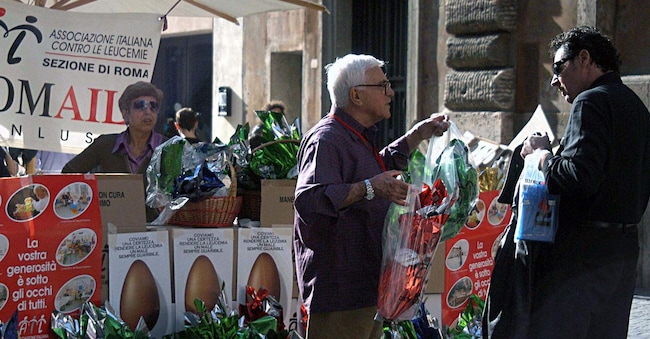
.The other innovative aspect that emerges from the survey concerns territory. Physical initiatives prevail as the contact strategy suggested by online donors, who prefer it as an option in 47% of cases compared to television and digital (both at 24% respectively). The Donate 3.0 survey shows how this preference is shared by all generations of donors only with slightly different nuances (46% millennials and Gen Z, 47% Generation X, 48% baby boomers). Among direct initiatives in particular, proximity initiatives prevail (headquarters, gazebos, events such as concerts and exhibitions). Even when deciding to make a donation, territoriality is an element that is chosen a lot (31%) and quite a lot (42%). "The physical dimension is relevant from two points of view," explains economist Venturi. "Donation is enhanced when it is within an experience, an encounter in person. In addition, the donation is strengthened when it expresses a cause linked to the territory where one lives'. In short, the fundraiser will have to take this dimension into account, knowing how to integrate and recombine it with digital. "The more the digital, global dimension grows, the more the physical, proximity dimension is able to make a difference. It is the phygital factor, digital brings the physical, local dimension back in, the two dimensions coexist,' adds Venturi. This prospect could have potential for the thousands of small associations scattered across Italy, which could seize this new demand of donors - including young ones - who return to the territories, to the places and can seize the small good causes scattered locally. Since a few weeks, it has also been possible to easily find third sector organisations at a local level: Italia Non Profit has launched the first complete map of non-profit organisations in Italy that geolocalizes the organisations, activities and social causes present in the territories. This result is made possible by the introduction of the Single National Third Sector Register and the numerous public registers present in the territory and thanks to the participation of organisations.
Less focus on health, more on disability
.That proximity is a value is evidenced by the numerous area-based crowdfunding campaigns that find support, even from distant communities. And crowdfunding remains a consolidated mode of donation (21 to 19%), behind direct donation to an association (63 to 60%) and solidarity gift (74 to 71%).


