
Zaccheo (Art): 'Motorways, tolls down from January. Extension for commuter trains on the Rome-Florence Av".
The president of the Transport Regulatory Authority, Nicola Zaccheo, announces the effects of the unit calculation scheme for motorway charges. And for the Rome-Florence direttissima, an exemption is ready for the circulation of regional trains on the high-speed route until 2026

5' min read
Key points
5' min read
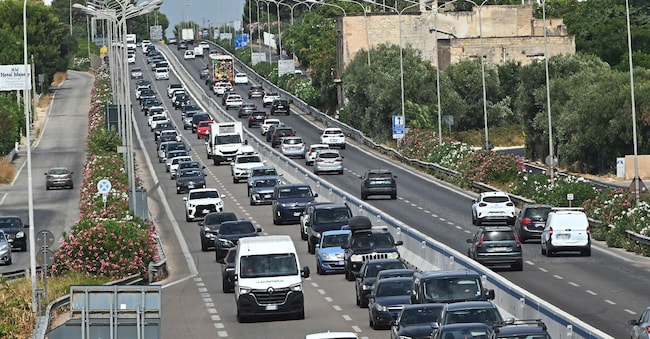
The revision of the scheme for determining motorway tolls initiated by the Transport Authority already had the flavour of a small revolution in its premise: no more Babel of tariffs, all ahead with a unitary calculation system that keeps the ticket well tied to the level of investment. And now that the process launched by the two resolutions (74 and 75 last May) is almost at the finishing line, it is time for Art to take stock with the annual report that will be presented to Parliament today. "The reform of the concession system has given us the cue to review all the regulatory measures in the motorway sector: at present the process is still underway, but I am also very satisfied with the relationship with the minister and the Mit because the new rules go in the direction of a strong rebalancing of the concessions". A game, it is no mystery, on which in the past there have been disagreements between the Authority and the ministry and which now, however, is travelling under the sign of a common purpose. Having shelved the hypothesis of a single toll, the Pedemontana Veneta model having faded, Art has gained more space and a stronger role. "Our opinions,' Zaccheo continues, 'are not only binding but also prescriptive.
Highway tolls
The new structure of tariffs passes through 'the determination of the WACC (the weighted average cost of capital, ed.), the remuneration of capital, which certainly goes more towards market levels' but also and above all 'the application of the figurative posts, which today I believe go in the direction of being adopted in a fairer, more equitable manner'. And then 'incentives have also been put in place to absorb these posts in the shortest possible time, and important stakes on the values of taking over concessions'. Art's number one speaks of 'a balance between concessionaires and users that will result in a fairer and more sustainable toll'. When? 'The idea is that the new tolls will come into force on 1 January next year, obviously as the old ones are updated: the novelty is that the unit calculation method will apply to new concessions but also to those in force'. There are no estimates on these numbers yet, but 'the aim is to have a more sustainable toll and therefore a lowered toll, strongly linked to the investments made'. In short, 'there will be a general lowering of the toll'. A revision that will be much more palpable in 2027 'because we will still need months of adjustment, but in some sections, in the EFPs already ready, the year is 2026'. The levers will also be on the annual variations, so 'the famous price cap, which determines the annual toll increases, will plausibly be under 1%. Amortisation and depreciation will also be under control, in some extraordinary cases, going to the useful life of the works: all this put together will have a positive impact on tolls, by how much we will see, it will obviously vary greatly from concession to concession'.
I Pef
Zaccheo also welcomes the news on the Pefs, a weak link in a system that used to live on perennial extensions "and which now may cost the forfeiture of the concession for those who do not comply". On the investment front, which all together, according to Art, would amount to almost 44 billion from 2024 until the expiry of the concessions, "there is an evaluation by a commission of the Ministry: there are still no final determinations, but cuts have been made and as far as I am concerned I confirm my perplexity about these numbers; but it is also very important to continue to maintain that the commitments made, the investments already present in the EFPs approved in previous years, must be honoured".
Railways: extension arrives for commuters on Rome-Florence
On the railways chapter, Zaccheo announces the extension of the circulation of commuter trains on the Rome-Florence Av network for the whole of 2026 and partially also for 2027: a chapter that has inflamed the summer debate with protests from the regions concerned and commuter associations worried about seeing local trains displaced from the - more efficient - high-speed network. "The derogation in force for years for the circulation of trains below 200 km/h will expire on 31 December, but we realise that there are major delays in the delivery of new rolling stock to the regions: this is why we will grant a further extension to 2026 and then partially to 2027. But let it be clear that from 2028 it will be difficult to sustain further extensions. We have also discussed this issue very constructively with Minister Salvini.
The Rail System
The first was the toll, with an initial rejection of the Rfi proposal, which was then accepted after the changes had been made", but "there is another element: we decided to help the freight sector, which is in great difficulty. For them the toll has been reduced by 30%, a reduction that Rfi, thanks also to discussions with Art, has decided to bring forward to 1 July, compared to the date of 1 January 2026 initially planned". The second hot topic, explains Zaccheo, "is the one linked to the tracks, to capacity: we are well aware of the major problems present on the national railway infrastructure, especially on the high-speed side: the numerous construction sites and other causes make the system, especially in some sections, extremely critical," but then after "an orderly resolution towards Rfi the situation has been recomposed with the acceptance of all our prescriptions and I must admit that at the moment there is a positive change of pace compared to the past. On the horizon there are the French, who will soon enter the Italian market: 'Even if at the moment the infrastructure is suffering, the operator will enter, because one of the prerogatives that the authority has is to allow non-discriminatory access to everyone, but under the same conditions as others, they must enter on the basis of available capacity: so we will not be put under pressure, all railway companies are treated by the authority in the same way, without shortcuts for anyone'. On the hypothesis of private entry into investment on Av, Art's chairman says he is in favour 'because the entry of private capital with the right remuneration would allow an important relief of investment from the state coffers'. On this front, 'discussions are already underway with the FS group because the role of the authority in a similar process is fundamental so that the interests of everyone, especially end users, are protected'.


