
Zaha Hadid without the rhetoric of the global superstar
The exhibition dedicated to the architect at the Luma Arles can be visited until 31 March 2027

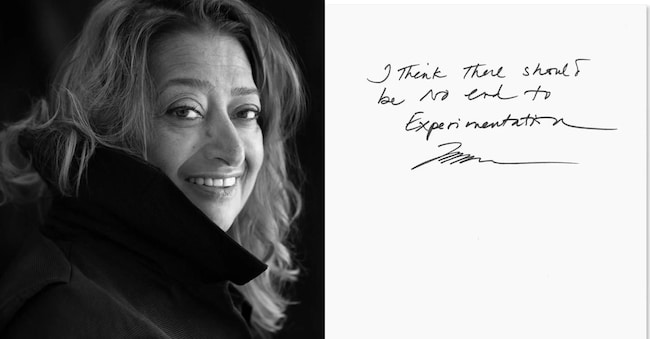
In his career, Hans Ulrich Obrist - the current director of the Serpentine Galleries in London - has always practised curating as an art of endless conversation, but more than organising exhibitions, he "builds mental trajectories, constellations of voices and archives in perpetual motion", as he likes to put it. Indeed, in his method, the monumental fixity of art history does not exist, as each artist keeps talking, deviating and contradicting himself. This is why the sixth chapter of his Hans Ulrich Obrist Archives dedicated to Zaha Hadid cleverly avoids the risk of solemn commemoration.
10 years since disappearance
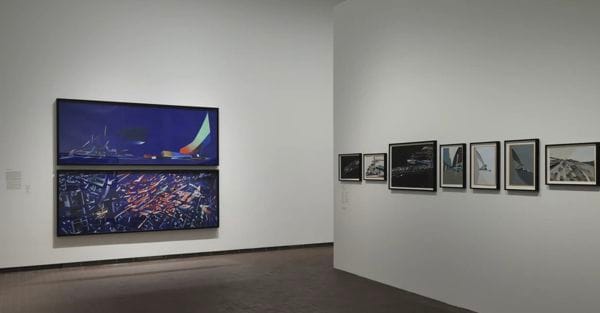
Ten years after the Iraqi architect's death, the exhibition set up by Luma Arles chooses to tell her story through dialogue, intellectual friendship and the duration of an exchange that spanned cities, continents, projects, obsessions and visions. When Obrist met Hadid in the late 1990s, her figure already possessed something legendary. There were still relatively few buildings constructed, but her paintings and perspectives had already altered the very lexicon of contemporary architecture. The panels looked like abstract earthquakes, Suprematist fragments thrown into the urban landscape, geometries that tilted to the point of losing all Cartesian obedience. Even before digital technology made certain formal complexities feasible, Hadid had turned drawing into an absolute theoretical laboratory, almost into a form of spatial narrative. Architecture, then, in her sheets, never just represented buildings, but produced speed, tension and collisions. The exhibition, significantly titled I Think There Should Be No End to Experimentation, brings everything back to that original point by highlighting the fragile and feverish instant of invention. You will find calligraphic paintings, notebooks, perspective studies, archival materials and interviews recorded between 2001 and 2013 that together compose an itinerary that resembles more of a mental atlas than a canonical retrospective. Obrist does not expose Hadid as one would expose a classic to be musealised, but reactivates her, puts her voice back into circulation, her very rapid way of thinking and that almost physical ability to imagine space as an unstable and mutant organism.
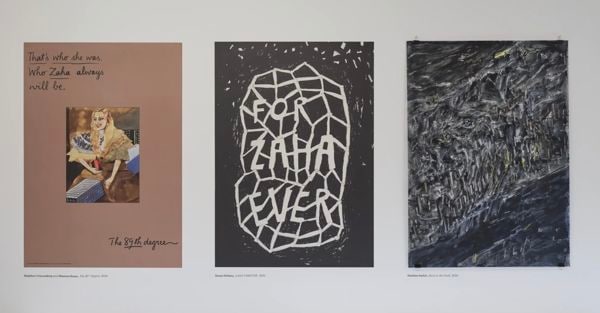
Inevitably, shared chapters also resurface: the conversations between London, Basel and Paris, the Meshworks project for the Villa Medici, the shared experience at the Serpentine Galleries, where Hadid had already intuited that a temporary pavilion could become a theoretical device even before becoming an architectural one. After all, the bond between the two stems precisely from that conviction that art, urbanism, design and curatorial thinking belong to the same mobile field. Then Arles arrives and the exhibition changes temperature, because Luma is not just an exhibition centre, but a place that seems designed to host radical ideas. Frank Gehry's tower emerges in the Camargue sky as an irregular metallic mass, as if it were a futurist lighthouse bathed in the white light of the south. All around it survives the harsh landscape of the Parc des Ateliers between disused railway tracks, Roman stone, dry wind and dusty vegetation. The result desired by the curator was to subtract Zaha Hadid from the rhetoric of the global superstar and return her to her most authentic nature, which is that of a restless mind that has never stopped pushing disciplinary boundaries. Rather than celebrating a myth, Obrist reconstructs the rhythm of an intelligence in motion and does so in the right place, where even the wind still seems to pass through the architecture without being noticed.
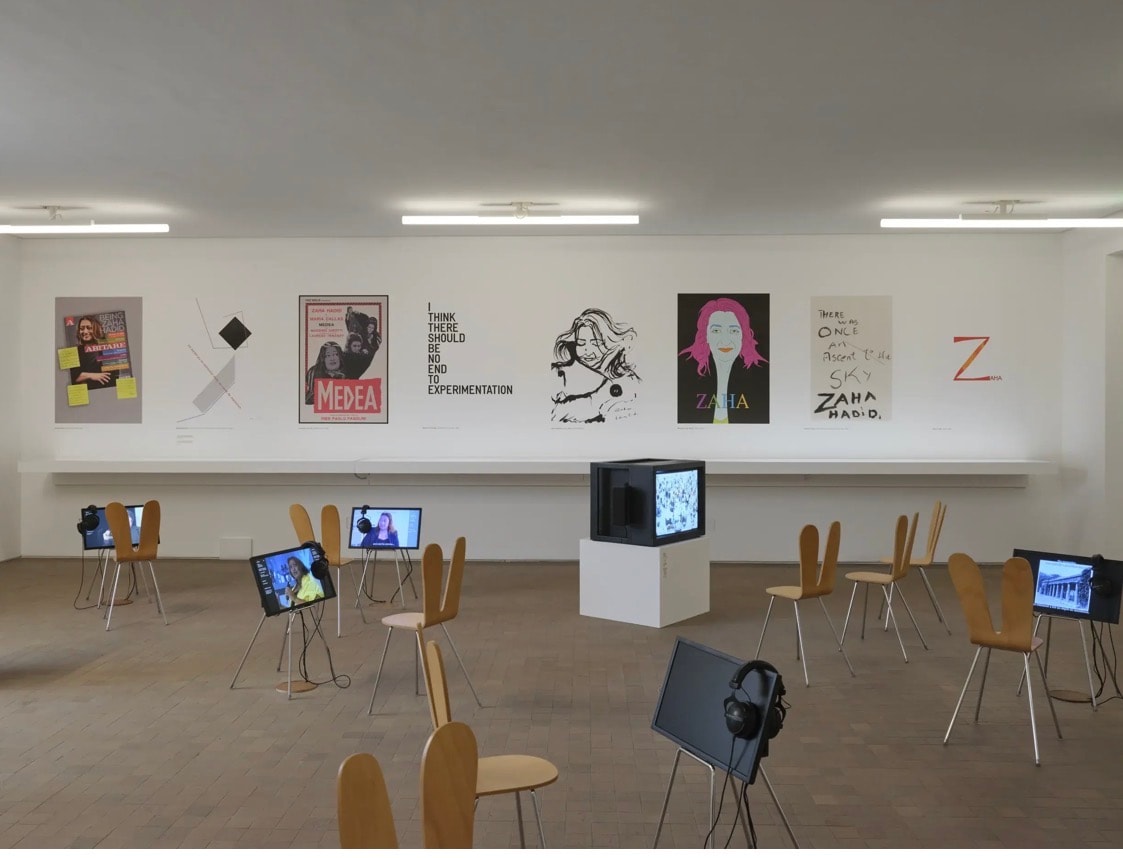
Zaha Hadid, I Think There Should Be No End to Experimentation, Luma Arles, Arles, France until 31 March 2027

