
Zambia: vote counting resumes following a halt and controversy
The electoral commission has suspended the vote count, citing ‘violence’ at polling stations
from our correspondent Alberto Magnani
 Aggiungi Il Sole 24 Ore
ai preferiti su Google
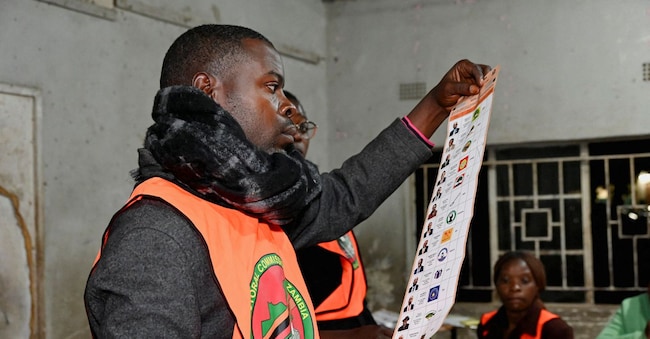
NAIROBI – Zambia’s Electoral Commission has announced that it has resumed the counting of votes from the 13 August general election, following a suspension that had sparked outrage amongst the opposition. “I am pleased to inform you and the nation that the threat to the security of the electoral process has been contained,” said Commission Chairwoman Mwangala Zaloumis, referring to reports of attacks and interference that had justified the suspension of the count. The first results will be announced at 10.00 pm local time, which is the same time zone as Italia.
The opposition has interpreted the suspension as an underhand move to conceal or delay the showdown for as long as possible, in an election seen as a test of the economic and political resilience of a mining hub with links to the US, China, the EU and other players. Incumbent President Hakainde Hichilema is the favourite and is projected to secure a second term in Lusaka, but opposition leader Brian Mundubile has publicly claimed victory and is pressing the commission to release the final results. Il Sole 24 Ore reported a weakening of the kwacha against the US dollar following the announcement.
The opposition’s allegations and Zambia’s vulnerabilities
In a video posted on the afternoon of 14 August on his Facebook page, Mundubile condemned the suspension of the vote count ‘in the strongest possible terms’ and called on the commission to proceed swiftly with the announcement of the results. These tensions form the backdrop to an election that took place against a backdrop of uncertainty, caught between investor optimism and internal fragilities in a country rich in minerals and strategically important for infrastructure projects such as the Lobito corridor.
Zambia, Africa’s second-largest copper producer, has got back on its feet following its 2020 default, thanks to debt restructuring, inflation halved between 2025 and 2026, and growth prospects of 5 per cent for the current year. However, the macroeconomic successes, claimed by Hichilema, are at odds with accusations of an authoritarian backslide under his leadership and the unresolved tensions within the economic fabric itself. Among the pressing issues are a poverty rate that exceeded 60 per cent in the World Bank surveys in 2025 and a cost of living that rose by up to 40 per cent between 2021 and 2026 for essential goods.
The outbreak of unrest or open clashes would undermine Zambia’s reputation for political stability, having undergone three peaceful transfers of power since 1991 and still regarded as a solid example of peaceful alternation of power at regional and African level. Hichilema was up against a total of 13 rival candidates in the election, although analysts had expected that Mundubile alone might pose an unknown factor in the final result.


