
Zangrillo: ‘A real turning point for public sector contracts; more funding now for security and local councils’
The Minister for Public Administration: “The centre-left agreed to pay rises of 3.8 per cent against a 15 per cent inflation rate. The new agreements provide for price reviews.”

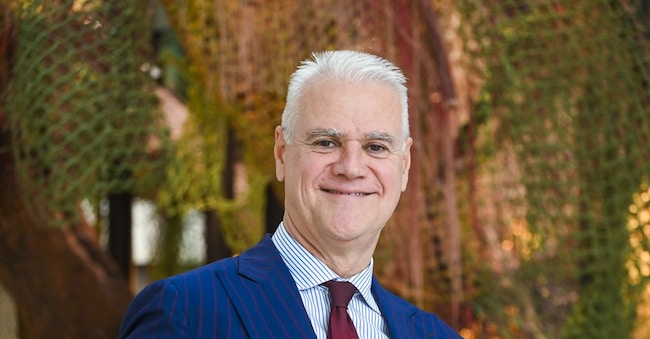
We have achieved a real breakthrough on civil servants’ pay agreements. The figures speak for themselves: 20 renewals in four years, with the duration of negotiation rounds reduced from 20 to six months, to the extent that, for the first time, we are on the verge of concluding negotiations across all sectors within the three-year reference period, rather than afterwards, as has always been the case until now’. Paolo Zangrillo, Minister for the Public Administration, has commented on the survey published yesterday by *Il Sole 24 Ore* detailing the agreements reached between the trade unions and ARAN, the public sector bargaining agency, which has sparked political controversy. “We have changed our approach, and this is not a technical detail. It is a matter of respect,” Giorgia Meloni reiterated in a post on X. Former Minister for the Public Administration Marianna Madia (IV-Casa Riformista) accused the Prime Minister of telling “blatant lies, because it was the Renzi and Gentiloni governments that changed the approach, renewing the contracts that had been frozen by the Berlusconi government”. Zangrillo countered: “The resumption of renewals in those years was not a political choice,” he said, but the consequence of a Constitutional Court ruling on an appeal by Confsal, which forced those governments to take remedial action; and which resulted in increases of 3.48 per cent whilst cumulative inflation stood at 15 per cent. Given those figures, I would be rather ashamed to say that our contracts do not keep pace with inflation. It may be that the heat is causing a lapse of memory, but I am astounded that such a statement should come from someone who experienced those events first-hand whilst holding an important institutional role.”
However, you yourself had to acknowledge at the time that the funds allocated for 2022–24 were not sufficient to counter the surge in prices triggered by Russia’s invasion of Ukraine. And now the impact of the crisis in the Middle East threatens to undermine the increases planned for 2025–27.
Please note: during the 2022–24 period, we dealt with an exceptional set of circumstances, concentrated within a short timeframe, by implementing a 6 per cent across-the-board pay rise and multiplying the contractual holiday allowance to speed up the process. However, in addition to the collective agreements, there were other measures relating to supplementary funds and allowances, which led to an increase in actual pay of around 13 per cent, as confirmed by ISTAT and INPS data processed by ARAN. This rate does not quite match inflation, but it comes very close. Looking ahead to 2025–27, the currently planned increases of 5.4 per cent are sufficient to offset the loss of purchasing power. It is precisely to ensure that salary protection is put in place as soon as possible that I have pushed to speed up the renewal process. On Tuesday, an agreement was reached on local authorities; on Wednesday, we stepped up efforts on the healthcare sector, which we aim to finalise before August; and today (yesterday, ed.) in the Council of Ministers, we approved the contract for the central public administration and the 2022–24 contract for education and research managers.
If the geopolitical landscape remains unchanged, however, the old inflation forecasts could become worthless.
In fact, in the most recent national collective agreements, we have included a clause providing for a review next year of any discrepancies between actual pay and the price index, to determine whether further action is required. We have established a consultation mechanism that obliges both parties – the government and the trade unions – to address the issue in a practical manner.


