
Zegna, between quality and composure the essence of Italian elegance
At Malibu, the collection designed by Alessandro Sartori is a hymn to textile research and a soft, concrete style, a demonstration of how fashion really counts when it interprets the beauty of real life

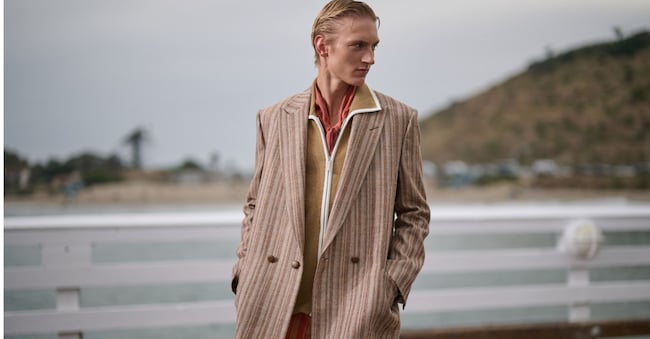
Since last year, Zegna has adopted a new strategy: if the winter fashion show of artistic director Alessandro Sartori remains a fixed appointment on the Milanese calendar, for the summer collection the choice is to move to different destinations, a bit like the cruise shows.
It is a way as much to generate targeted attention as to involve the most exclusive customers, to whom the exclusive Villa Zegna experience is dedicated in the days following the show, halfway between showroom for personal orders, club and total immersion in a lifestyle.
Last year the choice fell on Dubai, a vibrant market at the time. This time Zegna is focusing on Los Angeles, joining the large group of brands and maisons that have organised events in the United States in recent months, with the aim of consolidating success and presence in a market that has proved positive and resilient in the face of the general slowdown in the sector.
The show takes place outdoors, on the Malibu pier, among striped umbrellas and folding chairs. The flavour is unmistakable: summery and holiday, but far from mannerist escapism, albeit evocative of a patrician and well-codified way of spending the warm months. The protagonist is the rhythmic play of stripes, which run irregularly on tailored shorts and flowing shirts, but also on seersucker or raw silk suits, to which are added nautical-inspired windbreakers and blousons made with leather and canvas inlays, as well as crocheted leather bomber jackets and shirts with squared lines in plongé nappa leather. Characterising the whole is the graceful and composed approach, far removed from the prevailing 'laissez-faire' and equally mannered sloppiness.
Alessandro Sartori has the rare ability to honour classicism without becoming ensnared by it, which is why his work is progressive and evolutionary. This time he draws inspiration from the tradition of the villeggiatura, the local custom of retiring to a villa by the sea or in the country for an extended stay: a custom that saw its apogee between the 1950s and 1970s and that was not limited to a simple holiday, but involved transferring life itself for an entire season - family, rituals, elegance - from here to there. Everything like in the city, but with a soft cadence and expression.

