
Rubio: ‘We have invited Putin to the G20 summit in Miami.’ Poland: Russian helicopter violates airspace
The US Secretary of State meets Lavrov on the sidelines of the UN General Assembly. Tajani: “Risk of Russian interference in the European elections”. And Zelensky asks Trump for a military aid package for the winter, including Patriot anti-missile systems

Key points
On the one hand, provocations; on the other, diplomacy.
In the first instance, the Polish army reports that a Russian helicopter violated Polish airspace for 42 seconds. This is reported by The Guardian. The Russian armed forces’ Mi-8 helicopter crossed into Polish airspace by 300 metres, remaining there for 42 seconds. “The flight was monitored by our armed forces’ radar systems. Fighter jets were scrambled immediately, whilst ground forces and vehicles remained on high alert”, Warsaw stated, adding that “the nature of the incident suggests that Russia is once again testing the readiness of our air defence”.
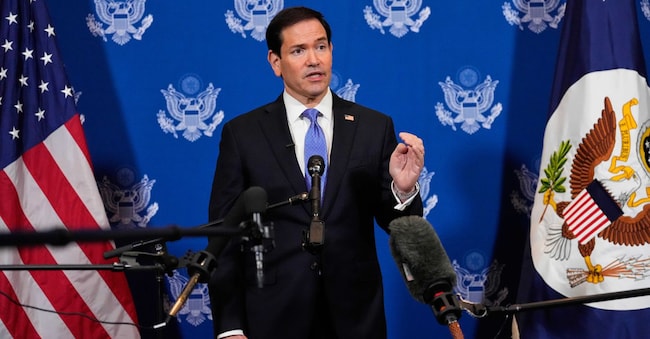
In the second instance, the US Secretary of State, Marco Rubio, announced that Vladimir Putin had been invited to the forthcoming G20. “I think it’s an opportunity to engage in dialogue not only with the president but with other leaders; I hope it’s an invitation he will accept,” Rubio said during a press conference on the sidelines of the UN General Assembly with his Russian counterpart, Sergey Lavrov, reiterating that the Russian leader’s potential attendance at the summit to be held in Miami in mid-December “would be another opportunity” for him to meet with Donald Trump.
“This president is willing to talk to everyone; he is a businessman who uses common sense. To solve problems, you have to meet with the people you disagree with,” the Secretary of State added, referring to the occupant of the White House.
The meeting between Rubio and Lavrov
According to Rubio’s comments following his meeting with Lavrov, Moscow and Kyiv would be willing to consider a ‘grain and energy truce’. Global wheat prices have soared due to attacks on ships and port infrastructure, which have effectively blocked shipments of goods from the Black Sea region since July.

