
Zero, frozen or discounted: price takes centre stage in storytelling once again

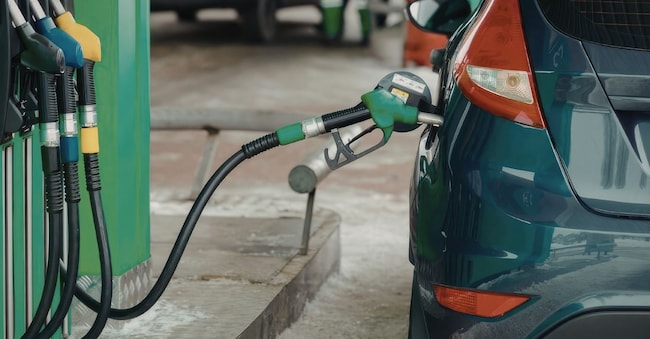
It is every motorist’s forbidden dream to drive down a road with a petrol station sign showing a price stuck at zero. In America, it actually happened – at least in an advert. Large digital billboards that appeared in Times Square, New Jersey, Philadelphia, Houston and Dallas replicated the familiar petrol station price displays, but instead of the fuel price, the number zero stood out prominently. So, to illustrate the energy transition, the campaign doesn’t show batteries or charging points, but rather a price. It’s a provocative move by Veloz, a non-profit organisation committed to promoting electric mobility: if you drive an electric car, the campaign suggests, the price of petrol simply drops out of the equation.
The price is the message
Whilst for years the price has been tucked away at the bottom of an advert – written in small print, crossed out, accompanied by an asterisk or even omitted altogether – today it is returning to the centre of the relationship between brand and consumer, driven by inflation, the erosion of purchasing power and the ability of algorithms to constantly alter the terms of the offer. This is ‘price storytelling’, a marketing strategy centred on price, transforming it from a commercial variable into a form of language, from a number into a message, at a time of galloping inflation across the major European economies. And then there are the growing energy tensions, which are transforming price from a simple number into something that needs to be controlled, lowered, frozen and, above all, explained. NielsenIQ has captured this shift in the landscape: greater price sensitivity is fuelling competition and helping to curb price rises. Italia is the country with the highest price elasticity amongst the major European markets: Italians react more strongly to price rises by switching their shopping habits, retailers and products. NielsenIQ reports that households visit an average of 6.3 physical retail outlets per year and that the frequency of purchases has risen by +7.6 per cent: in short, people are shopping more often with more selective shopping baskets, seeking out value for money. ‘This is evidence of a more active and informed consumer. Visiting more retailers and shopping more frequently means constantly comparing price, quality and value for money before deciding where and what to buy. It is a different kind of loyalty: no longer automatic towards a retailer or a brand, but earned each time through real and verifiable perceived value. For industry and the retail sector, this means that the relationship with the customer must be continually built and renewed, focusing on consistency, transparency and the ability to respond to increasingly diverse needs, rather than on habit or mere purchasing inertia’, says Enzo Frasio, Managing Director of Nielsen IQ Italia and President of Assirm, the Italian association representing market research companies. This pressure exerted by consumers is tangibly changing production and distribution strategies. “High price sensitivity is fuelling competitive pressure throughout the supply chain, which has helped to keep inflation in the fast-moving consumer goods sector in check compared with other major European markets. The response has been to invest in efficiency, productivity and collaboration, as well as in product innovation and the breadth of product ranges. In practice, consumers now play almost the role of an arbiter: they reward those who offer consistent value for money over time and penalise those who fail to maintain it. The lesson for brands is that perceived value is built on transparency and consistency between price and promise, not just on the price level itself,” concludes Frasio.
Around the world
Creative yet practical. That is the brands’ response. In Belgium, Ikea launched the ‘Price for moment’ campaign: the price remains the same, but is divided across all the moments in life that the item will bring, with an extended narrative. In the UK, it has done almost the opposite with ‘Hidden Prices’: the price is hidden behind the product to let the materials and quality speak for themselves first, turning its very absence into a statement of value for money. In Australia, Aldi launched a campaign based on a counterintuitive concept in the age of flash sales: you don’t have to rush. The price will still be there next week and the week after that, conveying stability. In Italia, the same brand has incorporated savings into its advertising production: a reduced budget, staff involvement and a clear message. In the UK, Tesco Mobile has turned anxiety about bills into a promise of certainty with ‘Frozen prices’: prices locked in for the entire duration of the contract, whilst inflation pushes tariffs upwards. In Australia, IGA has built its ‘Can’t believeable prices’ campaign on consumers’ amazement at prices lower than expected. In Germany, Penny has gone so far as to print the price directly onto the packaging of certain products, making it part of the packaging and the brand’s identity. Then there are the smaller businesses, where the experiment takes a more radical turn. In Austin, Texas, the Italian restaurant L’oca d’oro has introduced a ‘pay what you want’ scheme: customers order from the standard menu and decide how much to pay at the end. A few weeks ago, over a hundred restaurants in at least thirteen countries took part in ‘Paga Lo Que’, an initiative launched in Mexico City. In participating establishments, only the bill changes, leaving the margin up to the customer. It is a price-based co-creation mechanism in which the consumer ends up having maximum control. ‘Price is no longer just a commercial lever but a language through which a business communicates its values: transparency through fixed prices, customer focus through targeted promotions, and personalisation through dynamic offers built on data. The way a company structures and communicates its pricing therefore becomes part of its brand positioning,” concludes Frasio. Head and heart, data and trust, economics and emotion. Because price now reflects the value of the seller’s promise.

