
100% vegetable products in increasingly strategic positions in supermarkets
The choices of Italian large-scale retail chains in an increasingly strategic segment, but is it better to integrate or isolate?

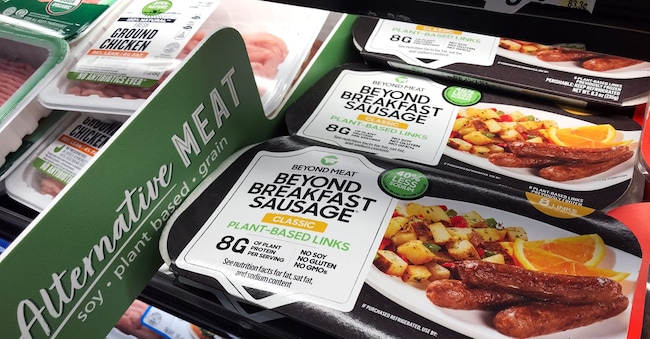
Established during the past decade in every point of sale of the large-scale retail trade (GDO), be it supermarket, hypermarket or discount shop, the100% plant-based areas serve to group together the alternatives first of meat, then sliced meats, cheese, eggs and finally fish. The bulk of the non-animal proteins are thus placed in these spaces favouring the shopping of the approximately 10% of Italians who are vegans or vegetarians, to whom the products are dedicated.
With the rise of reducetarians and flexitarians and the improvement in the quality of plant-based products, animal-free foods are now primarily chosen by those who also consume meat and fish (the Beneo Global Plant-Based Survey 2021 conducted by Insites Consulting explicitly mentioned flexitarians as the 'driving force' of the plant-based segment). One wonders how much this 'clean' oasis is considered by consumers as a whole, whether it favours or penalises them, and whether or not the brands are questioning it.
Aldi
Aldi, which entered the Italian market in 2018, does not fail to provide its customers with a 100% plant-based assortment through the growing Pl MyVay line. "More and more people," says Sofia Tugnoli, Director National Buying Aldi Italia, "are choosing this type of diet for mainly ethical reasons, but there are not a few cross-sectional consumers who want to integrate original and tasty plant-based options into their daily choices. As far as the fresh meat segment is concerned, we considered it strategic to group analogues in a single area dedicated to veg. We believe this solution improves the customer's shopping experience, offering a wide and highly visible range of plant-based products.
Outside the cross-category, on the other hand,vegetable alternatives to yoghurt to broaden visibility and intercept a broader and more diversified target. 'For UHT vegetable drinks,' continues Sofia Tugnoli, 'we follow a different logic: they are placed next to UHT milk, a consolidated and widely adopted choice in large-scale distribution, which meets consumer expectations and facilitates identification. Vegan snacks are also placed next to similar snacks, with clear visual references through special logos. In some cases, the plant-based variant is the only option available, reflecting the commitment to offering increasingly inclusive food choices in line with market trends'.
Coop
Coop, essendo una realtà formata da cooperative, puntualizza che il livello nazionale non interviene su assortimenti e strategie di display; nelle linea guida però ci sono il riconoscimento dell’esigenza di un pubblico che predilige l’animal free e l’aver creato una categoria apposita nei freschi libero servizio. «Il fenomeno plant-based – analizza Daniela Fiocchi, responsabile segmenti veg-vegetariani Prodotto a Marchio Coop Italia – è esploso recentemente passando da supernicchia a macrotrend alimentare, capace di coniugare alimentazione equilibrata, etica e sostenibilità ambientale; le proiezioni lo vedono ancora in espansione. Da tempo stiamo andando incontro a queste esigenze con sempre più attenzione, tanto da sviluppare, circa otto anni fa, un’offerta dedicata con il nostro marchio. Il comparto della gastronomia vegana e vegetariana in Coop vale circa 34 milioni, con un aumento del 3,5% anno su anno. Lo spazio dedicato al veggie è via via aum

