Exemplary local authorities

Peccioli: 235 million in revenue from waste

The case of the local council in the province of Pisa is the best-known example in Italia of overturning the ‘Not In My Back Yard’ (NIMBY) mindset, thanks to a green model of waste management and disposal

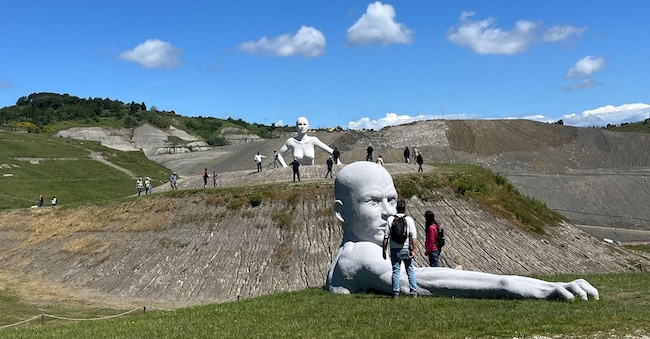
Foto scattata il 20 settembre 2026 - Le statue giganti di Peccioli (Pisa) si chiamano “Presenze” e sono sculture in polistirene e resina che simboleggiano la rinascita e il legame tra arte e territorio

5' min read

Translated by AI
Versione italiana

5' min read

Translated by AI
Versione italiana

The Pichetto Law on sustainable nuclear power – as stated in https://24plus.ilsole24ore.com/art/nucleare-italia-mini-power-stations-to-the-sector-authority-what-will-happen-under-the-new-law-AJlAVJNB">article by Celestina Dominelli in Sole 24 Ore on 24 September 2026 – does not identify the sites for future power stations. Sites will be selected on the basis of technical, environmental and territorial criteria: nuclear safety, seismic activity, hydrogeological risk, availability of infrastructure, grid connection and characteristics of the territory. Provision has been made for consultation with the communities concerned. However, during the parliamentary scrutiny of the bill, the Chamber of Deputies introduced the possibility for local authorities to put themselves forward as hosts for the new plants.

This brings to mind the case of the municipality of Peccioli, which in 1986 – to everyone’s surprise, given that waste and incinerators were viewed by all as a nuisance – decided to turn a problem into a resource.

Loading...

The local council reclaimed the old landfill site, building a safer facility and channelling waste into a waste management centre renowned nationwide for its advanced use of the landfill, the biogas digester for biomethane — a system designed to break down organic material through biological processes — and photovoltaic systems.
Attività didattiche

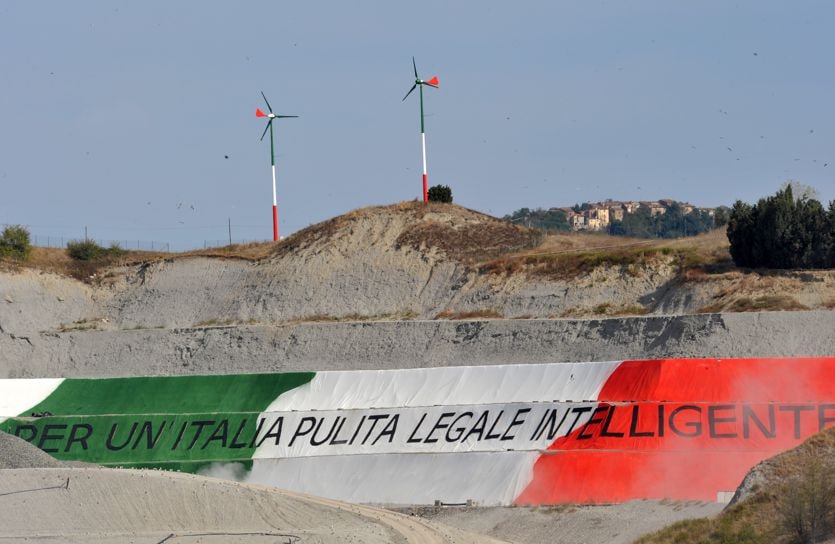
La collina tricolore costruita anni fa all’interno della discarica di Legoli, nel comune di Peccioli. Foto d’archivio. ANSA / STRINGER

The context and overview

The so-called Peccioli System (in the province of Pisa) is one of the most robust test cases in Italia in terms of sustainable local development. Over 25 years, the company that manages it has paid 235 million euros to the local council.
The core of the model lies in having transformed a typical regional challenge – waste management and the presence of a large waste disposal plant – into the area’s main economic, social and cultural driving force.

The system’s architecture is based on a three-pronged approach:
1) Belvedere S.p.A.: the industrial, economic and energy hub;
2) Peccioli Town Council: the institutional steering body and urban planning authority;
3) the Peccioli Foundation: the driving force behind cultural, artistic and outreach activities.

Belvedere Spa: the business model

Founded in 1997, Belvedere S.p.A. operates the Legoli treatment and disposal centre, effectively functioning as a public company with strong community roots.

More specifically, the technical and industrial profile is structured around three key areas:
1) waste treatment: the adoption of advanced technologies (MBT – mechanical-biological treatment) for unsorted waste to maximise material recovery;

2) energy transition: the utilisation of biogas derived from organic decomposition for the cogeneration of electricity, alongside targeted investment in photovoltaics;

Loading...

3) redistribution of value: the profits generated not only benefit local shareholders and the local council, but also contribute to a permanent fund for reinvestment in the local area .

Overcoming the NIMBY paradigm: environmental policies

Perhaps the most significant aspect of the Peccioli case is the reversal of the classic ‘Not In My Back Yard’ (NIMBY) mindset through the plant’s radical integration into the social fabric:

transparency and openness: the Legoli site is always open to visits from schools, universities, researchers and members of the public, forming part of environmental education programmes;
the ‘green triangle’: within the landfill site, a natural amphitheatre has been created using eco-friendly materials, alongside permanent exhibition spaces hosting monumental contemporary art installations;

control and standards: absolute rigour in the monitoring of environmental matrices and applied research in partnership with academic institutions.

Beyond the environment: Welfare, art and community

The revenue generated by the waste cycle is channelled into urban regeneration and cohesion policies coordinated by the Municipality and the Peccioli Foundation for:
1) public art and regeneration: the village, and even the areas surrounding the industrial plants, have become an open-air museum of site-specific works and contemporary architectural interventions, in line with the principle that aesthetic quality generates social value;

2) welfare and services: targeted investment in schools, sports facilities, cultural venues (such as the Fonte Mazzola amphitheatre) and high-quality personal care services;

3) social capital: a high level of civic participation and a strong sense of community involvement in long-term strategic decisions.

The innovative oxy-combustion plant

Returning to Peccioli (Pisa), the Tuscan Regional Council has given the go-ahead (on 7 September 2026) for the construction of an innovative oxy-combustion plant (or flameless technology) in Legoli. The project forms part of the Peccioli system. The technology involved is flameless oxy-combustion, which the Region of Tuscany regards as a step beyond the logic of traditional incinerators and waste-to-energy plants.

It will process up to 177,000 tonnes of waste per year (from mechanical-biological treatment and recycling residues); it will produce energy, process water and reusable liquefied carbon dioxide (CO₂).

The aim is to reduce landfill disposal to less than 10 per cent of total municipal waste.

L’impianto di Legoli

Ossicombustione

The Peccioli waste management model in New York

Peccioli presented its model for waste management and circular regional governance at New York Climate Week, taking part in the Future Food Institute at Convivium, the international forum which, from 20 to 26 September 2026, brought together institutions, science, cities, businesses and international communities to discuss climate issues.

Peccioli is becoming increasingly attractive: tourist arrivals up 96 per cent compared with 2019

In 2024, Peccioli, a picturesque town in the province of Pisa in the heart of the Valdera, won the eleventh edition of ‘Borgo dei Borghi 2024’, the famous competition featured on the Rai 3 programme ‘Kilimangiaro’.

It triumphed by beating Badolato (Calabria) and Grazie (Lombardy) in the final. It is renowned as an open-air museum, featuring scattered installations, murals and the famous ‘Giants’ (large sculptures rising from the ground near the treatment plant).Places of interest: The Palazzo Senza Tempo with its spectacular cantilevered panoramic terrace, the Pieve di San Verano and the rainbow tunnel.

Tourism in Peccioli continues to grow and establish itself as one of the most interesting developments amongst Italy’s villages. This is the finding of the ‘Peccioli Tourism Observatory’, produced by the Italian Touring Club and presented on 4 February 2026, which analyses the destination’s development, from its growing media visibility in recent years right up to the latest available data.

According to the Touring Club’s analysis of official Istat data, in 2024 Peccioli recorded 49,601 tourist visits, representing a 14.4 per cent increase compared with 2023 and a 34 per cent rise compared with 2019, whilst tourist arrivals have almost doubled compared with the pre-pandemic period, with a 96 per cent increase since 2019.

The report highlights how the growth in tourism has been accompanied by a strengthening of the destination’s image and reputation, thanks in part to the numerous accolades it has received in recent years. Among these, the title of “Borgo dei Borghi 2024” stands out, the award for “Italia’s Most Loved Village” at the Tourism Oscars, the renewal of the Italian Touring Club’s Orange Flag and other awards that have helped to boost the area’s national and international profile.

Copyright reserved ©
Loading...

Brand connect

Loading...

Newsletter

Notizie e approfondimenti sugli avvenimenti politici, economici e finanziari.

Iscriviti