

A 6.5 billion deal: energy, nearshoring and supply chains take centre stage at the Tunis forum
The initiative, led yesterday by Minister Tajani, forms part of the Mattei Plan and aims to strengthen an already robust relationship: in 2025, Italian exports are projected to reach 3.4 billion and imports 3.1 billion. Around 600 industry representatives were in attendance.

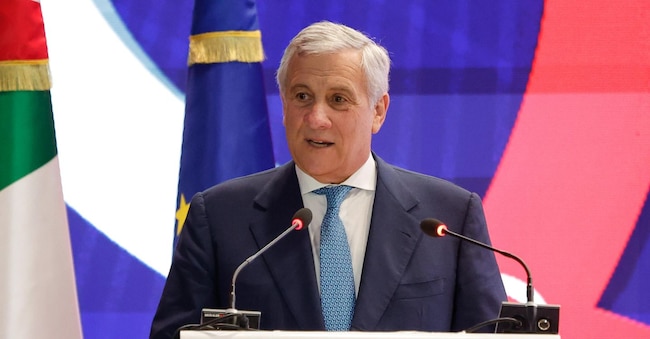
Tunis is strengthening its role as a manufacturing and logistics hub in the Mediterranean and is positioning itself as a key platform for the expansion of the Italian industrial sector into Africa. This is the strategic scope of the Italia-Tunisia Economic and Business Forum, which opened yesterday in the Tunisian capital by Foreign Minister Antonio Tajani alongside Prime Minister Sarra Zaafrani Zenzri, with the participation of around 600 representatives from businesses and institutions in both countries. The initiative forms part of the Mattei Plan and aims to consolidate an economic axis which, in terms of figures, already shows a high degree of integration: in 2025, trade reached 6.5 billion euros, with Italian exports amounting to 3.4 billion and imports to 3.1 billion. In the first few months of 2026, the trend remains positive, with growth driven by Italian exports (+10.9% in the first quarter), whilst in the first five months of the year, total trade flows reached 2.8 billion euros.
Integrated supply chain
The economic relationship between Rome and Tunis is based on a well-established model of industrial integration. Italia mainly exports refined energy products, metals, machinery, plastics and textiles, whilst it imports ready-made clothing, automotive components and oils. This is a typical dynamic of inward and outward processing, in which production segments are relocated to optimise costs and lead times, with the processed goods subsequently re-imported. Over a thousand Italian companies operating in Tunisia are active in this context, accounting for around 85,000 jobs. The local production system, characterised by competitive costs and a skilled workforce, is becoming increasingly integrated into European value chains, particularly in the automotive, textile and advanced manufacturing sectors.
Nearshoring
The reconfiguration of global supply chains, accelerated by geopolitical tensions and logistical challenges along Asian and Red Sea routes, is strengthening Tunisia’s position as a nearshoring destination. Transit times to Italian ports, ranging from 20 to 36 hours, represent a competitive advantage over Asian production, particularly for low- to medium-volume supplies requiring a high degree of flexibility. The North African country is specialising in the production of electrical wiring harnesses, plastic components and electronic systems, providing particular support to supply chains linked to Stellantis and other European industrial hubs. At the same time, membership of key regional trade agreements – from COMESA to GAFTA and the African Continental Free Trade Area (AfCFTA) – broadens access to emerging markets with zero tariffs.
Energy
The energy dossier is one of the pillars of the partnership. At its heart is the Elmed project, a 600-megawatt subsea power cable between Partanna (Sicily) and Cap Bon, representing a total investment of around 850 million euros, co-financed by the European Union. The infrastructure will serve a dual purpose: to stabilise the Tunisian grid and, at the same time, to enable the import into Europe of renewable energy produced in the North African country. This context also includes the agreement that Duferco is set to sign in Tunis for the development of photovoltaic plants in a joint venture with a local partner. The project ties in directly with the prospect of Euro-Mediterranean energy integration and the growing energy needs of both Tunisia and Europe. According to Duferco’s chairman, Antonio Gozzi, the interconnection could open up opportunities in both directions: the export of energy to Tunisia and the re-import of green electricity to Italia. The consortium of major Italian energy consumers has also expressed its willingness to contribute to the financing of the infrastructure.
The Mattei Plan
In addition to the industrial dimension, the partnership includes a growing focus on training and regular migration. Programmes promoted by organisations such as Elis aim to match the demand for skilled labour from Italian businesses with Tunisia’s human capital, within a framework of regulated mobility. Industry representatives emphasise that this issue requires a bilateral approach to avoid imbalances and ensure mutual benefits. The model is already being extended to other African countries as part of the Mattei Plan. The combination of geographical proximity, industrial integration and access to African markets reinforces Tunisia’s central role in Italy’s Mediterranean strategy. The Tunis Forum aims to translate this convergence into new investments, with a focus on the energy transition, digital transformation, infrastructure and advanced industry. Looking ahead, the objective is twofold: to consolidate Italy’s industrial presence and to use Tunisia as a platform for promoting ‘Made in Italy’ products across an expanding African continent, against a backdrop of growing geopolitical competition and the redefinition of global value chains.

