

A blood test reveals the response to treatment, right from the first tablet
A study is investigating possible early response signals that could enable an even more personalised choice of initial treatment

Key points
Knowing in advance whether a drug chosen as a cancer treatment has a good chance of success is invaluable information. But until now, at least for chronic myeloid leukaemia (CML), the only way to find this out was to monitor the patient closely to detect any signs of a lack of response at an early stage. However, this may soon change, as suggested by a study just published in Signal Transduction and Targeted Therapy (part of the Nature group). With the introduction of tyrosine kinase inhibitors (TKIs) into clinical practice, chronic myeloid leukaemia has become one of the greatest successes of precision oncology; these drugs enable many patients to live for a long time with the disease under control.
However, there is also a proportion of patients who do not respond to treatment and, at present, the only way to determine this is through the regular monitoring of a parameter in the blood – the BCR::ABL1 transcript – which is a true molecular biomarker of the disease (it measures the quantity of the fusion gene and the associated abnormal protein produced by leukaemia cells in the blood or bone marrow). The problem is that by the time a lack of response is detected through this blood test, several months of ineffective – or at least sub-optimal – treatment may already have elapsed. And this is where the research by a group of Norwegian universities comes in (lead author Stein-Erik Gullaksen).
Looking for early signs of a lack of response to treatment
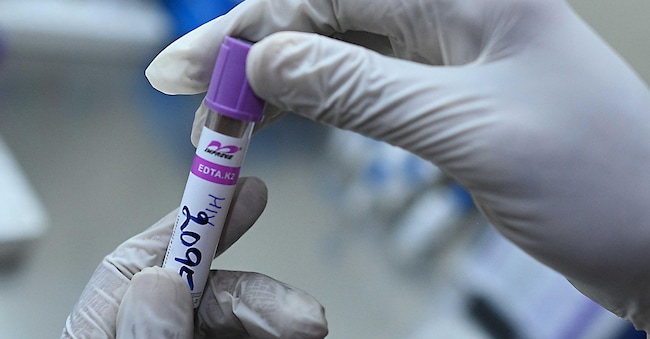
The researchers used blood samples from around 80 patients with CML, enrolled in two multicentre trials: NordCML007 (involving 32 patients treated with dasatinib) and ENEST1st (involving 50 patients treated with nilotinib). Blood samples were taken before treatment and one hour (for dasatinib) or three hours (for nilotinib) after the drugs were taken. The study authors then examined differences in intracellular signalling in leukaemic and immune cells, both before and after treatment, in order to identify and compare early signs of non-response with the actual molecular response observed over the following 12 months.
Where to look for signs of response to different treatments
Both drugs rapidly alter the activity of specific intracellular signalling pathways, but the characteristics that predict response to treatment differ significantly between the two. For dasatinib, the factors found to be most significant were the initial leukaemic burden, the maturation of neutrophils, and the activity of immune cells such as T lymphocytes and NK cells. For nilotinib, intracellular signals from cells with characteristics similar to leukaemia stem cells were found to be more important in terms of their ability to predict response to treatment. In both cases, therefore, the Norwegian researchers have identified specific factors that may predict response to treatment, even at a very early stage.
What will happen in the future
The identification of these early response signals could enable an even more personalised choice of initial treatment; indeed, if a test were able to rapidly predict an inadequate response to treatment, this would allow the therapeutic strategy to be adjusted at an early stage. This could prevent months of suboptimal treatment, whilst increasing the likelihood of achieving a deep molecular response with another therapy. And this, in turn, may lead over time to the controlled discontinuation of the therapy itself, whilst keeping the patient in remission.

