
Cultural diplomacy

‘A bridge of agreements with the Maghreb. The way forward? Recognising dual degrees’

Interview with Valentina Garavaglia, Vice-Chancellor of IULM University: “Double degree programmes with universities around the world represent invaluable opportunities for students. IULM currently offers seven such programmes, ranging from Canada to Finland. The challenge now lies in the Mediterranean.”

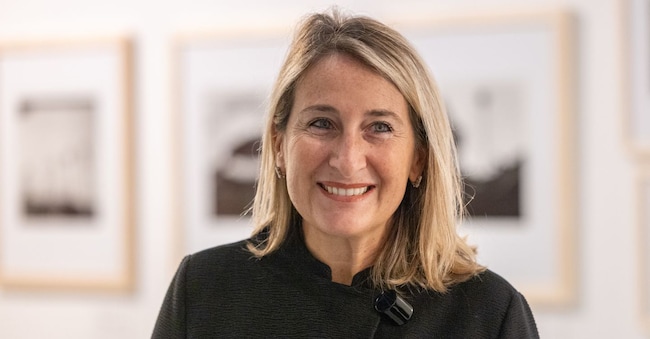
by Claudio Antonelli

Valentina Garavaglia, rettrice dell’università Iulm

3' min read

Translated by AI
Versione italiana

3' min read

Translated by AI
Versione italiana

In complex geopolitical times, higher education and university activities act as a vital unifying force. Could the reshaping of the multilateral world, as we have known it over the last 20 years, breathe new life into universities? And how? We asked Valentina Garavaglia, Vice-Chancellor of the Free University of Languages and Communication (IULM), for the perspective of a university with a strong international focus.

‘Universities are not only places of education and research, but also of cultural diplomacy. They foster exchange and ongoing dialogue, especially in a world riven by conflict. International mobility is the lifeblood of universities. With the population in decline, it is becoming increasingly necessary to open up to international students. Added to this is the wealth of opportunities provided by European research projects, which link universities together and strengthen cooperation on an international scale.”

Loading...

However, in order to engage in cultural diplomacy, universities must remain politically neutral…

‘Yes. Universities must remain places of dialogue. It is precisely the nature of academia that enables us to build bridges: exchange between countries takes place through the exchange of students, lecturers and ideas.’

How significant is the presence of EU and non-EU students in terms of numbers and prospects?

‘Over the years, we have increased the number of international students enrolled. Until a few years ago, we were a long way from the 7 per cent target for 2025. Projections for 2026 suggest we will reach 10 per cent. Today, we have students from 79 different nationalities at IULM. This is a deliberate choice: to focus on diversity of origin. We have larger student communities, such as the Turkish community, but we are open to integrating students from a wide variety of backgrounds, such as Kazakhs and Uzbeks.”

Strategy: more than just numbers?

‘We have ties with Taiwan, Singapore, Japan and South Korea, and we are always keeping a close eye on the Mediterranean region, where we would like to strengthen our presence in Libya, Tunisia, Egypt and Morocco.’

What agreements do you have in place in the Middle East?

‘In the Middle East, we are in dialogue with Sultan Qaboos University in Oman, thanks to their laboratories specialising in applied neuroscience. We also collaborate with Dubai through the GEMS Education programme and with Doha via the Qatar Foundation for the promotion of the Arabic language and culture.’

Do you consider relationships with other universities or with foundations to be more stable?

‘The strongest and most enduring partnerships are those linked to medium- to long-term educational and research projects. In this context, double-degree programmes with universities around the world represent invaluable opportunities for students. IULM currently offers seven double-degree programmes: ranging from the Master’s in Hospitality and Tourism Management, in collaboration with universities in Florida and Finland, to the partnership with the New York Film Academy, and the Bachelor’s degree in Business Communication with DBS (Ireland) and Royal Roads University (Canada). The challenge now is to extend this model to the wider Mediterranean region and, why not, to the East.”

Staying with the Mediterranean, last October the Commission launched the new Pact. It contains numerous ideas for bringing together the education sectors on both sides of the Mediterranean. What do you expect?

‘Building collaborative ecosystems is complex, but essential: in this context, programmes such as Horizon 2020, Creative Europe and other initiatives are a lifeline for our researchers, offering resources, networks and opportunities for international cooperation. I would like to highlight ‘Mapping Media for Future Democracies’, which is dedicated to the study of EU media and their impact on democracy. However, the key issue remains the link between project planning and funding: when resources run out, projects often come to a standstill. The aim is to make them more self-sustaining and long-lasting.”

Does coordination between universities work when it comes to international outreach?

‘The Italian university system today, thanks in part to the work of the Conference of Italian University Rectors, is less fragmented than in the past. The working groups on internationalisation, in collaboration with the Ministry of Foreign Affairs, are helping to strengthen the diplomatic network, identify major trends and develop shared objectives. We are on the right track.”

We’ve been talking about internationalisation so far – what else is needed to make a place attractive?

‘Universities are attractive to the extent that the cities in which they are located are also attractive. Welcoming students means ensuring they have sustainable living conditions, particularly in terms of accommodation. As a non-state university, we are investing in this area: we have two student halls of residence. We have also acquired a new building on Via Russoli to expand our accommodation provision. It is a significant effort, but one that is necessary to support young people’s mobility.”

Copyright reserved ©
Loading...

Brand connect

Loading...

Newsletter

Notizie e approfondimenti sugli avvenimenti politici, economici e finanziari.

Iscriviti