Luxury Food

Lightness and a desire to experiment: luxury restaurants and hotels are focusing on alcohol-free cocktails and food pairings

Some choose them for their health benefits, others simply because they love the taste. Whilst Gen Z is increasingly turning away from wine, the fine dining sector is investing in sophisticated non-alcoholic drinks, opening up new market opportunities (with rising revenues) through creativity, fermentation and plant extracts

 (Adobe Stock)

10' min read

Translated by AI
Versione italiana

10' min read

Translated by AI
Versione italiana

Some choose them because they want to keep it light, others because they’re watching their weight and want to cut down on calories, some for health reasons, and others simply because they love the taste – without it necessarily feeling like a ‘sacrifice’. The truth is that non-alcoholic drinks, whether in luxury hotels or high-end and Michelin-starred restaurants, are gaining ground in ways that were unexpected in the past.

Gen Z seems to be taking less and less interest in wine, probably partly because marketing has failed to forge a direct connection with the younger generations; this gap is opening up new market opportunities for non-alcoholic pairings based on fruit and vegetable extracts, natural fermentations that play on acidity, kombucha made from fermented tea. Luxury restaurants and hotels are following this trend, investing in increasingly sophisticated non-alcoholic cocktails designed to complement every course on the menu. Not merely a ‘wine alternative’, but a standalone gastronomic offering, capable of enhancing a dish with the same complexity and balance as a fine wine.

Loading...

Atelier Moessmer and mountain fermentation

A pioneer in sustainability and mountain cuisine, the three-Michelin-starred Atelier Moessmer restaurant, helmed by chef Norbert Niederkofler, now offers one of the most intriguing non-alcoholic food and drink pairings in Italia.

The pairing follows the Cook the Mountain philosophy, which focuses exclusively on the Alpine region. Every drink is crafted from local and seasonal ingredients: vegetables, wild herbs, grains, fermented products and artisanal methods. “Non-alcoholic pairings account for 15 per cent of turnover, but we’re seeing a steady increase in demand,” explains chef Norbert Niederkofler alongside sommelier Lukas Gerges. “We’ve put together a comprehensive selection featuring nine drinks. The smoked trout is paired with the drink “Peas and Uvaspina”, the whitefish tartare with the drink “Green Apple and Pickled Gherkin Water”, the Red Turnip Gnocchi with a red turnip and rhubarb extract – which plays on the similarities in sound – whilst the White Spaghetti is paired with kombucha infused with camomile. And, furthermore, sweetbread is perfect with the mocktail made with Sylva, Rubedo and Manicor apple balsamic vinegar. In summer, we also produce red berry kombucha and kefir to pair with Tarte Tatin». These are carefully crafted pairings – certainly not run-of-the-mill – the result of a level of effort on a par with that required for Michelin-starred dishes.
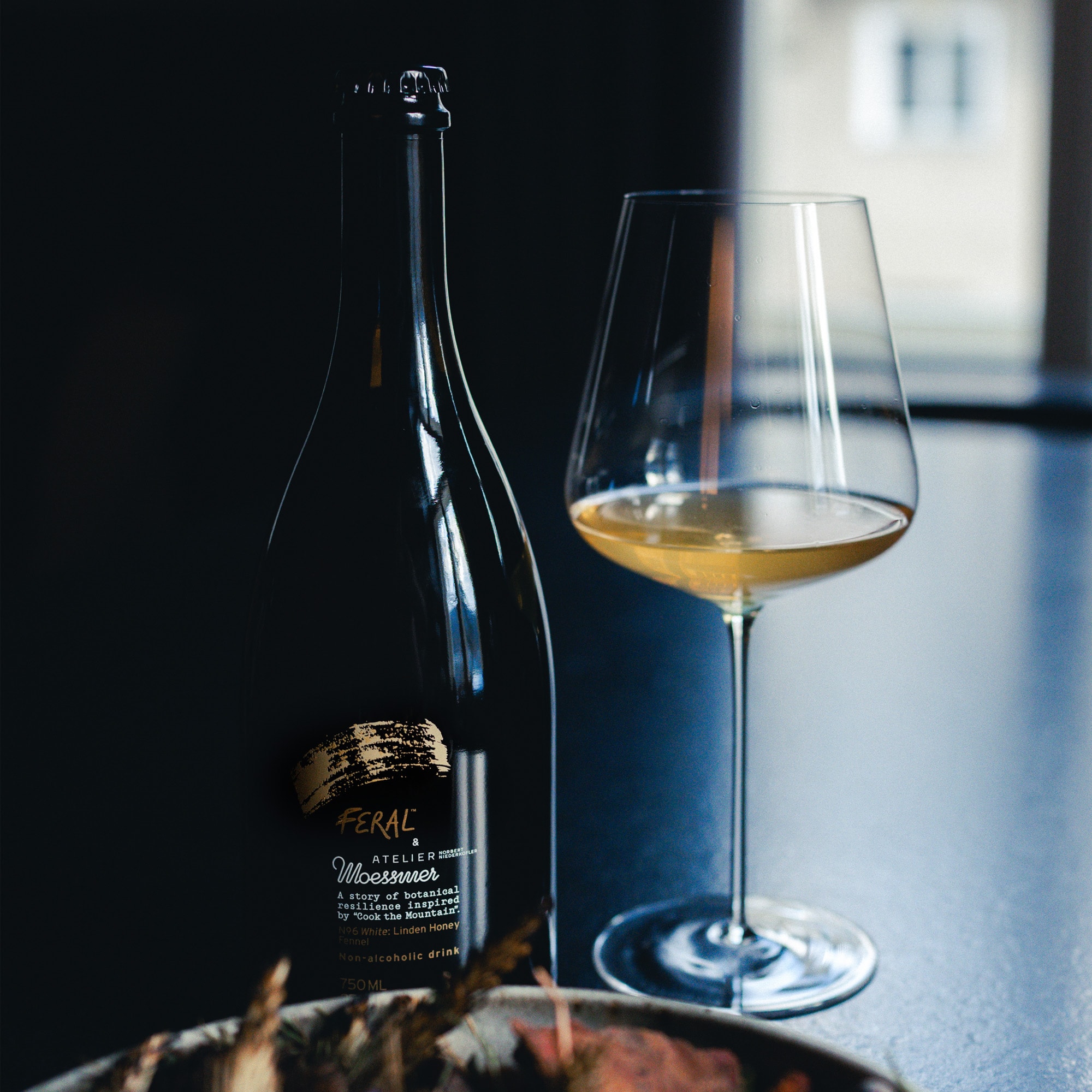
Chef Niederkofler has also created a recipe for Feral, a start-up founded in 2022 in the heart of the Italian Dolomites. The term ‘feral’ means ‘free, wild’ and refers to an animal or plant that was once domesticated but has returned to its natural state. The company relies on a multidisciplinary team of botanists, scientists, sommeliers and fermentation enthusiasts, united by a deep love of nature and a curious, experimental approach. Production in 2025 stood at approximately 50,000 bottles, and the aim today is to double that figure.
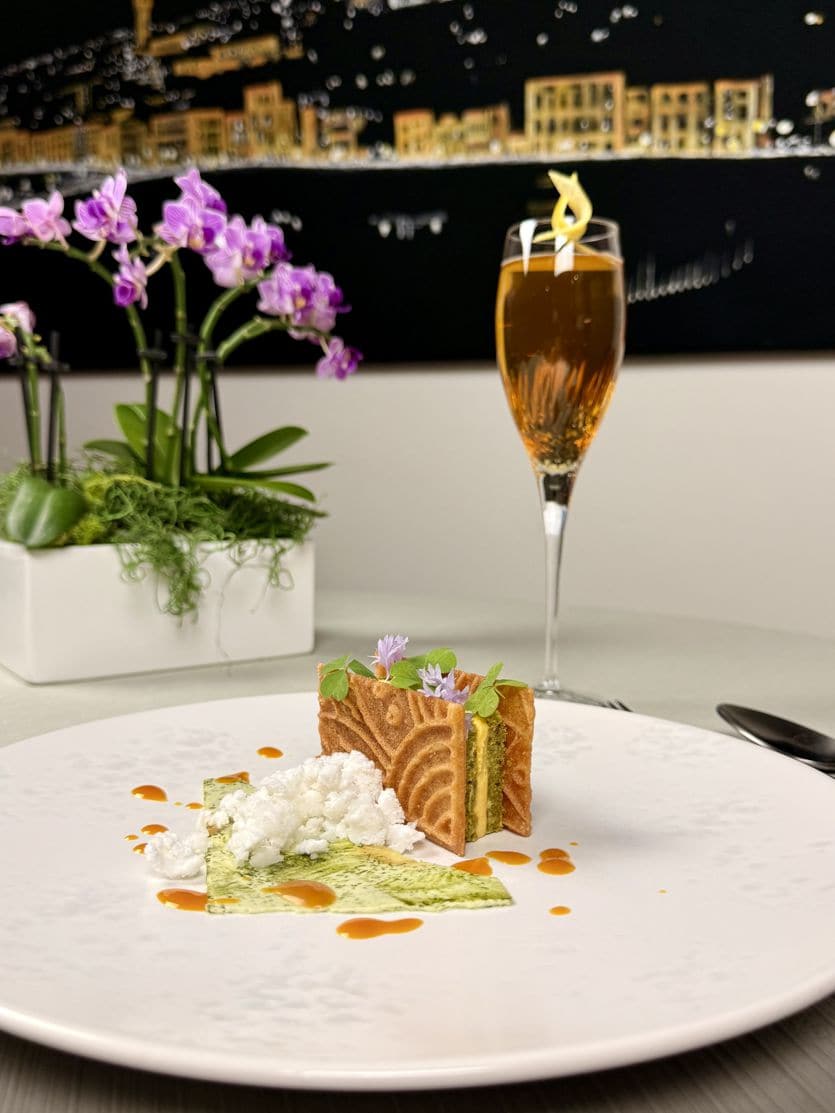
“We pair our Spring Salad with Feral No. 6, a recipe made with fermented white beetroot, lime blossom honey, mountain pine, fennel seeds and apple cider vinegar. It has a surprising aromatic complexity with notes of white peach and honey. Our guests really appreciate it,” conclude Niederkofler and Gerges.

Enoteca Pinchiorri: wellness and kombucha

It might seem strange that a Michelin-starred restaurant with one of the world’s finest wine cellars should offer a non-alcoholic pairing. Yet it all makes perfect sense, given that a focus on wellbeing is very much at the heart of the chefs’ approach Riccardo Monco and Alessandro Della Tommasina, who are able to interpret a tradition that is constantly evolving and changing with the times, without getting bogged down in clichés. Not even when it comes to the name ‘Enoteca’.

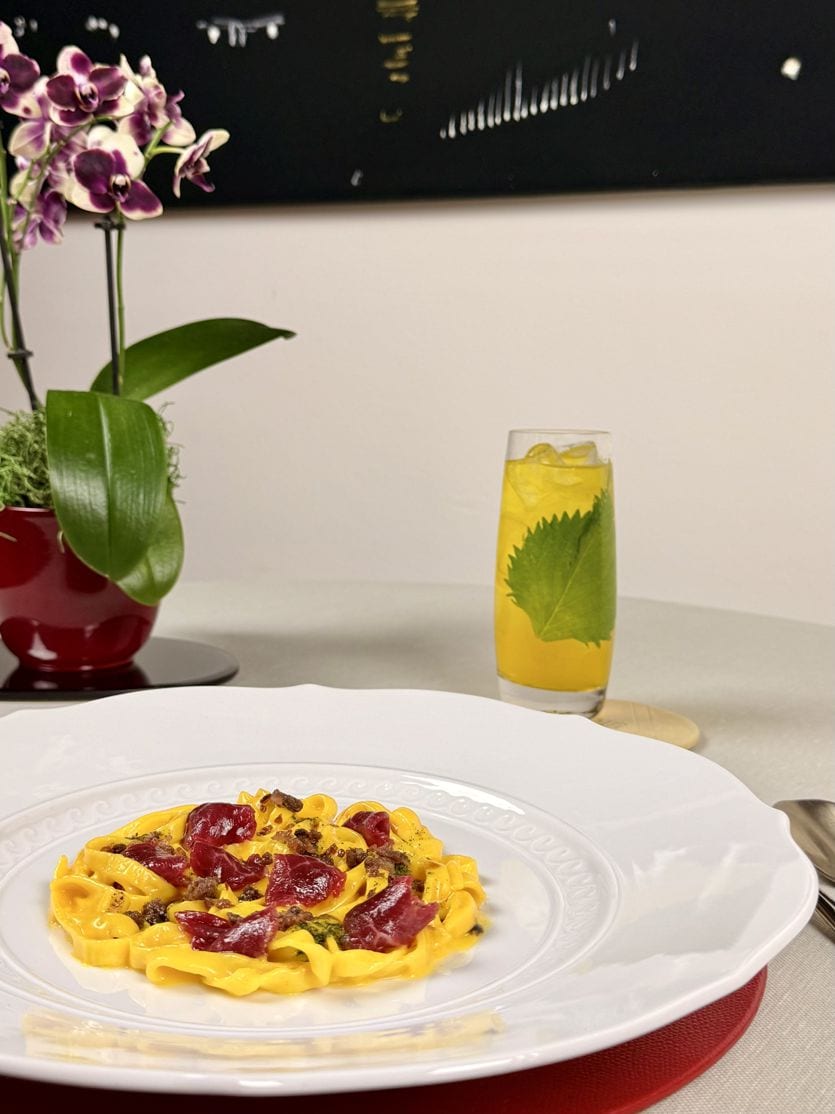
“Our obsessive focus on sourcing the finest wines does not mean we overlook guests with different needs,” explain chefs Monco and Della Tommasina, alongside head waiter Alessandro Tomberli. Today, wellbeing is at the heart of haute cuisine. Guests leave our table feeling happy, yet light. We pay close attention to vegetables and food intolerances, which are now a concern for many guests. Combining local produce, creativity, excellence and wellbeing is the guiding principle of our culinary exploration. We never stand still, and there are no limits. Our non-alcoholic pairings are crafted with the same care as our wine pairings. This season, the salad of grilled green beans, smoked mozzarella, yellow peach caponata and green curry pesto is accompanied by bergamot kombucha from Bevande Artigianali Fiorentine. In the world of contemporary beverages, kombucha is highly appreciated by our guests and is emerging as one of the most credible and fascinating alternatives to wine – not to replace it, but to offer a parallel experience that shares many of its fundamental values: complexity, craftsmanship and regional character, without compromising on flavour harmony. The melt-in-the-mouth squid puffs, cold pine nut cream, seaweed tartare, caviar and camomile can be enjoyed with an infusion of cinnamon, orange, vanilla, camomile, sugar and lemon. This cocktail boasts bold and assertive flavours, with a sharp sweetness tempered by a citrusy, acidic finish that complements the sweetness of the squid perfectly and contrasts with the savoury notes of the caviar. The tagliolini with a warm saffron emulsion, hand-chopped sheep’s cheese, coffee and bay leaf powder are paired with ‘Saffron Secret’, a mocktail made with saffron infusion, Mediterranean tonic and rosemary. A pairing designed to complement the dish, using the dominant ingredient whilst lightening the finish.”

‘Our research into meat dishes has led us to complex pairings such as that of duck breast, cherries and rhubarb with the non-alcoholic “Sinfonia Mediterranea” – a cordial made from juniper, lavender, pepper, fermented lemon, grapefruit juice, soda and grapefruit zest. This offering is appreciated by our international clientele who, for various reasons, cannot drink wine and require a pairing of equal calibre.”

Niko Romito and the art of vegetables

Reale Casadonna in Castel di Sangro is an oasis of almost monastic tranquillity, far from the hustle and bustle. A place for the soul. Niko Romito has the ability to delve deeply into every creation, through a process of mental and introspective reflection that translates into an original and unique menu. The non-alcoholic pairings for the dishes are curated by sommelier Andrea Zoggia.

Loading...

Around 15–20 per cent of the pairings requested are non-alcoholic, but there are those who, out of curiosity, ask for a couple of mocktails without going through the whole experience. The Reale’s non-alcoholic pairing embraces the philosophy that guides the chef’s cuisine: a personal style that seeks essence, elegance and precision. This approach has led to the elimination – or minimisation – of sugar, to enhance the purity of flavours. The interplay with the kitchen is fundamental: dishes become the basis for mocktails, and the development of mocktails leads to new innovations in the kitchen.

Just as with wine pairing, non-alcoholic pairing is also characterised by different nuances: some pairings aim for amplification and continuity with the dish, whilst in other cases the aim is to create a counterpoint. Among the trends shaping non-alcoholic pairing is the use of culinary staples: certain culinary preparations, such as extracts, juices or infusions, are incorporated into non-alcoholic cocktails. For example, ‘Celery, cucumber, lime, liquorice and tarragon’ is paired with ‘Oyster and Chicory’. The mocktail is prepared with a base of celery extract, a fermented cucumber peel infusion, lime juice and an infusion of liquorice and tarragon. The balsamic notes play off the bitterness of the chicory, the freshness enhances the savoury flavour of the oyster, and the delicate acidity balances the creaminess of the milk. Sometimes we use ingredients from the kitchen, but with new techniques. For example, we’re working on a watermelon tepache. Tepache is a Mexican fermented drink made from pineapple. Here, however, we start with watermelon rind – a kitchen waste product – which is fermented with very little sugar. A drink designed to accompany ‘Cucumber and Mixed Greens’, a dish from this year’s summer menu that opens the menu; and from the non-alcoholic drink, we’re thinking of creating an alcoholic cocktail – so our work on the non-alcoholic version also provides inspiration for the alcoholic offerings.” In other words: never set limits, but always innovate.

Mandarin Oriental: the mocktail as a category in its own right

The Mandarin Oriental in Milan is a luxury hotel that demonstrates how ‘quiet luxury’ is a reality. Clean lines, black-and-white patterns, elegant service and a two-Michelin-starred restaurant led by chef Antonio Guida. The cocktail list has been devised and curated by Gugliemo Miriello – a long-serving bar manager and now director of the Mandarin Garden.

‘In recent years, the consumption of premium non-alcoholic drinks has evolved from an occasional choice to a conscious decision. Today, many guests are not simply looking for an alternative to alcohol, but want to enjoy the same sensory experience as a great cocktail – with balance, technique and aromatic complexity. In the first half of 2026, we recorded growth of around 30 per cent in demand for non-alcoholic cocktails compared with the same period the previous year. Today, the mocktail is no longer simply an alternative to alcohol, but a category in its own right, sought after by an increasingly broad and diverse audience. There are various reasons why we are seeing an increase in demand for mocktails: a lifestyle more focused on wellbeing, as well as a desire to moderate alcohol consumption. I believe this trend will continue to grow. Non-alcoholic drinks will become an increasingly established feature on the drinks menus of cocktail bars and fine-dining restaurants, with dedicated pairing options and a clearly defined identity.”

At the Seta by Antonio Guida restaurant, the mocktail “Amalfi Twist”, made with Martini Vibrante, raspberry and mint cordial, lemon and white tea, is designed to accompany the roast blue lobster with bagna cauda, cuttlefish and vanilla bisque. ‘The acidity and citrus freshness of the cocktail balance the natural sweetness of the lobster, whilst the white tea lends elegance and a lingering finish. The raspberry and mint cordial adds a delicate aromatic note that complements the smoothness of the vanilla bisque, creating a harmonious pairing that complements the dish without ever overpowering it,” concludes Miriello.

Four Seasons: a fresh take on the great classics

Milan is an international city that knows how to meet the needs of even the most discerning clientele; demand for non-alcoholic drinks is growing with each passing season. At the Four Seasons, in the heart of the Fashion District, you can pair dishes by chef Fabrizio Borraccino of Ristorante Zelo with offerings from Bar Stilla. A few examples? Linguine from Pastificio Gentile with lobster and sea urchins; homemade spaghetti with clams, baby squid, garlic, olive oil and chilli, bottarga and tarallo; grilled octopus; and the ‘Damini’ veal cutlet Milanese-style. To accompany these, a non-alcoholic drinks list that puts a new spin on the great classics, such as the Sprizzetto (Everleaf Aperitivo, fermented rhubarb, jasmine, Martini Floreale and sparkling water), the Sober Negroni (Gin 00, Bitter 0 and Martini Vibrante) and the Secret Garden (Gin 00, fruit infusion, passion fruit, lime, vanilla and citrus-infused sparkling water).

In Florence, too, dinner at the Michelin-starred restaurant “Il Palagio”, led by chef Paolo Lavezzini, includes a non-alcoholic pairing. Certain dishes, such as the crispy courgette flowers stuffed with creamy buffalo ricotta, are paired with the “Yuja” mocktail, made with Tanqueray 0.0, yuzu juice, Paragon labdanum cordial and Three Cents soda with fig leaves.

Jumeirah Capri Palace: from cocktails to ‘gourmet’ water

Even on the stunning island of Capri, international guests are keen to enjoy light, refreshing food and drink pairings. At the two-Michelin-starred restaurant L’Olivo, led by chefs Andrea Migliaccio alongside Salvatore Elefante and Vincenzo Tedeschi, the beverage manager Riccardo Alberto Presezzi has paid particular attention to non-alcoholic pairings.

‘In a restaurant like L’Olivo, where every detail of the dining experience is carefully considered, the aim

‘It wasn’t simply a matter of offering alcohol-free wines, but of creating an entirely new language, based on ingredients with their own identity and capable of complementing the cuisine without imitating wine,’ explains Presezzi.

The main sources of inspiration were the worlds of tea, aromatic herbs and contemporary mixology, with particular reference to the Sparkling Tea range from the Copenhagen Sparkling Tea Company and Giulia Caffiero’s book *Juice Pairing*. These influences have given rise to an approach that accompanies the entire dining experience with the same attention to detail as that given to wine pairings.”

One of the signature cocktails at Il Bar degli Artisti, another of the Jumeirah Capri Palace’s venues, served in its non-alcoholic version, is the Italian Fizz, a reimagining of the classic Gin Fizz.: In this creation, a non-alcoholic botanical spirit infused with basil is combined with one of Campania’s iconic ingredients, the lightly smoked Vesuvius cherry tomato, complemented by the freshness of Tassoni Soda. A cocktail that showcases the region through the language of contemporary mixology. Far from predictable: the pairing continues with a selection of gastronomic waters taken from the restaurant’s water list. Among the options currently available for tasting is ROI, a Slovenian mineral water characterised by a total dissolved solids content exceeding 6,000 mg/l and an extraordinary mineral richness. A water described as ‘gastronomic’, capable of complementing dishes with a distinct personality and demonstrating how even water can become a genuine pairing element.

Omnia: plant-based in the Dolomites

Vegan cuisine can be hugely rewarding when approached with creativity and a connection to the local area. The Greek-born chef Aggeliki Charami, together with sommelier Anna Giusti, create combinations of dishes and cocktails free from any ingredients of animal origin, out of the utmost respect for the planet and a deeply held ethical conviction. This is thanks to the conviction of the Spogler family, who own two other vegan hotels in Italia – a unique venture of its kind.

‘We love non-alcoholic drinks and 50 per cent of our customers order the non-alcoholic pairing . For example, we pair the vegan butter brioche – which is flambéed at the table for a touch of fire – with a drink made from black tea in the first fermentation stage, to which dried figs, green olives, thyme, rosemary and Sichuan pepper are added in the second fermentation stage. Among our iconic cocktails is the Smoky Green, made with green tea in the first fermentation, followed by tonka bean with sweet and astringent notes, and Lapsang Souchong in the second fermentation.”


The ingredients for both the dishes and the cocktails are the result of the chef, Charami, and her team’s foraging expeditions: ‘Summer is the season of vibrancy and life, but life will continue in winter thanks to our work on fermentation and natural preservation. We’ll have everything we need even when the snow falls, whilst fully respecting nature.”

Copyright reserved ©
Loading...

Brand connect

Loading...

Newsletter

Notizie e approfondimenti sugli avvenimenti politici, economici e finanziari.

Iscriviti