Council of State

A police officer can issue a fine even when off duty

The administrative judges have quashed the penalty imposed by the Chief of Police for offences committed outside the child’s school, on the grounds that law enforcement officers are always on duty

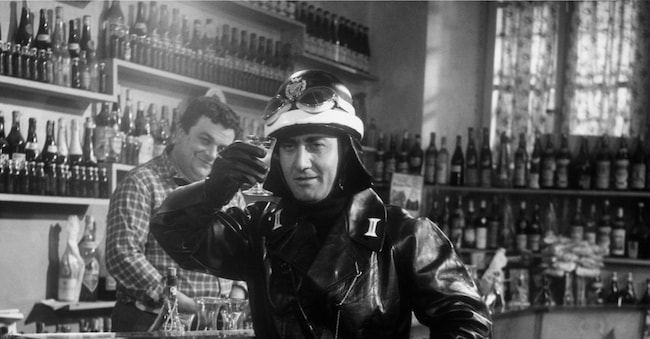
foto IPP/imagostock   foto di scena del film   IL VIGILE   nella foto :  (ALBERTO SORDI)   warning available only for italian market IPP

3' min read

Translated by AI
Versione italiana

3' min read

Translated by AI
Versione italiana

The behaviour of the Superintendent of the State Police, who issues a barrage of fines outside his son’s school , ‘punishing’ the parents of the child’s classmates and the teachers themselves for speeding or careless parking. This is because – as the Council of State states – law enforcement officers are always on duty.

However, the Chief of Police had punished this excessive zeal by deducting 1/30 of the officer’s salary for the current month because, in the opinion of his superiors, the officer had breached the code of ethics . He had also cast a shadow over the image of the police force itself by taking matters into his own hands whilst off duty, perhaps even motivated by personal reasons, and thus with the aim of cleaning up the areas around the school attended by his child, and furthermore without issuing immediate fines, by placing the notes on the windscreen.

Loading...

At the end of the disciplinary proceedings, the superintendent had been informed of the decision taken against him, with the following grounds: ‘Having established breaches of Highway Code committed in front of the school attended by his son, he failed to challenge them immediately without formalising the grounds for doing so, and took photographs that were not mentioned in three reports drawn up subsequently, thereby failing to fulfil his duties of fairness and professional ethics, which should have led him to call in police officers acting in an impartial capacity’

The complaint lodged by the Consumers’ Union

Proceedings against the appellant were initiated following a complaint in which the Consumers’ Union had condemned the behaviour and actions of the traffic warden who had issued 25 fines. These fines were then issued to everyone: to parents who had briefly left their cars in front of the nursery school to collect their children, to those who were speeding, and to those who had breached the no-entry restriction. All of this without proper authorisation.

For his accusers, it was clear that his action stemmed ‘from the fact that he happened to be at that location and felt an emotional prejudice regarding safety as a father and road user, rather than as an impartial, external third-party investigator. The behaviour described above is therefore at odds with the rules of fairness and professional ethics”.

Legitimate behaviour – indeed, it is one’s duty

But the diligent police officer refuses to accept this and lodges an appeal to assert his right to restore order on the roads, 24 hours a day and wherever necessary. Internal appeals were rejected, but he found justice before the Council of State , which upheld his actions, deeming them lawful. Indeed, it was his duty. The appellant had informed the administrative judges that he had received the approval of many parents for having helped to improve safety in the area. He had also reported that all his service reports had been forwarded to the police headquarters manager for the necessary assessments, without ever having been annulled by way of self-review.

Salary cut cancelled

The Council of State – having reiterated the duty of members of the public security administration to refrain from intervening when personal interests are at stake – makes a clear distinction in the case of the diligent superintendent who had not taken action in a matter that concerned him as an individual, but which related to road safety on a public road . The Council of State notes that ‘members of the public security administration are in any case required, even whilst off duty, to observe the duties inherent in their role’. A permanent duty, by virtue of which ‘the appellant was certainly obliged to intervene. Indeed – as the judgement states – had he failed to do so, quite apart from the possible implications regarding his own individual liability, such inaction would indeed have been detrimental to the dignity of the institution to which he belonged’.

These were actions that some parents had called for and which his superiors had endorsed, only to subsequently censure them following the complaint lodged by the Consumers’ Union. The fact that the complainant’s son attended that school is irrelevant: having taken him to and from school was ‘merely the occasion (and not the reason) for his intervention’. His disciplinary measures were also justified: only three out of twenty-five reports had been dismissed; one case, for example, concerned a teacher at the school who had a parking pass. No pay cut, therefore, for excessive zeal.

Copyright reserved ©
Loading...

Brand connect

Loading...

Newsletter

Notizie e approfondimenti sugli avvenimenti politici, economici e finanziari.

Iscriviti