

A radioelectric field to treat headaches, depression and stroke sequelae
A device, developed by the Rinaldi Fontani Research Institute and tested by numerous Italian and foreign universities, improves intercellular communication

2' min read
2' min read
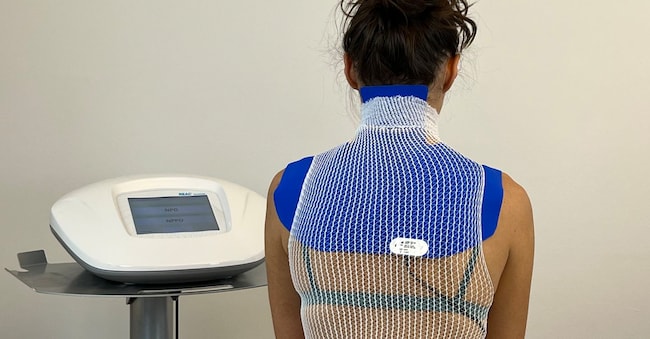
It can be compared to the laser, which can be used for various pathologies. In this case, it can be applied in the field of neurology, to treat headaches and migraines. In that of psychiatry, to treat anxiety and depression but also anorexia and bulimia as well as autism spectrum disorders. In advanced rehabilitation, on the other hand, it is indicated for the after-effects of fractures, sprains, muscle injuries and strokes. It is called Reac, an acronym for 'Radio Electric Asymmetric Conveyer', and is a new medical technology that improves the electrogenic and electro-metabolic activity of cells. An innovative therapeutic approach already tested in Italy by several universities - ranging from the University of Catania to those of Trento and Sassari - and abroad, in Brazil, by the two universities - federal and state - of São Paulo.
"It is the fruit of research that began 40 years ago," says Salvatore Rinaldi, a doctor with three specialisations - sports medicine, rehabilitation medicine and neurophysiopathology - founder together with his wife Vania Fontani, also a doctor, of the Rinaldi Fontani Institute, based in Florence, which operates in the field of medical and scientific research and also collaborates, in agreement, with the Ausl Toscana Centro.
An innovation at the service of the SSN
'Together with the healthcare company in our region, we are working in the field of restorative and regenerative medicine to apply the new technology to patients,' explains Rinaldi. A technology, patented worldwide, that could soon become an asset in Italian public health. Produced by Asmed, a company based in Scandicci, in the province of Florence, and born as a spin-off of the same research institute, it is capable of improving biological and neural functions, with a modulation of ionic fluxes at the cellular level, which are essential for the correct functioning of the organism. In practice, it does not administer external shocks but merely emits a very low-power radioelectric field capable of varying, precisely, the distribution of ionic fluxes, i.e. those currents of electrically charged particles that are fundamental for intercellular communication.
The universities involved in the research
.In agreement with the Tuscan institute, the University of Catania is experimenting with it for the treatment of tinnitus. While in Trieste, the focus, together with the Department of Life Sciences, is on improving cognitive abilities, and in Sassari the focus is on the molecular mechanisms involved in cell proliferation and differentiation processes. The institute also works in partnership with the National Research Council for the treatment of chronic pain, as well as with the regenerative medicine laboratory of the D'Annunzio University of Chieti-Pescara for experimental research with new stem cell technology. In Brazil, the focus is on childhood neuropsychiatric disorders, again with Reac. In Spain, together with the Fundacion Reina Sofia, research is focusing on the application of the device as a new therapeutic approach to combat Alzheimer's disease. "Our goal is to graft innovation into public health, improving the effectiveness of therapies and reducing hospitalisation times," explains Rinaldi. "This," he continues, "by offering the theoretical and practical knowledge for the application of Reac".

