

A backbone of super hospitals that also reaches the South, but there is the problem of funding
In the enabling act approved by the Council of Ministers, the reorganisation of family doctors and paediatricians is also included, but without giving any indications on their classification

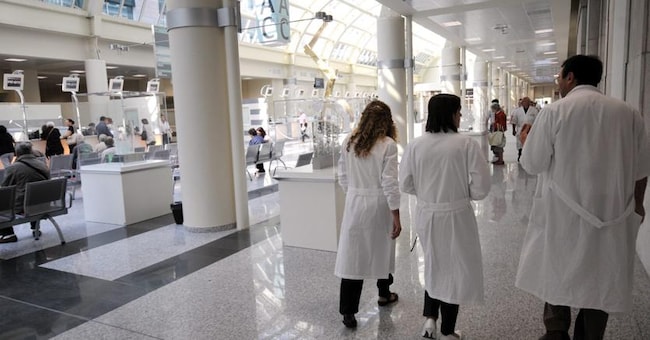
A backbone of super-hospitals that also reaches the South, capable of avoiding the phenomenon of the travels of hope, that health mobility that moves tens of thousands of patients every year, especially from the South to the North. And then a reorganisation of the discipline of family doctors and paediatricians so as to 'valorise' them in the new territorial health service designed and financed by the NRP, which will open more than a thousand community centres in less than six months, without, however, clarifying how they will be managed, given that in the past it was also hypothesised that they would be made employees of the SSN. These are the two main ingredients of a mini-reform of the National Health Service contained in the draft delegated law approved yesterday in the council of ministers, which entrusts the government with the task of adopting one or more legislative decrees by 31 December 2026 to update the last 'mother' reform of the Health Service (Legislative Decree 502/1992).
Like any delegation of powers, at the moment it is only a matter of general principles and objectives, so this reform - like the other one on the health professions that is already in Parliament - is still to be written in order to understand its fall-off points. And with more than one unknown factor, starting with resources, also because the measure envisages the adoption of implementation decrees with 'financial neutrality', unless Parliament allocates additional resources with special provisions. The extra resources would be used, for example, to bring out at least twenty super hospitals - especially large polyclinics and IRCCSs (including private ones) - that would also be located in the South and could count on large equipment, the possibility of hiring without ceilings, research, etc.. In fact, in addition to the basic, first- and second-level hospitals, the delegation provides for the creation of third-level hospitals and 'elective hospitals'. The former, it is clarified in Article 2, correspond to hospital facilities of excellence at the national level, with a national and supranational catchment area, identified according to homogeneous criteria taking into account, in particular, high quality standards, the share of patients coming from other regions, and research activity. Elective hospitals, on the other hand, correspond to acute hospital facilities without an emergency room where non-urgent acute patients can be transferred from other higher-level hospital facilities, providing a timely connection with the facilities of the reference emergency-urgency network. The objective of the reform is also to improve the appropriateness of hospital supply by defining minimum standards for hospitalisation activities.
The measure also devotes special attention to territorial care for the non-self-sufficient to the need to indicate staffing standards, the guarantee of continuity of care and the promotion of home care. It also aims to guarantee the updating of care for persons with complex and advanced chronic diseases and the organisation of palliative care. 'With this measure,' explains Health Minister Orazio Schillaci, 'we want to make the SSN more capable of responding to the care needs of citizens. This is why we are intervening on organisational models with new national reference hospitals, also to ensure greater uniformity in the provision of healthcare services and limit healthcare mobility. We are also strengthening the integration between hospital and territory and the models for taking charge, particularly for non-self-sufficiency"


