Climate

The week of record-breaking heat: the peak on Thursday, 45 degrees in Sardinia, all the red alerts day by day

A maximum-level heatwave warning is in place for Wednesday 15 July in seven cities, including Rome, Florence and Turin. In Sardinia, in the Ottana Valley, Logudoro and Campidano, temperatures are expected to exceed 45 degrees

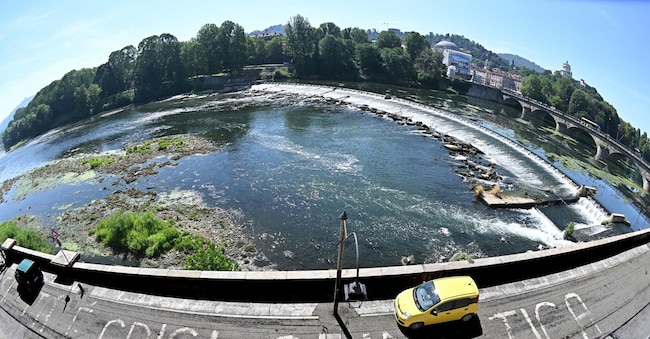
Fiume Po in secca ai Murazzi e terreni agricoli aridi dopo il caldo torrido, Torido, 8  luglio 2026. ANSA/ ALESSANDRO DI MARCO ANSA

3' min read

Translated by AI
Versione italiana

3' min read

Translated by AI
Versione italiana

Seven red alerts and nine orange alerts. The rest of the 27 cities being monitored are classified as yellow. No municipalities are in the green category. This is the situation reported by the Ministry of Health for Wednesday 15 July. Among the cities where thealert will be at level three – which indicates emergency conditions that are potentially hazardous to the health of even healthy and active people, and not just the most vulnerable groups – are Bologna, Brescia, Florence, Frosinone, Perugia, Rome and Turin. The heatwave is expected to peak between Wednesday and Thursday.

The third heatwave

Monday 13 July marked the start of a week of intense heat and stable weather conditions which, according to the forecast by Federico Brescia of iLMeteo.it, will see a mass of hot air from North Africa heading straight for Italia, affecting mainly central and southern Italia and Sardinia, though the north will not be spared either.

Loading...

One of the regions hardest hit by the third heatwave of the year – which arrived last week following those at the end of May and in the second half of June – is Sardinia. On the island, the new severe weather warning issued by the regional Civil Protection Agency will remain in force until at least Friday 17 July.

Maximum temperatures will remain high, above 37 degrees, and may reach 43 degrees in inland areas. In the Ottana Valley, Logudoro and Campidano, peaks of over 45 degrees are expected. 

Unlike during the first two waves, when the African high had merely brushed past the peninsula, the path of the current mass of warm air is further east and is therefore hitting Italia head-on.

Lorenzo Giovannini, an atmospheric physicist at the University of Trento, explains that “it will be very hot almost everywhere this week; perhaps only the Alpine region will be spared. Over the weekend, cooler air is expected to arrive from the north-east, which will cause temperatures to drop first in the northern regions and then gradually spread southwards over the following days’.

Fire alarm

On the subject of wildfires, the head of the civil protection department, Fabio Ciciliano, has reassured the public: “It is true that it has been hotter, but it is not true that there have been more fires. It goes without saying that the ones receiving the most attention, such as the fires currently affecting Piedmont, make big headlines because they are large, last a long time and occur in a region that is not normally accustomed to them’, whilst emphasising, however, that at present the number of recorded fires is no higher than in previous years.

However, according to an analysis by Coldiretti based on data from Effis – the European system that monitors large-scale wildfires – the record-breaking heat and drought are increasing the risk of fires, and over the past month almost 9,000 hectares of woodland and land have gone up in flames. The study suggests that extreme temperatures are facilitating the spread of the flames, exacerbating the damage already caused by the drought in the Italian countryside.

And, according to Coldiretti’s estimates, every hectare destroyed by fire incurs a cost of over 10,000 euros for fire-fighting operations, site clearance and the restoration of the affected areas. On top of the direct damage, there is also the impact on the local economy, tourism and biodiversity.

The rest of Europe

The situation remains critical across much of the continent. According to a study by Imperial College London, the Met Office and the London School of Hygiene and Tropical Medicine, at least 2,700 people may have lost their lives in England and Wales due to heat-related causes during the heatwaves in May and June.

Loading...

In Germany, on the other hand, there was a surge in drowning incidents in June alone: 99 people died in the water, the highest figure recorded in a month of June for over 20 years.

In France , the fire alert remains at its highest level. On Sunday afternoon, a fire broke out in the Fontainebleau forest, some 60 km from Paris, which was described as “of exceptional magnitude” by the area’s deputy prefect, Yannis Bouzar.

Copyright reserved ©
Loading...

Brand connect

Loading...

Newsletter

Notizie e approfondimenti sugli avvenimenti politici, economici e finanziari.

Iscriviti