
Excise duties: another extension. Confusion over petrol vouchers for employees and the self-employed
At today’s Cabinet meeting, the discounts were extended once again, albeit in a scaled-back form. From October, there are plans to provide support of up to 150 euros for low-income workers

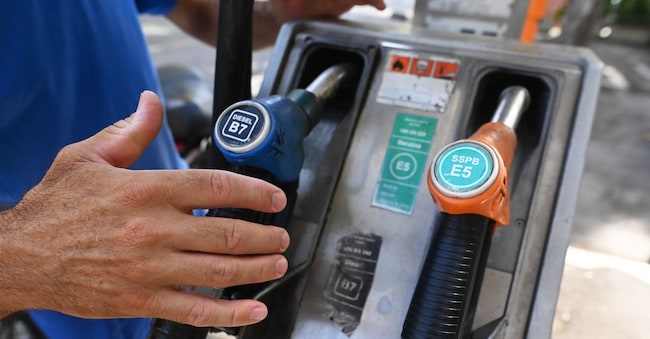
History shows that temporary tax breaks, once introduced, are difficult to scrap. And current events bear this out, with the 16th extension of the fuel excise duty cut expected this afternoon at the Cabinet meeting. Selective aid measures, announced on several occasions by Prime Minister Giorgia Meloni but so far bogged down by the difficulty of reconciling political imperatives with the needs of public finances, therefore risk a further delay – unless political imperatives make it necessary to set aside these expectations.
Reduced discount
As is always the case in such situations, figures, parameters and measures fluctuate right up to the last minute, all the more so given the constant back-and-forth between those calling for an immediate transition to the new phase and those advocating caution. To avoid fuelling the endless whirlwind of speculation, the Ministry of the Economy is maintaining absolute discretion. In recent meetings, a proposal to extend the diesel price discounts for a further 7–10 days has been put forward, with the aim of bridging the gap between the end of the old support schemes and the launch of the new ones on 1 October – provided, of course, that the new schemes are finalised in time.
The proposals suggest a discount of around 10–12 cents per litre. However, everything depends on the many variables at play, because, given the available resources, extending the duration reduces the size of the discount.
The petrol voucher proposal
As for the fate of targeted aid, however, the back-and-forth continues. The scheme, which has regained momentum following the uncertainties of recent days, centres on a 150-euro bonus to support employees and the self-employed with an income of up to 28,000 euros during the last three months of the year. Pensioners would remain outside the scope of the petrol voucher scheme, despite calls from Forza Italia. Civil servants could face the same fate, although the issue is likely to prove politically sensitive.
To move on to concrete measures, however, the final say lies with politicians and, consequently, with the maths required to work out the funding. All this against a backdrop complicated by the continued rise in fuel prices, which yesterday saw further increases, bringing petrol to 2.120 euros per litre (2.212 on motorways) and diesel to 2.231 euros (€2.313 on motorways). Brent crude followed the same trajectory, coming within a hair’s breadth of €110 per barrel yesterday, causing even greater alarm within the government regarding the outlook for the near future. The Prime Minister herself voiced these concerns during a meeting at Palazzo Chigi with the President of the European Council, Antonio Costa: ‘The continuous rise in energy prices requires targeted and immediate action at European level to support businesses and citizens,’ said Giorgia Meloni, according to a statement issued by Palazzo Chigi.
Upcoming events
Yet another ‘bridge’ towards the new phase of aid also allows the government to get past 22 September – a date marked in red on all government calendars – because on that day Istat’s national accounts will reveal the updated figures for GDP and the deficit for 2025. From then on, it will become clear whether the hopes – which are not unfounded – of bringing Italia out of the EU’s excessive deficit procedure as early as this autumn will be realised. Consequently, the outlook for the next steps will become clearer.
Those tables will not yield the billions in free money that many politicians dream of. However, the path towards the 2026 deficit will also take shape, aided, moreover, by higher growth than forecast in April, which could make it possible to keep the deficit at the expected levels whilst offering a margin of up to a couple of decimal places of GDP (just under 5 billion). Above all, should the country exit the procedure, the way will be cleared to activate the EU Pact’s safeguard clause, designed to use the extra deficit to finance investments in renewables and energy supplies, as well as those in defence. But it is the next chapter that will be written once the puzzles surrounding the most immediate measures have been resolved.


