
Action plan to combat Xylella in Calabria: seven infected plants identified in the Gioia Tauro Plain
The Puglia model is setting an example. Measures have been planned to contain the outbreak, involving the felling of trees to protect the entire olive oil supply chain, which is already suffering from speculation and low prices

Key points
In a region where the area under olive cultivation exceeds 183,000 hectares – of which almost 30 per cent is organically farmed – and which is second in size only to Puglia, Calabria – a land where the olive tree is an invaluable natural heritage and a symbol of identity that has been part of its history for centuries – is now reeling from the spread of Xylella fastidiosa of the pauca subspecies. A containment plan is ready, modelled on the ‘Puglia System’ – the region that was the first, from 2013 onwards, to tackle olive wilt syndrome with new plant health policies and ad hoc prevention strategies. Over the years, the bacterium has changed its behaviour; in many areas it has been contained but not entirely eradicated.
Seven infected plants
Seven infected olive trees have been identified in an agricultural area on the outskirts of the town centre of Taurianova, in Contrada Olivetella, an inland area of the fertile Gioia Tauro Plain in the province of Reggio Calabria, where olive oil production stands at nearly 11 million litres, accounting for more than a third of the region’s total, with a total turnover – according to data from the latest report by the Council for Agricultural Research and the Analysis of the Agricultural Economy – of around 650 million euros.
The regional decree to protect the olive oil supply chain
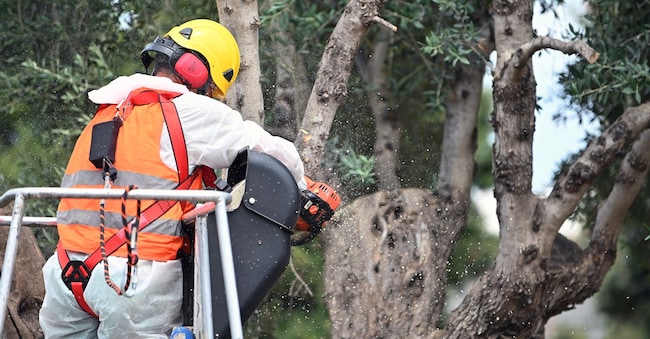
Reactions were swift: the Regional Department for Agriculture, Inland Areas and Territorial Connectivity Policies, following the technical and phytosanitary report by Arsac (the Regional Agency for the Development of Calabrian Agriculture), confirmed the presence of the bacterium. It has just issued a decree to contain the infected area within a radius of 80 metres, extend the buffer zone to a width of 2.5 km and plan eradication operations, with a view to safeguarding the region’s olive-growing heritage and the entire olive oil supply chain. The owners have also been notified of these measures.
Attack from the south
“We would never have imagined such an attack from the south,” explains Gianluca Gallo, regional councillor for Agriculture. “ At most, we feared the spread of the bacterium from the north, from the upper Ionian coast near Cosenza, but instead the first to be affected was an olive tree in the courtyard of a private home in Taurianova. And six other trees on an adjacent plot. We acted swiftly, taking advantage of the fact that the insect vectors do not move about in summer. In the meantime, we have set up a crisis unit involving Arsac, Crea, the Forestry Carabinieri, the Metropolitan City of Reggio Calabria, the Mediterranean University and our department.”
Guaranteed compensation
“At the moment we are confident that the problem does not pose a threat to the economies of the affected areas, and, moreover, the Minister for Agriculture, Francesco Lollobrigida, has already assured us of compensation for replanting. ‘Let us learn from what has already happened in Puglia,’ adds Gallo, ‘and focus on technological innovation to develop innovative systems capable of preventing the spread of the bacterium.’

