
From olive trees affected by Xylella to marine plastic: recycling for a green future
In Puglia and Sardinia, innovative Italian projects are transforming agricultural waste, marine litter and textile waste into sustainable materials

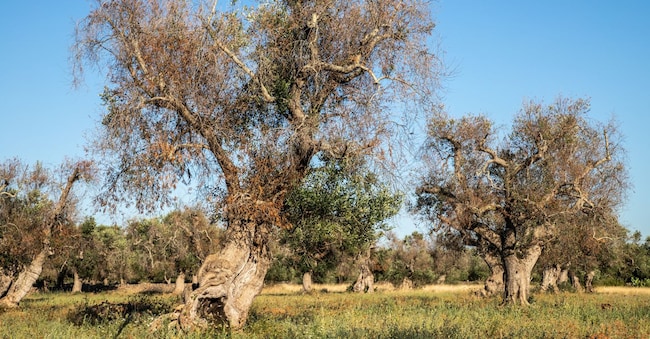
From smartphone cases made from olive wood fibres sourced from trees affected by Xylella to plastic fished from the sea and recycled. And then there’s plant-based leather made from cork waste. Sustainability is not only becoming part of business but is also connecting companies and local communities.
Xylella and smartphones
This is the case in Tricase, in Salento, where a new chapter is being written in the story of the olive trees affected by Xylella. This marks the start of a new chapter in the story of Vaia, a B Corp and benefit corporation that is bringing its regenerative model to Puglia and which has already planted 200,000 new trees in the Dolomites.
The company presents Olive Matter, a material developed using olive wood fibres sourced from trees affected by Xylella, which is used to create 100% Made in Italy smartphone cases. The starting point was the thousands of trees felled following the Xylella outbreak, which affected 20 million olive trees. This 100% recyclable biocomposite product was conceived as part of a research project carried out in collaboration with the University of Trento – Department of Industrial Engineering, supported by the establishment of a scientific committee comprising researchers from the CNR in Bari and the University of Salento, with a focus on environmental regeneration and an Italian production chain involving organisations from Puglia, Emilia-Romagna, Piedmont and Veneto.
The purchase of every cover supports a regeneration project: every product sold will help to regenerate one square metre of Mediterranean scrub in the municipality of Specchia, contributing to the creation of the first ‘Forest of Rebirth’ in the Apulia region. “With Olive Matter, we want to demonstrate that applied research, design and a connection with local areas can help create products capable of making a positive impact,” comments Federico Stefani, founder and president of Vaia. “The idea of placing a case made of living material – one with a verified origin that supports the regeneration of a local area – into the hands of thousands of people around the world is something that excites us and drives us to let our imagination run wild when considering future applications.”
Plastic and fishermen
Then there is the ‘sea’ section, where fishermen retrieve nets, plastic, fish traps and other items which, after sorting, will be sent for recycling and processed into new plastic. The latest initiative, promoted by Uecoop Sardegna, took place in Teulada, Sardinia, where a campaign to recover ‘ghost nets’ has been launched as part of a project promoted by Coldiretti Cagliari.

