Cinema

Farewell to Fulvio Lucisano: the king of producers was 98 years old

A pioneer of Italian cinema, Lucisano founded leading production companies and headed ANICA, leaving a legacy that lives on through his daughters in the world of show business

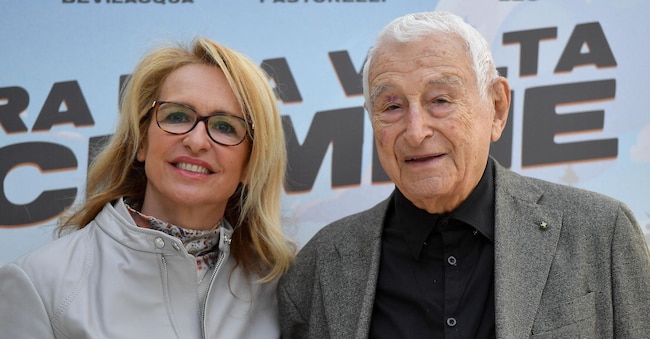
Federica e Fulvio Lucisano  ANSA

5' min read

Translated by AI
Versione italiana

5' min read

Translated by AI
Versione italiana

‘There’s no doubt about it: as far as I can remember, this is the most difficult time the film industry has ever faced. And I take a rather bleak view of the situation, not least because of the slowness with which the authorities are tackling it.’ It was 28 June 2020, and Fulvio Lucisano began a lengthy interview with Il Sole 24 Ore – conducted alongside his daughter Federica – with these words. It is hard to dismiss such remarks when they come from one of the giants of Italian cinema.

Fulvio Lucisano, born on 1 August 1928, has seen it all in his career spanning some 70 years: from the days of queuing at the box office, through the period when the cinema began to grapple with commercial television – and to suffer as a result – right up to the current era of streaming platforms, which are part client and part competitor (and whether they are more adversaries or allies is a very open debate).

Loading...

His is no ordinary vantage point: in addition to his work with the Lucisano Media Group, during his long career he has also served as president of ANICA and the National Union of Film Producers, been awarded the title of Cavaliere del Lavoro, and won a David di Donatello and a Nastro for lifetime achievement. Producer, distributor, cinema operator and talent scout. ‘Cinema will suffer just as the theatre has suffered. But people will continue to go to the cinema. The cinema is irreplaceable,’ was his conclusion. And indeed, looking at it now, with the Covid effect behind us, the trajectory outlined by those words seems to have held true.

A life dedicated to cinema

At the age of 98, Fulvio Lucisano has passed away, leaving behind a legacy that extends far beyond the credits of over 130 films, the David di Donatello awards, the Nastri d’Argento, the Oscar nominations or the company he founded bearing his name. He leaves behind a craft. Or perhaps, more precisely, a way of understanding it. That of the producer who would read a script, watch an actor take to the stage, do some quick calculations and then decide to take a risk. Often with his own money. And his reputation.

Lucisano belonged to a generation for whom making films did not simply mean managing tax credits, distribution windows and platforms. Above all, it meant making choices. And sometimes getting it wrong. He himself recounted, without mincing his words, that he had turned down the Italian rights to *Rambo* because, in 1982, it had seemed too violent to him, and that he had sold the rights to *God Forgives… I Don’t!*, the first film starring the duo Bud Spencer and Terence Hill.

The wonderful thing is that, in an industry where almost everyone remembers only the successes, Lucisano also remembered the mistakes. The successes, after all, were enough to fill a lifetime. One in particular: Massimo Troisi.

Troisi, the ‘Jolly’

In the late 1970s, Lucisano went to the Teatro Tenda in Rome, saw that Neapolitan comedian who spoke as if the words were coming at him a split second before he uttered them, and realised that the film industry had to get hold of him. He summoned him and persuaded him – not without some resistance – to direct a film himself. The result, released in 1981, was *Ricomincio da tre*. Lucisano remembered Troisi as ‘meticulous, an extraordinary character’. And he had also found a very practical solution to the problem of that Neapolitan accent which some members of the audience might not understand: ‘I asked him to repeat his lines two or three times. By then, they became understandable to everyone’.

That was his method: intuition and craft. Born in Rome on 1 August 1928, he graduated with a degree in Law – because his family would have preferred him to become a solicitor – but Lucisano had chosen a different stage very early on: the cinema. In 1949, he took part in the making of the documentary *Anno Santo*, dedicated to the 1950 Jubilee; this was followed by his work at the Istituto Luce, newsreels for Latin America, hundreds of documentaries and, finally, his own production company.

In the early days, there was also a loan of one million lire from the Cassa di Risparmio, which was used to produce the documentary “Mattino a Piazza Navona”. This was followed by meetings with American producers such as Samuel Arkoff and Roger Corman, and the establishment of Italian International Film, founded in 1958 and which, many decades later, became the Lucisano Media Group, listed on the stock exchange in 2014.

The cream of Italian cinema

In between lies a huge slice of Italian cinema. Damiano Damiani, Luigi Comencini, Mauro Bolognini, Franco Zeffirelli, Liliana Cavani, Lina Wertmüller, Francesca Archibugi. And, on the other side of that same industry, Enrico Montesano, Paolo Villaggio, Neri Parenti, Carlo and Enrico Vanzina, Franco Franchi and Ciccio Ingrassia. Right up to Alberto Sordi.

Loading...

My relationship with Sordi was close enough to border on family. On set, he’d be brought lunch prepared by the Lucisano family’s nanny. Fulvio would smile at the legend of our very own ‘Albertone’ being a miser. But there was one flaw he wouldn’t overlook: ‘He did, however, have one vice. That of taking pleasure in himself.’ The editor would laugh at his jokes and, as he recounted, Sordi wouldn’t let anything be cut out. ‘In the end, the films were so long that it was impossible. In some cases I managed to rein him in, in others I didn’t.’

Films produced

That, too, was part of being a producer: saying no to a star. Lucisano’s filmography almost takes you on a journey through Italy from the 1960s to the present day, changing genre at every stop. *Il tassinaro*, *Un ragazzo di Calabria*, *Il grande cocomero*, *Fantozzi – Il ritorno’, right up to the new era of comedy that began in 2006 with *Notte prima degli esami*, followed by *Ex*, *Nessuno mi può giudicare*, *Io che amo solo te* and *Non ci resta che il crimine*.There, too, behind the film, lay a small entrepreneurial gamble. For *Notte prima degli esami*, the group invested 250,000 euros to organise free screenings and spark word-of-mouth buzz. ‘We were curious to see what effect that marketing decision would have. It was a resounding success,’ his daughter Federica would recall. Because, in the meantime, the business had also become a family affair. Federica was at the helm of the group, whilst Paola was involved in television productions. ‘Dad had his office on the top floor of the building. I remember going upstairs to sort out the invoices,” Federica told Il Sole 24 Ore. Above all, she remembered Sunday mornings at the Metropolitan with her father, after Mass. Upon hearing the news of his death, Paola chose three words: “Rest in peace, Dad.”

Donatello’s David

In 2005, the Venice Film Festival paid tribute to his career; two years later, he was awarded the title of Cavaliere del Lavoro. In 2009, the David di Donatello Lifetime Achievement Award marked his fiftieth year as a producer. But more than the accolades, what remains is the legacy of a man capable of navigating very different eras without ever losing his connection with the public. A career that began in post-war cinema and spanned right up to contemporary film production, always guided by the same philosophy of the craft: choosing stories, discovering talent and turning them into films. With his passing, Italian cinema loses one of its last great figures, a direct witness to a history that began more than seventy years ago.

Copyright reserved ©
Loading...

Brand connect

Loading...

Newsletter

Notizie e approfondimenti sugli avvenimenti politici, economici e finanziari.

Iscriviti