
Adidas, the race for World Cup kits: rising sales and a challenge to Nike
The group, which sponsors Germany, has supplied technical kit to 14 of the 48 national teams and estimates that this will have an impact on turnover of one billion euros

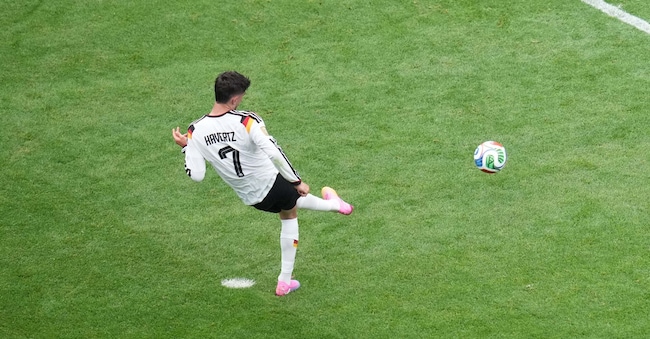
The enthusiasm of German fans for the national team is having an unexpected impact on the sports merchandise supply chain, turning into an operational problem for Adidas: the letter ‘V’ is temporarily out of stock for personalising official shirts. The high demand for kits associated with players Kai Havertz, Deniz Undav and Aleksandar Pavlovic has, in fact, made it impossible, for the time being, to fulfil online orders for personalised versions featuring these surnames.
Adidas has confirmed the rumours reported by the German newspaper *Bild*, explaining that “the high number of requests for personalised shirts for Undav, Havertz and Pavlovic has led to a temporary shortage of the letter ‘V’”. However, the company has clarified that this is a temporary issue: “Stocks are already being replenished and shirts featuring the letter ‘V’ will soon be available online again.”
Merchandising as a revenue driver
This trend highlights the increasingly significant role of merchandising as a driver of turnover at major international football events, where the sale of shirts represents a strategic component of revenue for sportswear manufacturers. For the 2026 World Cup, whichis currently being held across the United States, Canada and Mexico, Adidas has supplied the kit to 14 of the 48 participating national teams and estimates a total impact on turnover of around one billion euros, although it has not specified the proportion directly attributable to shirt sales. The national teams on Adidas’s roster are Algeria, Argentina, Belgium, Colombia, Curaçao, Germany, Japan, Mexico, Qatar, Saudi Arabia, Scotland, South Africa, Spain and Sweden.
According to the company’s own statement, Germany’s blue away kit is performing better than expected, with demand accelerating both following the announcement of the final squad and as the tournament gets underway. In Germany, two versions of the official kit are currently available: a standard version priced at 100 euros and a premium version at 150 euros, with prices broadly in line across other international markets as well.
The World Cup of Brands
On the competition front, Puma – which supplies kits to 11 national teams taking part in the tournament – is also reporting positive sales trends. In particular, Portugal’s shirts are among the most sought-after, whilst the kits for New Zealand, Morocco, Senegal and the Ivory Coast are also performing well. The group emphasises, however, that it is taking a long-term strategic approach, highlighting that the main objective is not merely immediate revenue growth, but the strengthening of brand equity and the relationship with fans in international markets.


