
Advisory networks, exceeding one trillion in inflows
Doris: 'Financial advisors remain essential for Italian savers'

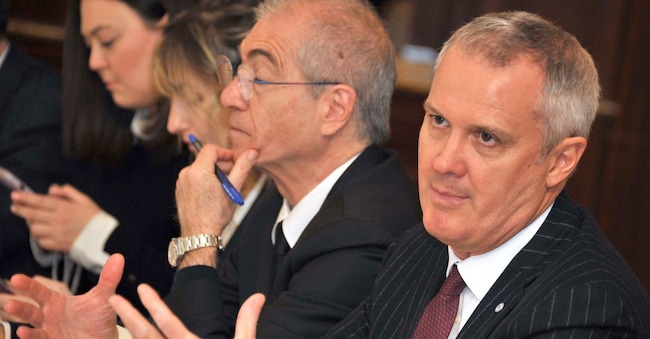
Having passed the milestone of EUR 1,000 billion in assets under management, having generated 90% of inflows in mutual funds over the past decade, financial advisory networks are projecting themselves into the future thanks to a decisive generational change. During the presentation held yesterday in Milan, Assoreti chairman Massimo Doris and secretary general Marco Tofanelli outlined the state of the financial advisory sector in Italia.
The first figure in evidence is therefore dimensional in nature. Doris explains: 'The networks have reached 1007 billion in assets under management, marking a 132% increase over the 434 billion in 2015. Currently, financial advisors manage 24.8% of the financial assets of Italian households. The average annual growth rate of assets entrusted to the networks stands at 8.4%, compared to the 1.7% recorded by other intermediaries'. The second important element concerns the role of the networks in channelling savings. Over the last ten years, the networks have collected 200 billion for open funds compared to the total 220. This propensity to invest is reflected in asset allocation: 'At the end of 2025,' explains Tofanelli, 'liquidity in the portfolios of advisory clients stands at 13.5%, compared to the 41.4% recorded by other intermediaries. In this way, savers followed by an advisor have been able to contain the effect of inflation, which has eroded 18.4% of the purchasing power of uninvested liquidity since 2015'. In addition to purely numerical aspects, Doris went on to emphasise the importance of the behavioural support offered by advisors, based on 'empathy', since 'most people want to talk to someone, especially in times of difficulty'.
The third indicator analysed is the generational turnover in the profession. Data show that in 2025, 57.5% of new registrants of financial advisors were under the age of 35, a sharp rise from 25.2% in 2015. This demographic shift has been driven by changes in the organisational models of networks, which, in order to circumvent the initial difficulties of young professionals in being entrusted with capital, have placed them in team teams in which they are supported by senior figures.
The meeting also touched on the topics of efficiency, costs and artificial intelligence. Doris recalled: 'As early as the early 2000s, with the arrival of online trading, there was talk of the end of this profession, and the same prediction was repeated cyclically with the spread of ETFs, low-cost passive funds and, finally, robo-advisors. But the advisory networks have continued to grow'. The same logic applies today to Artificial Intelligence, which is not conceived as a substitute for the professional, but as a technological resource to make internal processes more efficient, not least to absorb rising regulatory costs. As for the DIY of savers, which artificial intelligence could enable, Doris recalls that banks are making significant investments in specialised artificial intelligence to support advisors, not comparable with the possibilities of generalist AI.

