
Afd becomes increasingly radicalised: resolution in Bavaria in favour of remigration
The regional branch of the ultra-right party approves a document calling for the repatriation also of 'groups of people with little ability and willingness to integrate'. Stop asylum on German soil: 'Protection zones outside Europe'. But companies are short of hundreds of thousands of workers

3' min read
3' min read
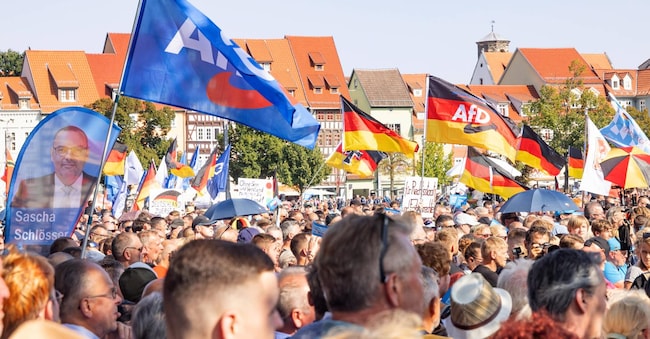
With the election campaign now underway, Alternative für Deutschland is becoming more and more extreme: the congress of the party's Bavarian branch passed a resolution in favour of remigration on 23 November, a euphemism that appeals to far-right movements in Europe as much as to Donald Trump's Republicans. But German companies are short of hundreds of thousands of workers.
Away with those who do not integrate
.In the imagination of the Afd in rich Bavaria, mass deportation would not only affect migrants who have committed crimes. The proposal put forward by the vice-president of the regional party, Rainer Rothfuß, argues that also 'groups of people with little ability and willingness to integrate should be returned to their home country through compulsory repatriation programmes and supported in reintegrating into their home society and (re)building their country'. Let's help them at home, in short.
On the web site of Afd Bavaria, a photomontage of an airliner flying over a group of migrants on the way stands out. In the centre the slogan 'Remigration ist machbar', remigration is possible. Remigration, explains a press release on the same page, is 'a scientifically neutral concept'. In somewhat victimising tones, Afd complains about the manipulations of the 'lying press', which accuses it of 'xenophobia or even racism'.
The arguments in favour of remigration are the usual ones: 'The German social system must not continue to be overburdened by millions of benefit recipients without citizenship status. Otherwise, the increase in taxes and fees risks turning Germany into a country with a permanent industrial exodus and dragging our economy into the abyss'.
Stop asylum
.Then there is the insistence on stopping the right to asylum. People fleeing authoritarian regimes or wars will still be able to obtain international protection, but not in Germany or even in Europe. In fact, asylum seekers should not reach German soil at all. Instead, 'protection and development zones outside Europe' should be created, the Bavarian resolution states.


