
Sahel: Chad also withdraws from the International Criminal Court
The Sahelian government bids farewell to The Hague following similar rifts involving the military juntas in Mali, Burkina Faso and Niger
from our correspondent Alberto Magnani
 Aggiungi Il Sole 24 Ore
ai preferiti su Google
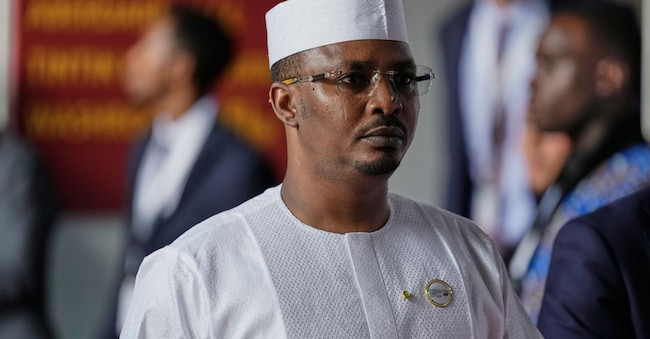
NAIROBI – The Sahelian state of Chad has announced its withdrawal from the International Criminal Court, formalising months of tensions over the ‘prejudices’ against Africa that have already been challenged at the court in The Hague.
The break comes just a few months after the rifts caused by the coup-installed regimes in Burkina Faso, Mali and Niger on the African continent, and in Venezuela in Latin America, at a time further complicated by the search for a new prosecutor following the dismissal of Karim Ahmad Khan. The break with N’Djamena, according to a government statement, is the ‘result of an in-depth review of the functioning of the International Criminal Court since it began operations in 2002, as well as its track record, the effectiveness of which remains limited and geographically unbalanced’. The government has accused the court of having focused the bulk of its investigations on African countries and of making ‘no concrete progress’ – a claim that has already been refuted on several occasions by the ICC.
The break-up of the coalitions with the CPI
Chad is a country with a population of around 20 million in the heart of the Sahel, rich in resources such as oil, gold and uranium. Following the death in 2021 of its long-standing leader Idriss Déby Itno, who had been in power for three consecutive decades, power passed into the hands of his son, Mahamat Déby, in a de facto coup that paved the way for one of several ‘transitional’ governments to emerge from the flurry of sub-Saharan coups between 2019 and 2023. Déby subsequently called and won the 2024 presidential election with 61 per cent of the vote, in a contest deemed to have been rigged by the opposition and some observers. N’Djamena’s trajectory has already been likened to that of the openly coup-installed governments in the Sahel, starting with the severing of ties with Emmanuel Macron’s France and the military troops deployed in the country.
The ICC’s split appears to mirror this political and diplomatic line, emphasising the anti-African or Eurocentric biases that are said to characterise the institution’s work. But there may be other influences, or affinities, with another player that is (re)gaining ground on the continent: Donald Trump’s US.
The phone call with Garcia
“The announcement of the withdrawal from the ICC comes just as US Secretary of State Marco Rubio has launched a campaign to dismantle the Court,” notes Tamara Aburamadan of Human Rights Watch, a US-based NGO, recalling the telephone call on 23 July between the Chadian Foreign Minister, Abdoulaye Sabre Fadoul, and the newly appointed US Under-Secretary of State for African Affairs, Frank Garcia. At the same time, Aburamadan recalls, some African leaders had already called a decade ago for the adoption of a ‘mass withdrawal strategy’ from the Court, only to come up against the hostile stance of governments such as those of Nigeria, Senegal, Côte d’Ivoire and Tunisia. Today, “the geopolitical landscape is different from what it was a decade ago”, Aburamadan points out. The NGO has asked the AU to “intercede” to reverse the decision by Chad and the three coup-installed juntas.


