
Brad Smith (Microsoft): 'Ai is the new electricity but beware of the North-South divide'
According to the vice-president of the Redmond giant and the company's main interlocutor with governments and institutions around the world, red lines exist and must be maintained

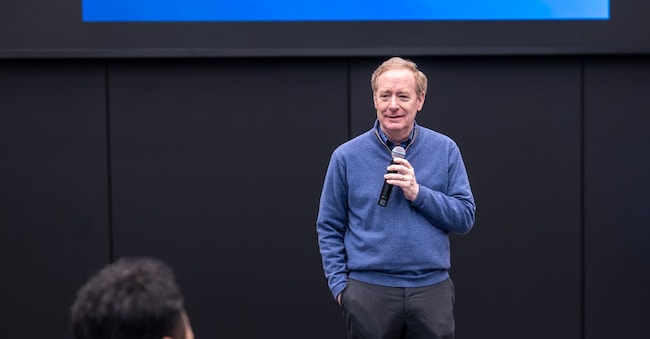
When Microsoft speaks, it is not just a multinational software company that speaks. A veritable global geopolitical player speaks, whose digital infrastructure underpins governments, hospitals, schools and entire economic systems. And when its chairman, Brad Smith, takes the floor, it is like listening to the Redmond giant's 'foreign minister'. Understanding Smith's vision is not just an exercise for insiders: it means understanding how the company that is leading (together with OpenAI) the artificial intelligence revolution intends to move in the delicate chessboard between innovation, regulation and social impact.
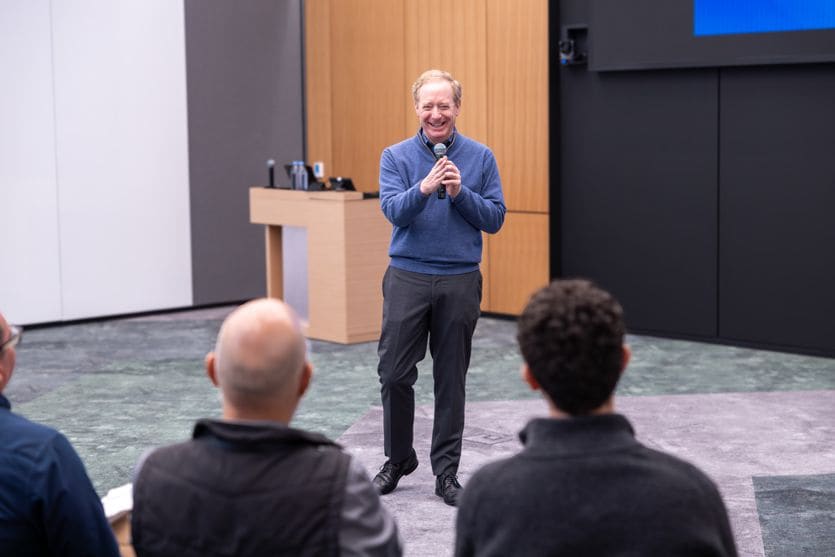
Here's how Microsoft is designing our near future, between billion-dollar investments, military 'red lines' and the promise of a sovereign cloud for Europe.
"AI is the new electricity, but watch out for the global blackout," began Brad Smith, the vice-president of Microsoft, the man - let us remember - chosen by CEO Satya Nadellto manage the complex relationship with the US administration and governments around the world that use their technology, during a closed meeting with international journalists.
To frame the historical significance of the moment, Smith does not mince words and resorts to classical economics. Artificial Intelligence is not mere software, but 'the next great general purpose technology'. What economists call GPT (General Purpose Technology), capable of spreading throughout the economy.
Smith's favourite comparison is electricity, which has enabled an enormous level of innovation since 1880. But electricity brings with it a stark lesson that Silicon Valley cannot ignore. History teaches us that 'where electricity went, prosperity followed', but it took decades before it reached the South, creating the economic divide we still see today.


