

Does air conditioning make us ill? From bacteria to colds: here’s how to use it properly
The team of doctors and fact-checking experts from the National Medical Association addresses the main health concerns

Key points
- Does air conditioning give me a cold?
- Can air conditioning spread bacteria or other harmful microorganisms?
- Does an air conditioner protect your health during heatwaves?
- How should you behave when there are babies or young children in the house?
- How do you use an air conditioner properly?
- What about fans? Are they a safe alternative to air conditioning?
In summer, air conditioners are everywhere: at home, in the office, on public transport, and in shops. They protect us from the heat, but we are often left wondering whether they might cause colds, sore throats, headaches or infections. Some of these concerns are well-founded, others far less so. This factsheet answers the most common questions about personal health; those wishing to explore the environmental impact and inequalities linked to the use of air conditioning in more depth can read “Is air conditioning bad for you?”.
Does air conditioning give me a cold?
No, strictly speaking. A cold is caused by viruses, not by the cold itself. However, prolonged use of air conditioning can create conditions that contribute to respiratory discomfort. The air cooled and dried by air-conditioning systems reduces the humidity in rooms, and this can dry out the mucous membranes in the nose and throat, making them less effective as a barrier against irritants and microorganisms. In any case, draughts and cold air currents alone are not enough to make us ill: without the involvement of a virus or bacterium, the cold does not cause colds or flu, as we explained in the factsheet ‘Are draughts dangerous to health?’.
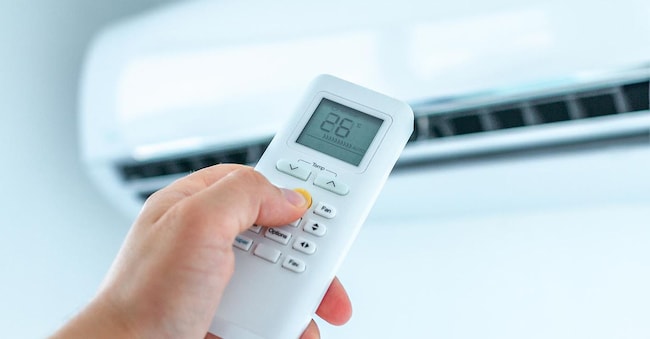
The problem is exacerbated when the indoor temperature is too low compared with the outdoor temperature. The Department of Health recommends setting the air conditioning to between 25 and 27°C, so as not to expose the body to sudden temperature changes. If you move between very cold environments and temperatures of 35–40°C several times a day, your body finds it harder to adapt. It is also worth remembering that keeping windows closed for long periods – to keep out the heat or because the air conditioning is on – reduces air circulation and increases the concentration of microorganisms indoors: opening windows during the cooler hours, as we explain at ‘Is it important to open the windows?’, remains a good habit even in summer.
Can air conditioning spread bacteria or other harmful microorganisms?
In some cases, yes, but only if the systems are not properly maintained. The best-known risk is legionellosis, a form of pneumonia caused by the bacterium Legionella pneumophila. The bacterium does not survive in cold air as such, but it multiplies in stagnant water at temperatures between 20 and 50 °C, as can occur in the water circuits of large air-conditioning systems that are not regularly maintained. When this water is atomised, the contaminated particles can be inhaled. The risk increases during the summer months, as the seasonal temperatures in tanks and rarely used pipes are precisely those at which the bacterium grows most readily. We have discussed this in detail in the factsheet ‘Does the risk of contracting Legionnaires’ disease increase in summer?’.
Traditional domestic air conditioners do not spray water and pose a much lower risk than large centralised systems with cooling towers. Dirty filters can also accumulate dust, mould and other allergens, worsening indoor air quality: this is particularly important for people with asthma or respiratory allergies. The solution is simple: regular cleaning and maintenance of the systems, in accordance with the manufacturer’s instructions and the Ministry of Health’s guidelines.

