
AirAsia is seeking foreign investors to ensure its survival
Asia’s largest low-cost airline secures $1 billion in funding on the financial markets. AirBaltic: US court approves Chapter 11

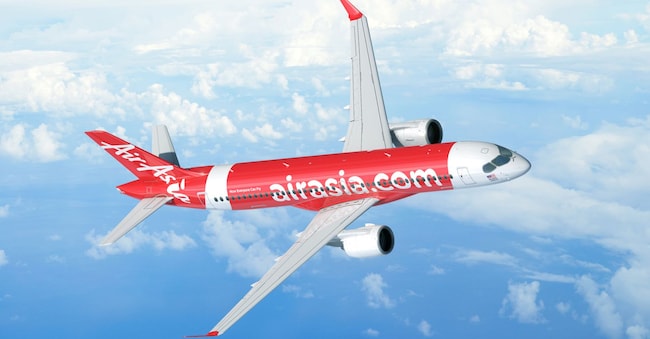
It is not only American and European airlines that are suffering from rising fuel costs. Whilst AirBaltic has been granted approval by a New York court to file for Chapter 11 protection for its restructuring plan, AirAsia, Asia’s largest low-cost carrier, based in Kuala Lumpur, Malaysia, is seeking new sources of funding to service its debt, which has been weighed down by jet fuel costs. The Malaysian government is also coming to the carrier’s aid and is reported to have begun talks with competitors Malaysia Airlines and Batik Air to assess their capacity to absorb a significant portion of the domestic market should the low-cost airline find itself needing to scale back its operations further.
According to Reuters, citing sources close to the matter, discussions have intensified in recent weeks and are also said to involve the Ministry of Finance and Malaysia Airports Holdings Berhad, the state-linked airport operator.
The pressure on the finances of AirAsia, a privately owned but publicly listed company, has intensified as operating costs have risen, particularly those related to fuel. In the second quarter, the average cost of jet fuel rose to around $183 per barrel, an increase of 66 per cent compared with the previous quarter. The AirAsia Group has a fleet of 243 aircraft, all of which are Airbus: this year, it placed an order for 150 Airbus 220s.
For a low-cost airline, characterised by high volumes and relatively low margins, rising fuel prices are a particularly sensitive issue. AirAsia has also had to contend with significant foreign-exchange losses.
In the quarter ended 30 June, the company recorded a net loss of $205 million, whilst foreign exchange losses amounted to $81 million.


