
Airlines plummet, pay chaos in the Middle East with thousands of flights cancelled
The global disruption of air transport caused by the US-Iran conflict is comparable only to that experienced during the pandemic, with over 5,000 flights cancelled. Tourism stocks also hit hard

Le ultime da Radiocor
Difesa: Crosetto, nessun Paese europeo puo' da solo affrontare le sfide
Borsa: riparte da Anthropic dopo una settimana nera, Milano (+1,3%) rivede quota 49mila
***Newcleo: Rizzotti, volatilita' nelle corde di mercato dinamico, andiamo avanti
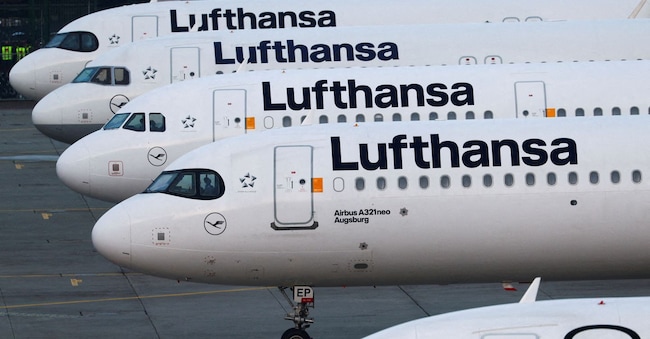
(Il Sole 24 Ore Radiocor) - Airlines plunged on European stock exchanges as the conflict in the Middle East caused thousands of flights to be cancelled. In Paris falls Air France-Klm and in Frankfurt Deutsche Lufthansa . In London, sales targeted Iag (Iberia and British Airways) and Wizz Air. Consistent, but smaller, losses for Easyjet and Ryanair.
Global airlines cancelled flights across the Middle East after the US and Israel launched airstrikes against Iran on Saturday, which then launched retaliatory strikes, plunging the region into a new conflict that is spreading to other countries. Global air traffic is also disrupted today as the war forced the closure of major Middle Eastern hubs, including Dubai, Doha and Abu Dhabi, for the third consecutive day, stranding tens of thousands of passengers worldwide. It is estimated that over 5,000 flights were cancelled. This is a global disruption of air transport comparable only to that experienced during the pandemic. Between delays, cancellations and hijackings, major airlines are reviewing routes and operations on an international scale. Several big names in the industry have already announced stoppages or severe restrictions. Flight tracker maps show an almost total 'vacuum' over Iran and neighbouring countries, with traffic diverted to alternative routes, mainly via Egypt and Saudi Arabia. The most heavily penalised routes are those between Europe and Asia. To avoid the entire region, flights are forced to lengthen their routes, resulting in increased travel time and fuel costs.
Easa, the European Aviation Safety Agency, issued a bulletin on the conflict zones recommending that airlines do not operate in the affected airspace, at all altitudes, until at least 2 March. In the statement issued on 28 February, the agency indicated that 'given the ongoing military intervention, retaliatory actions against US and Israeli assets in the region are likely to occur, introducing additional elevated risks not only to Iran's airspace, but also to that of neighbouring states hosting US military bases or otherwise affected by hostilities and associated military activities, including interceptions. The possession of air defence systems at any altitude, cruise missiles and ballistic missiles, and the employment of air assets capable of operating at any altitude, including interception capability, make the entire affected airspace vulnerable to risks of spill-over, misidentification, miscalculation andfailure of interception procedures. Given current and expected developments, there is therefore a high risk to civil aviation in the affected airspace'.
Air France-KLM is particularly affected by the downturn as it also announced that it had taken note of the Justice of the European Union Court of Justice ruling upholding the European Commission's 2017 decision against 13 cargo operators, including its subsidiaries KLM and Martinair, for past practices deemed anti-competitive. "The practices in question date back more than 20 years and were the subject of administrative proceedings before the European courts, culminating in a now final decision," Air France-KLM said in a press release. The group expects to pay a sanction of 368 million euros, including interest, in March 2026. The company points out that EUR 366 million had already been set aside in its accounts for this litigation.
Tourism stocks also fell
The escalation in the Middle East also hit tourism stocks hard on the European stock exchanges. In Paris, Accor, Europe's leading hotel group, fell in the morning and in Frankfurt Tui, the Old Continent's leading tour operator. Among cruise lines, Carnival in London declined. On the third day of its military operation with the US, Israel continued bombing Iran on Monday, while launching incursions into Lebanon that could last "many days" in response to attacks by the pro-Iranian Hezbollah movement against its territory. "We believe that an active war zone, coupled with flight disruptions due to the closure of airspace and airports, will dampen the propensity to travel to the region," B Riley Securities said in a note.

