

Alaa Farouk: “The Italian agricultural sector can look to Egypt as a hub for Africa. We are ready.”
The Egyptian Minister of Agriculture explains the programme to strengthen the sector and the plans for food security. “We are identifying ways to make the best use of the assets owned by the ministry, investing them as efficiently as possible.” “With Rome, we can go beyond the debt-for-equity swap model and make even greater use of the Ro-Ro link between Damietta and Trieste.” Aquaculture and new technologies are key. “We have discussed with the EU the creation of a centre for the production and marketing of high-yield seeds.”

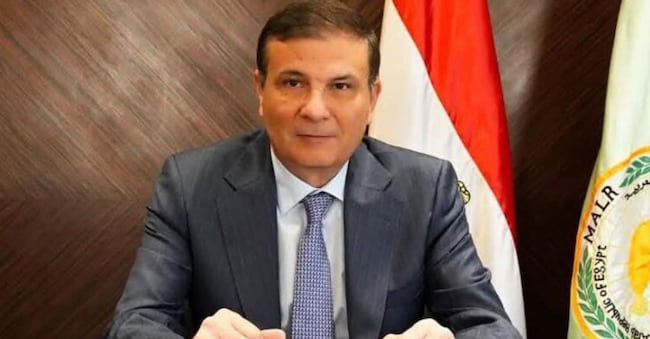
“There are still significant opportunities for Italian private companies wishing to expand their investments in the Egyptian agricultural sector, particularly in light of the government’s commitment to boosting agricultural investment and encouraging foreign companies to enter into partnerships with Egyptian entities and the private sector. This will have economic benefits for countries in the Mediterranean basin and North Africa.” This is according to Alaa Farouk, Egypt’s Minister of Agriculture and Land Reclamation, in an interview with 24OreNextMed, in which he also emphasises the aim of ‘strengthening intra-African trade and, at the same time, creating opportunities for European companies, including Italian ones, to access African markets’. With a long career in the financial and banking sector, Farouk served as chairman of the Agricultural Bank of Egypt from 2020 before taking up his ministerial post in July 2024. In this interview, the minister analyses the challenges facing Egypt’s agricultural sector and the investment opportunities for the Italian private sector.
Four decades in the banking sector, including senior roles at Barclays Egypt and the National Bank of Egypt. How has this career path influenced your approach to agricultural policy since becoming minister? Do you view agriculture primarily in terms of production, or as an investment system in which funding, risks and returns must be assessed?
‘There is no doubt that the experience I gained in the banking sector has had a positive impact on my work in the agricultural sector. Since becoming Minister for Agriculture and Land Reclamation in July 2024, I have consistently sought to manage this sector with an economic, investment-oriented mindset, with the aim of achieving maximum efficiency in the use of resources. We are identifying ways to make the best use of the assets owned by the Ministry, investing them as efficiently as possible. Furthermore, we are working on implementing a digital transformation system by digitising all the Ministry’s data and information, with a view to making the decision-making process more effective. We also wish to establish clear criteria for the selection and assessment of ministry officials responsible for supporting the implementation of this system. We are constantly working to transform the production and service sectors into activities capable of generating a return on investment. At the same time, we attach great importance to scientific research and innovation in agriculture, encouraging researchers working in research centres affiliated with the Ministry, and establishing specific indicators and standards to measure performance and monitor progress towards achieving the set objectives.”
Egypt and Italia have long-standing relations, particularly in the agricultural sector, including through the Italian-Egyptian debt conversion programme. In your view, has the time come to transform this long history of public cooperation into a broader phase of Italian private investment? And what should Egypt do to move from pilot projects to investments worth millions of euros?
‘The Italia debt-for-development swap programme is a successful model for supporting development sectors – not only agriculture but other sectors as well. The Ministry has benefited from the implementation of two projects under this programme. The first concerns support for the production of high-yield, drought-resistant seeds, particularly vegetable seeds, with the aim of increasing local production and reducing the expenditure on seed imports borne each year by the Egyptian state, especially with regard to seeds. This is currently one of the political leadership’s priorities. The second is a project dedicated to aquaculture, aimed at contributing to the achievement of food security by increasing fish production in Egypt. I would like to emphasise that, given the strong historical ties between Egypt and Italia, we hope to broaden the scope of this programme and increase the number of projects supported by the Italian side. This approach would strengthen cooperation between the two countries in the agricultural sector, support sustainable development and contribute to food security not only at national level but also at regional level, whilst improving conditions for smallholder farmers.”

