Agriculture

Alarm bells ringing for livestock farms as drought scorches maize and pastures

Coldiretti: damage exceeding 30 per cent, with some areas affected by up to 70 per cent

 Volker Müther - stock.adobe.com

2' min read

Translated by AI
Versione italiana

2' min read

Translated by AI
Versione italiana

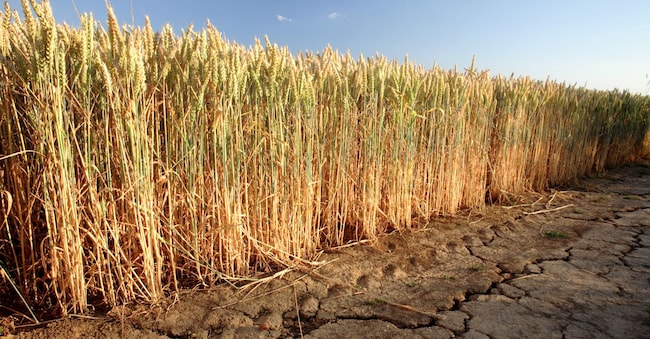
Concerns are mounting on Italian farms as the heatwave and drought are scorching pastures and maize crops, putting the supply of hay and cereals for livestock at risk, whilst costs for farmers are rising.

Coldiretti has sounded the alarm, as high temperatures and below-average rainfall are also having an impact on the livestock sector.

Loading...

This year’s maize harvest has been severely affected by extremely difficult weather conditions, with water stress having particularly impacted the flowering and grain-filling stages, compromising yield potential. In the worst-affected areas of Piedmont and Lombardy, damage is already estimated at over 30 per cent, with peaks of up to 70 per cent, whilst in some areas the harvest is even at risk of being completely lost.

The final extent of the losses will depend on weather conditions in the run-up to the harvest, but the drought is already the main limiting factor, with severe economic repercussions for farms and the entire livestock sector.

The pastures are also suffering, where the lack of rain, particularly in the north – from Piedmont to Trentino-Alto Adige – is causing falls in forage production of between 30 and 40 per cent.

The situation is even more dire in the mountain pastures, where the lack of rain has dried up the meadows and drastically reduced the availability of fresh grass, as well as the water needed to water the animals.

Similar situations have been reported in Val di Sole, Val di Non and Val di Fiemme , where fodder production has fallen by more than 40 per cent.

In addition to the risks associated with a shortage of hay and cereals, there are also falls in milk production.

In the Piedmontese mountain pastures, production has fallen from 7–8 quintals a day in normal years to 2–3 quintals. Consequently, cheese production has also fallen dramatically.

However, this phenomenon affects all livestock farms in general, which are suffering from the heat. Coldiretti estimates an average decline of more than 20 per cent between June and July, with the figures likely to worsen further, adding to the losses, particularly given the rise in costs.

Loading...

According to Coldiretti’s analysis, the record-breaking heat has also caused a 30 per cent rise in energy costs on livestock farms. The high temperatures have made it necessary to increase the output of refrigeration systems to cool the milk in time. But more is also being spent on air-conditioning systems for the barns, including misting systems, sprinklers and fans for the animals. The drought is also affecting the production of animal feed, with an estimated average increase of over 30 per cent in irrigation costs, including water consumption and the diesel required to operate the systems.

This is further proof – as Coldiretti points out – that the heatwave affects the entire livestock sector, because without water and fodder it is impossible to ensure that animals can remain in the mountains and that farms can continue to produce. Climate change is making it increasingly difficult to plan agricultural and livestock activities and calls for structural measures.

Copyright reserved ©
Loading...

Brand connect

Loading...

Newsletter

Notizie e approfondimenti sugli avvenimenti politici, economici e finanziari.

Iscriviti