The epidemic

Alarm over suspected Ebola case in Cagliari, patient with symptoms in isolation in hospital

A patient with symptoms compatible with Ebola has been isolated in Sardinia as the African epidemic continues to claim victims and worry international health authorities.

by Rome Editorial Staff

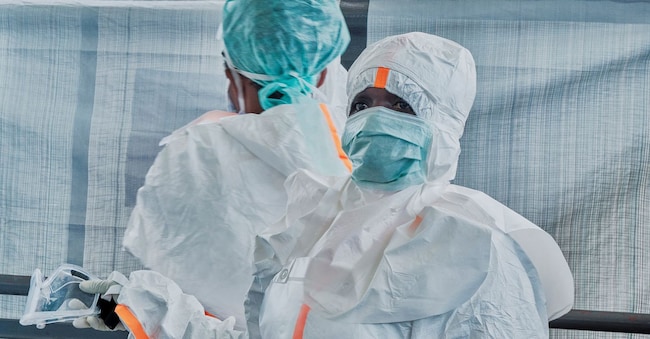
Il personale medico dell'Alliance for International Medical Action (ALIMA), una ONG internazionale, indossa i dispositivi di protezione individuale (DPI) mentre allestisce un centro di cura per la gestione dell'Ebola, mentre le agenzie intensificano gli sforzi per contenere una nuova epidemia di Ebola causata dal ceppo virale Bundibugyo, a Rwampara, nei pressi di Bunia, nella provincia di Ituri, Repubblica Democratica del Congo, il 29 maggio 2026. REUTERS/Gradel Muyisa Mumbere REUTERS

3' min read

Translated by AI
Versione italiana

3' min read

Translated by AI
Versione italiana

Protocols for a suspected case of Ebola were triggered in Cagliari to remove a person from a house and transport him to hospital. The person who had returned from abroad was reportedly suffering symptoms attributable to the virus. The protocol was triggered and the police, fire brigade and local police arrived on the scene in support of the 118. Doctors and nurses equipped with aseptic suits and masks entered the house and picked up the patient, who was transported to the Holy Trinity Hospital in the infectious centre, where all necessary investigations will be carried out.

Symptomatic patient

It is a symptomatic patient, the one admitted to Sardinia for a suspected case of Ebola. This was underlined by the Ministry of Health in a note stressing that the patient had returned from Congo and will be tested for the virus. The tests will be carried out at the Spallanzani in Rome in the evening. The patient, says the ministry, which is in contact with the local health authorities and the Spallanzani, 'is currently in isolation at a hospital facility'. The risk of Ebola in Italy, the ministry concludes, 'remains very low'.

Loading...

The outbreak in the Democratic Republic of Congo

Meanwhile, today the director of the Centres for Disease Control and Prevention of Africa (CDC) Jean Kaseya said that the Ebola outbreak that is ravaging the north of the Democratic Republic of Congo and has spread to Uganda has so far yesterday already resulted in 43 deaths and 263 confirmed cases. In an editorial published by the Financial Times, Kaseya also informed that there are currently more than 1,100 suspected cases and that the crisis has become a crucial test for the affected countries, the agency he heads and the African Union, because 'the risk of regional spread is already a reality'.

The contagion in Uganda too

Kaseya did not specify the distribution of those infected, but the vast majority were identified in the Democratic Republic of Congo. In its last assessment, the UN estimated that the Congolese province of Ituri, epicentre of the disease, concentrated 88% of confirmed cases. A total of nine confirmed cases, including one death, were reported in Uganda. Kaseya insisted that context is a critical factor in the spread. The fighting between the Army and militias in the north and north-east of the country has resulted in 'constant population movement across permeable borders' between DRC and neighbouring Uganda. Health systems are saturated and, for this strain of the virus, there is currently no authorised vaccine or specific treatment,' he warned.

"Between four and six months to defeat or contain the outbreak"

The director-general of the World Health Organisation (WHO) Tedros Adhanom Ghebreyesus is in Bunia, capital of the province of Ituri, this weekend to assess the situation in person and meet with the country's health authorities, including Health Minister Roger Kamba. In his first press conference yesterday, Kamba gave himself a period of 'between four and six months' to 'defeat or contain the outbreak'. The WHO chief, for his part, recalled Kinshasa's response in past outbreaks and argued that although there is no known vaccine for the current outbreak strain, the country's experience is currently the best weapon. "We know that this is a rather complex crisis, but the DRC already has extensive experience in fighting the virus. We are confident that we can contain this outbreak once again,' Tedros said.

Copyright reserved ©

Brand connect

Loading...

Newsletter

Notizie e approfondimenti sugli avvenimenti politici, economici e finanziari.

Iscriviti