

Alesse: ‘More and more international agreements for efficient port corridors’
Interview with the director of Adm: ‘Strengthening institutional relations and developing shared tools are a decisive factor for the future of the Mediterranean and the blue economy’

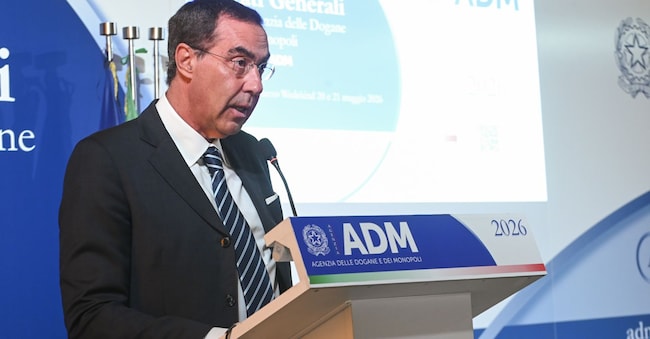
Excise duties, energy, e-commerce, inspections, security and tax revenue. At the recent General Assembly, the Customs and Monopolies Agency released the figures. Over 82 billion in revenue in 2025, an increase of around 2 compared with the previous year. However, the Italia system is currently grappling with the issues of internationalisation and new digital platforms, which will become increasingly integrated at EU level. Director Roberto Alesse has spoken on several occasions about the transformation of systems through the use of artificial intelligence. The aim: greater protection for ‘Made in Italy’ products and the streamlining of procedural channels. What impact will these technological innovations have on logistics, particularly in ports?
Editor, the Mediterranean is a key route for international trade. What is the strategic priority for strengthening Italia’s role as a hub in the coming years?
‘The most important priority is to move beyond a fragmented view of the Italian port system and steer development towards an integrated model. Today, major logistics operators no longer assess individual ports in isolation, but rather a country’s overall capacity to provide efficient, reliable and predictable services throughout the entire logistics chain. In this context, the decisive factor is not merely the infrastructure in place, but the quality of the organisation of onshore processes. Reliable timings, clear rules and proportionate controls are the elements that guide the decisions of international operators. For Italia, the competition therefore hinges on its ability to present itself as a unified logistics platform, capable of integrating ports, inland ports and land transport networks. This requires closer coordination between public authorities, the systematic use of digital technologies and coherent investment planning.”
What role does the Customs and Monopolies Agency play in this strategy?
‘The Agency’s role has gradually expanded. Customs is no longer merely a checkpoint at the border, but a structural element of the overall efficiency of the logistics system. The aim is to achieve more advanced flow management, which tracks goods throughout the entire logistics chain and is not limited to the moment they enter the country. In this regard, tools such as pre-clearance, fast-track logistics corridors and the one-stop shop for checks meet the need to reduce processing times and operational uncertainties. The objective is twofold: on the one hand, to facilitate legitimate trade by making the movement of goods more fluid; on the other, to maintain high standards of control through a selective, risk-based approach. It is this balance between simplification and oversight that largely determines the competitiveness of a port system.”

