
Alice Huang, from the Shanghai financial sector to the heart of Nvidia: who is the whistleblower at the centre of the Jensen Huang scandal?
A former television journalist who went on to become a manager in the Chinese financial sector, she has built up a network of companies across Singapore and Malaysia that has purchased over 4 billion dollars’ worth of Nvidia chips. The US authorities regard her as an intelligence asset for Beijing

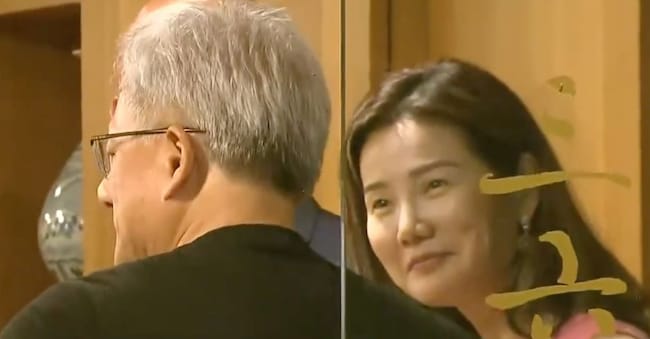
First television, then the financial sector in Shanghai, and finally the global semiconductor industry. The career of Alice Huang, also known in China as Huang Le, spans some of the most strategic sectors of the Chinese economy. But it is above all her relationship with Jensen Huang, founder and chief executive of Nvidia, that has placed her at the centre of a scandal involving intelligence and technological rivalry between the United States and China.
The US authorities believe that Alice Huang is a Chinese intelligence asset, recruited by the Ministry of State Security to help transfer technology subject to restrictions imposed by Washington to Beijing. She is alleged to have exploited a network of companies based in South-East Asia and her connections with senior figures in the technology industry to obtain the most advanced processors designed for artificial intelligence.
What makes the affair even more controversial is the personal relationship between Huang and Jensen Huang, founder and chief executive of Nvidia. The 63-year-old executive has admitted to having had a relationship with the woman, with whom he has been photographed on several occasions over the past three years in Singapore, Shanghai, Silicon Valley and Taiwan. The affair has prompted Nvidia to launch an internal investigation, and Huang himself to resign.
From television to finance
Relatively little is known about Alice Huang’s private life and professional background. Her online CV reveals a career path that initially took her far from the world of technology: four years as a television journalist, before moving into private banking at HSBC and subsequently to CITIC Securities, a Chinese state-backed investment bank.
It was within Shanghai’s financial circles that Huang built up his network of contacts. Among his closest associates is Kang Wei, a 51-year-old fund manager, who is said to have been introduced to some investors and employees as his husband. Over the years, the two have developed a network of companies involved in acquisitions and investments.


